Diving in Negril
Why dive here
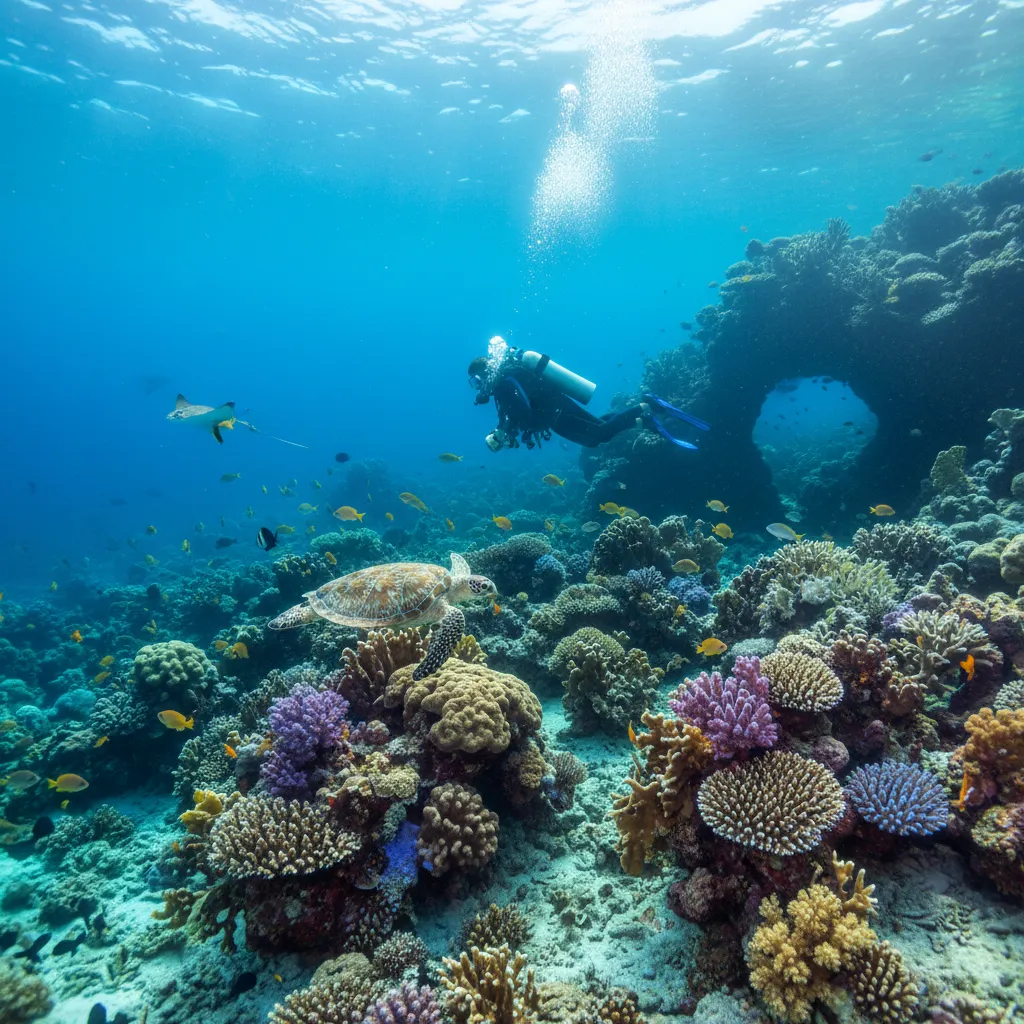
Negril offers some of Jamaica's richest diving, with 208+ marine species recorded in the area - including barracuda, dolphins, oceanic whitetip sharks, orcas and sea turtles. Water ranges 28-32°C, warmest August, September, October.
Negril offers that quintessential laid-back Caribbean diving. It’s not about big pelagics or massive walls, it’s about slow, sunny dives with a healthy dose of chill. Think gentle currents, warm water, and plenty of light filtering down onto those shallower reefs. We love the feeling of just drifting along, spotting a Mottled Jawfish peering out, or watching Glassy Sweepers school in a small cavern. Our favourite spots are often the sites with small caves and overhangs. There’s something special about seeing a Surge Clingfish camouflaged on a rock, or catching the iridescent flash of an Atlantic Lookdown. Visibility here is usually good, particularly in the mornings before any afternoon chop picks up. We’d suggest getting out early to beat any crowds and really soak in the peaceful vibe. The reefs are generally healthy, if not spectacular, with plenty of Thin Finger Coral and sponges, and you’ll find the usual suspects - Yellowhead Wrasses, Hound Needlefish, and often a well-camouflaged Coral Scorpionfish. It's a forgiving place to dive, perfect for shaking off the rust or just enjoying a relaxed afternoon underwater.
Negril Dive Site Map
Dive sites and dive centres in Negril
Negril Dive Sites
10 dive sites in Negril
ATALANTA
Atalanta is one of those wrecks we keep coming back to in Negril, and honestly, we think it’s a site that really delivers. It’s a shallow wreck, sitting at just 7 meters, which means plenty of bottom time and a relaxed dive. This steamship went down way back in 1889, and you can still make out the bow and stern sections, even if the midship is pretty broken up now. We love how the historical context plays out on the reef here; the ribs and plates are completely encrusted, serving as homes for all sorts of reef fish. You’ll find schools of snapper darting in and out of the skeletal remains, and often a grumpy moray eel peeking from a dark crevice. Our favourite detail is the way the light filters through the structure, making the whole site glow in the afternoon sun. It’s a photographer’s dream, especially when the parrotfish are busy grazing on the coral-covered hull. Due to its depth, Atalanta is perfect for newer divers, but even seasoned wreck enthusiasts will appreciate the atmosphere and the sheer amount of life that’s made this old ship its home. Go early to avoid any crowds, though it’s rarely too busy.
AVATAR TWO
Avatar Two isn't some purpose-sunk spectacle. This 12-meter fishing vessel went down the hard way, and you can feel that history when you descend onto her. She sits upright, pretty intact, at 20 meters, and we love how the Caribbean has really started to claim her. You can poke around the wheelhouse, peer into the hold – it’s tight, but definitely explorable for those comfortable with wreck penetration. Her real draw, though, is the resident marine life. Schools of grunts and snapper hang in the shadow of the hull, and we’ve often spotted eagle rays cruising by in the blue, just off the wreck. The deck is carpeted in sponges and small corals, a real magnet for macro life; keep an eye out for cleaner shrimp tucked into crevices. It’s a compelling dive for wreck enthusiasts who appreciate a bit of backstory, and the moderate depth means extended bottom time to really soak it all in. If you’re looking for a wreck with a genuine feel, Avatar Two is our pick in Negril.
Deep Plane
Deep Plane is a pretty special spot in Negril, a proper standout. We love it because it’s not just a wreck; it’s a whole ecosystem built around an old plane fuselage, sitting upright on the sand at 30 metres. Dropping down, you hit the top of the tail section at about 20 metres, and the visibility here is often good enough to make out the whole silhouette from above. We always feel a real sense of scale here, seeing the plane spread out below before you even get close. The fuselage itself is well broken up, but you can still make out wing sections and the cockpit area. It’s been down there long enough for some serious growth, with huge barrel sponges clinging to the metal, and intricate pillar and lettuce corals sprawling across the wings. Look closely and you’ll spot tiny lyre gobies darting in and out of crevices, or the flat shape of a lined sole tucked against the sand. Schools of French and bluestriped grunts often hang out around the wreck, giving it a lively, bustling feel. We’d suggest heading down early if you can manage it; the light plays really nicely off the sand and the plane’s remains. It’s an intermediate dive for sure, given the depth, but the currents are usually pretty mild, making it a relaxed exploration for anyone comfortable at 30 metres.
MALIBU
Malibu isn’t your typical Caribbean wreck. We’re talking about a fishing vessel, not some deliberately sunk training ground. She went down back in ’68, a proper maritime incident, just 8 metres off Northeast Cay on the Pedro Bank. That history, the actual story of her sinking, makes the dive feel a bit more… substantial. We love exploring the bow, where the damage from the fire is still evident if you look closely. It’s a bit eerie, thinking about the crew lost. Now, the wreck sits at 25 metres, and honestly, the ambient light often feels a little dim down there, adding to the atmosphere. You’ll find schools of jacks circling the mast, and the resident barracuda seems to enjoy just hanging out in the wheelhouse. Our favourite spot is usually the stern, where the prop is still mostly intact, draped in soft corals. It's a proper hunt for critters too; we’ve spotted morays peeking from every shadowed crevice and plenty of squirrelfish darting in and out of the hold. This dive really suits those who appreciate a wreck with a genuine past and enjoy a good rummage for smaller life alongside the bigger fish.
MARIA ROSA
The Maria Rosa is one of those wrecks we keep coming back to in Negril. It’s a proper steamship, 76 metres long, built in 1931 and it went down on the Pedro Banks in 1962. Now, it’s broken up quite a bit over the years, but you can still get a real sense of its scale. We love finning along the deck plates, imagining the cargo hold when it was full. There are big sections of the hull still standing proud, forming swim-throughs for eager divers. Look inside the more sheltered parts, and you'll often spot nurse sharks tucked away, or moray eels peeking from crevices. We’ve seen huge schools of snapper here, just hanging over the wreck like a shimmering cloud. This isn't a deep dive, sitting at around 5 metres, so you get incredible bottom time. That means plenty of opportunity to really scrutinise the details, the barnacles, the way the coral has started to reclaim the metal. It’s ideal for photographers looking for interesting light play through the structure, and it’s a brilliant site for newer wreck divers to get a feel for exploring something man-made.
SEA ISLAND
Sea Island, just off Negril, is a good pick for wreck enthusiasts, especially those who appreciate a well-colonised artificial reef. This old supply vessel, sunk in 2006, sits upright at 26 meters, making for a straightforward dive. We usually find schools of jacks circling the superstructure, and the bow ramp, a unique feature for a wreck dive in these parts, now hosts some impressive barrel sponges. Penetration is limited, but there's plenty to explore on the outside, with nurse sharks sometimes resting underneath the hull. It's a solid, enjoyable dive for anyone comfortable with the depth.
SEA ROAMER
The Sea Roamer wreck, a fishing vessel resting upright in just a metre of water off Negril, offers a different kind of dive. It’s a snorkel, really. You’ll spend your time peering down at the hull, a dark shape against the sand, exploring what’s left of the superstructure. We've seen schools of juvenile snapper flitting in and out of the openings, and the occasional moray eel peeking from a dark corner. It’s perfect for a lazy afternoon; easy entry, no current, and a chance to get up close with a piece of Negril’s maritime history without even needing to get your hair wet.
Shallow Plane
We love a good wreck at beginner depths, and Negril’s Shallow Plane delivers a proper little adventure. It’s a Cessna, resting upright on a sandy bottom at 12m, nose slightly down as if it just ran out of runway. The current description doesn't do justice to how thoroughly colonised it is; we’re talking thick growth here. The wings, fuselage, and tail are a tapestry of coral – Massive Starlet, Finger, and Lettuce corals are all over it. Swim around and through what’s left of the cabin. You’ll find French grunts schooling inside, sometimes a shy hogfish peeking out from under a wing. Look closely for juvenile snappers hiding in the nooks and crannies. The plane itself feels ancient, even if it’s not. Its metal skeleton is now home to countless tiny critters, and the way the light filters down through the shallow water, shimmering off the sand and the plane’s encrusted surfaces, makes it feel quite magical. It's a relaxed dive, usually with little to no current, so you can take your time exploring every angle. We’d suggest going in the morning; the light is best then and you often get it to yourselves. It’s perfect for new divers getting their first taste of wreck diving, or anyone who enjoys a leisurely poke around a unique, vibrant artificial reef.
Throne Room
The Throne Room in Negril. Now this is a proper cavern dive, and one we always try to hit when we're in town. It’s not a deep spot, topping out around 20 metres, but the experience is all about what’s above you. Drop in and descend into the main chamber. What makes it special are the light shafts that slice through the water from openings in the ceiling. On a sunny day, the effect is genuinely stunning. You’ll feel the temperature drop a little as you move further in, and the sound of your own breathing becomes more pronounced. We often see nurse sharks tucked into corners, sometimes just one, sometimes a small group. Keep an eye out for coney and graysby darting between the coral heads, and we always spot a few dark green parrotfish munching away. It's a fairly straightforward dive, no tricky navigation, which means you can really relax and soak in the atmosphere. The Throne Room is perfect for divers comfortable in an overhead environment who want something a bit different from the usual reef drift.
VEGA
The Vega wreck in Negril is a proper dive, a carrier vessel sunk back in ‘85. She lies in just 11 metres, making her a solid choice for a longer bottom time, letting you really explore the superstructure. You’ll find schools of snapper and grunt milling around the hull, with the occasional barracuda lurking in the shadows. It's a relaxed dive, good for photographers keen to capture some classic Caribbean wreck shots without fighting current.
Negril Dive Centres
3 dive shops and operators in Negril
Ocean Wildlife in Negril
208 species recorded in Negril
Negril Daylight & Sunrise/Sunset
Sunrise and sunset times for Negril, calculated from coordinates
Today - Sunday 11 October
Sunrise
06:05
Sunset
17:55
Daylight
11h 50m
Golden Hour
17:26
First light (dawn) at 05:44 · Last light (dusk) at 18:17
Monthly Averages
| Month | Sunrise | Sunset | Daylight |
|---|---|---|---|
| Jan | 06:47 | 17:58 | 11h 11m |
| Feb | 06:41 | 18:15 | 11h 34m |
| Mar | 06:22 | 18:23 | 12h 1m |
| Apr | 05:58 | 18:29 | 12h 31m |
| May | 05:42 | 18:38 | 12h 57m |
| JunLongest | 05:39 | 18:49 | 13h 11m |
| Jul | 05:46 | 18:52 | 13h 6m |
| Aug | 05:56 | 18:41 | 12h 45m |
| Sep | 06:01 | 18:17 | 12h 16m |
| OctNow | 06:06 | 17:52 | 11h 46m |
| Nov | 06:18 | 17:38 | 11h 19m |
| DecShortest | 06:36 | 17:41 | 11h 5m |
Times are approximate local times based on longitude. Actual times may vary slightly depending on the exact timezone observed in Negril.
Where to Stay near Negril
Prices from Booking.com. We may earn a commission at no extra cost to you.
Marine Protected Areas near Negril
27 protected areas near Negril - please respect local regulations when diving
Portland Bight Protected Area
Portland Bight Wetlands and Cays
Negril Environmental Protection Area
Negril Marine Park
Ocho Rios Marine Park Protected Area
Palisadoes- Port Royal Protected Area
Palisadoes- Port Royal
Black River Protected Area
Bluefields Bay
West Harbour-Peake Bay, Clarendon, Game Sanctuary
Montego Bay Marine Park
The Long Island, Clarendon, Game Sanctuary
Showing 12 largest of 27
Getting to Negril
Montego Bay
Kingston
Santiago
Plan & book
Ways to dive Negril, from day trips to liveaboards.
Day trips & courses
via GetYourGuideGuided dives, courses and snorkel trips with instant booking.
Find dive trips in NegrilPlaces to stay
via Booking.comHotels and dive resorts near Negril.
Search stays in NegrilDive insurance
Most travel insurance excludes or limits scuba. Check what you need before you go.
Dive insurance explainedPartner links: we may earn a commission if you book, at no extra cost to you. How we make money