SEA ISLAND
Why dive here
With 208+ marine species recorded in the area - including barracuda, dolphins, oceanic whitetip sharks, orcas and sea turtles - SEA ISLAND offers some of Negril's richest wreck diving. Water ranges 28-32°C, warmest August, September, October.
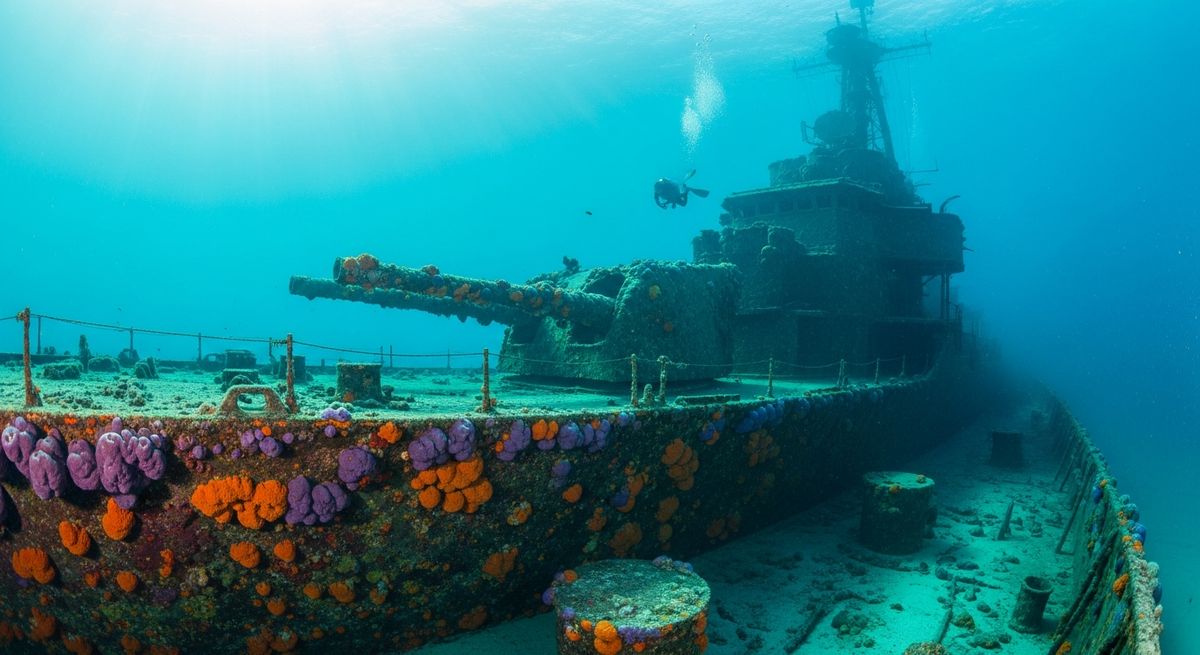
Sea Island, just off Negril, is a good pick for wreck enthusiasts, especially those who appreciate a well-colonised artificial reef. This old supply vessel, sunk in 2006, sits upright at 26 meters, making for a straightforward dive. We usually find schools of jacks circling the superstructure, and the bow ramp, a unique feature for a wreck dive in these parts, now hosts some impressive barrel sponges. Penetration is limited, but there's plenty to explore on the outside, with nurse sharks sometimes resting underneath the hull. It's a solid, enjoyable dive for anyone comfortable with the depth.
Typical SEA ISLAND Dive Profile
Illustrative profile based on site depth and type. Actual dive profiles vary - always follow your dive computer and training.
Safety Notes
Depth of 26m - Advanced Open Water certification recommended.
Wreck site - avoid penetration without wreck diving certification. Watch for sharp metal and entanglement hazards.
Always perform a 3-minute safety stop at 5m before surfacing.
Reviews for SEA ISLAND
Conditions
Ocean conditions, forecast and tides for SEA ISLAND
SEA ISLAND Ocean Conditions
Monthly averages for SEA ISLAND, sourced from Open-Meteo marine data - nearest station: Open-Meteo marine grid (18.02, -77.85) (47km away)
October Averages
Sea Temperature
31°C
88°F · Range: 28.8–32.4°C
Air Temperature
28°C
82°F
Wind Speed
3.84 m/s
7.5 knots
Atmospheric Pressure
1011.7 hPa
Based on 4 years of monitoring data · Data sources: Open-Meteo marine data
Plan & book
Ways to dive Negril, from day trips to liveaboards.
Day trips & courses
via GetYourGuideGuided dives, courses and snorkel trips with instant booking.
Find dive trips in NegrilPlaces to stay
via Booking.comHotels and dive resorts near Negril.
Search stays in NegrilDive insurance
Most travel insurance excludes or limits scuba. Check what you need before you go.
Dive insurance explainedPartner links: we may earn a commission if you book, at no extra cost to you. How we make money
Where to Stay near SEA ISLAND
Prices from Booking.com. We may earn a commission at no extra cost to you.