Diving in Saint-Pierre
Why dive here
Saint-Pierre offers some of Martinique's richest diving, with 314+ marine species recorded in the area - including barracuda, dolphins, dwarf minke whales, humpback whales and nurse sharks. Water ranges 27-30°C, warmest August, September, October.
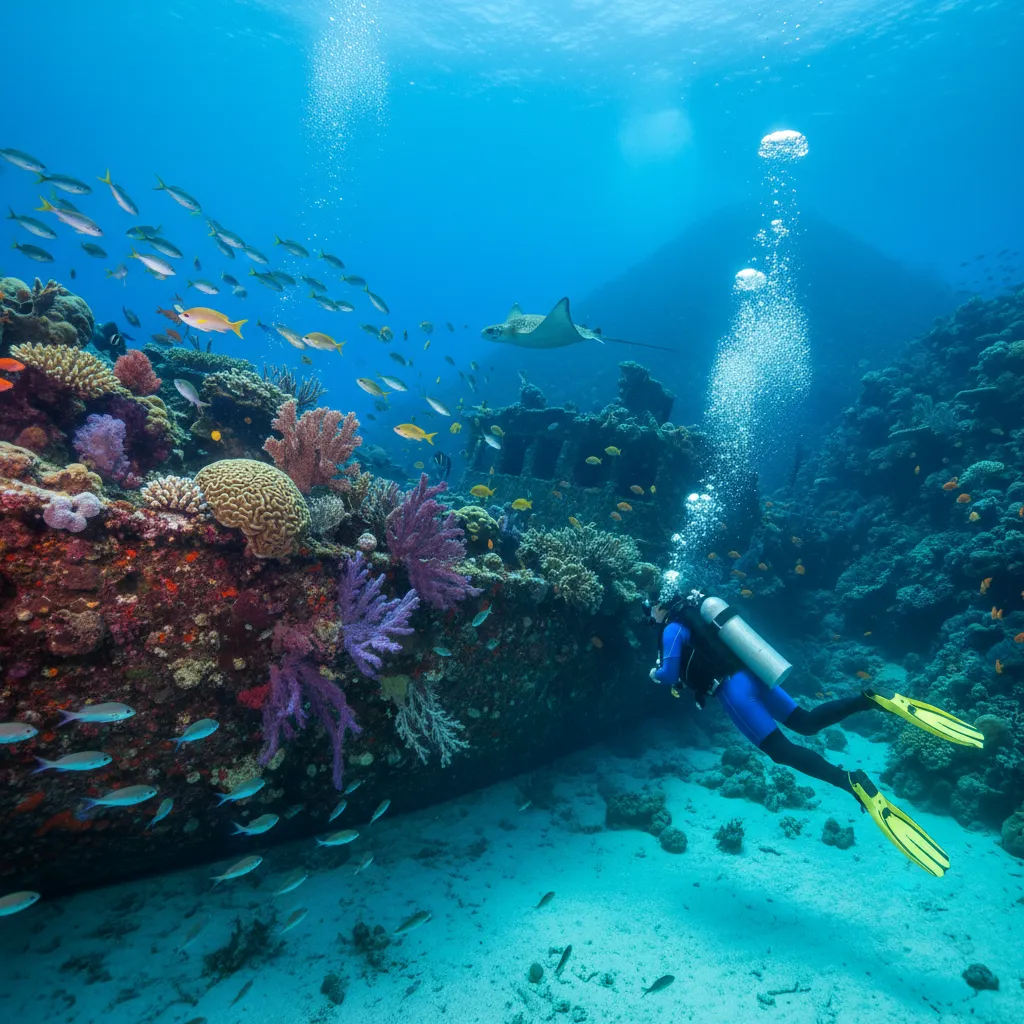
Saint-Pierre is a captivating dive destination, unlike many other Caribbean spots. We love it for its moody, almost ghostly, underwater landscape. This isn't a place for your typical vibrant coral gardens, though there are patches of colour. Instead, you're diving a volcanic wreck graveyard, the result of Mount Pelée’s catastrophic eruption in 1902. We’re talking about a dozen or so vessels, sunk right in their moorings, now resting silently on the sandy bottom, cloaked in a layer of volcanic silt. The visibility here can be a bit variable, sometimes a hazy 15 metres, other times a surprisingly clear 25 metres, particularly in the calmer months between May and November. We'd suggest focusing on the morning dives for the best light penetration into these historical relics. You’ll weave through the skeletal remains of steamships and fishing boats. Keep an eye out for the Ballyhoo schooling around the masts, and we've spotted some surprisingly large Black Margate patrolling the deeper sections. The Mushroom Scorpionfish blend so perfectly with the volcanic rock, it’s a real challenge to spot them, but that's part of the fun. Our favourite moment is always peering into the dark holds, imagining the chaos of that fateful day. It's a sombre, incredibly unique dive, rich with history and a palpable sense of time suspended. You won't find better wreck diving in the region.
Saint-Pierre Dive Site Map
Dive sites and dive centres in Saint-Pierre
Saint-Pierre Dive Sites
12 dive sites in Saint-Pierre
Canyons de Babodie
The Canyons de Babodie, just off Saint-Pierre, offers a unique geological dive. Here, volcanic rock formations create dramatic swim-throughs and narrow canyons, giving the site a distinct feel compared to typical reef dives. We often spot schooling fish sheltering within the crevices, and the occasional turtle glides past in the blue. It’s a good choice for divers looking for something a bit different, focused more on topography than dense coral.
Club de plongée de Fond Capot
Fond Capot might just be our favourite shore dive on the island. Forget the boat charters for a moment, this spot, right off the beach in Saint-Pierre, offers a surprisingly rich little world. You gear up practically on the sand, wade in, and descend into a gentle slope that really comes alive. We’ve had incredible luck here with macro, spotting all sorts of blennies peeking from crevices and juvenile puffers tucked under ledges. It’s a calm, easy dive, perfect for a relaxed afternoon or for divers who want to take their time with their camera. The real draw for us is the sheer number of hermit crabs scuttling across the sandy patches, some in the most colourful shells. Look closely for the shy opossum pipefish blending into the seagrass – they’re masters of camouflage. While we haven't seen a sperm whale here (that’s a much deeper, offshore experience), the reef itself, though not vast, supports a good number of cardinalfish and the occasional school of jacks cruising by. It’s not a deep dive, maybe 15 metres at its deepest extent, making it accessible and low-stress. We’d suggest going in the late morning, the light catches the schooling fish just right.
DALHIA
DivePlnr Opinion: Dalhia, off Saint-Pierre, is one of those wrecks that really tells a story. We’re talking about a steamship sunk by the eruption of Mont Pelée in 1902, and you can still feel that history down there. She rests upright, mostly intact at 25m, and even if you don't penetrate, there's plenty to explore externally. Our favourite part is the bow, where the anchor chain still drapes dramatically. The main deck is now a highway for schooling snapper and jacks. Look into the cargo holds, and you’ll often spot massive green moray eels tucked away, their heads peering out. The structure itself, encrusted with sponge and hard corals, feels like a living reef now, a testament to time and nature reclaiming its own. We’d suggest a morning dive; the light filtering through the clear Caribbean water really illuminates the wreck's scale. It’s a dive for those who appreciate history as much as marine life, best suited for experienced wreck divers comfortable with open water. While it’s classed as dangerous, we find it’s more about respecting its age and avoiding penetration unless properly trained.
Le Dahlia
Le Dahlia isn't just a wreck; it's a slice of history, frozen in time off Saint-Pierre. This steamship, sunk in the catastrophic 1902 volcanic eruption, rests upright, making it a surprisingly accessible and poignant dive. As you descend, the sheer scale becomes apparent, her hull draped in sponges and soft corals, a testament to the sea's reclamation. We particularly love the bow section, often teeming with schooling fish, while the stern offers deeper penetration opportunities for those with the right training. There's an eerie beauty to exploring the Dahlia. You can still make out the outline of the deck, the cargo holds, even the ghostly silhouette of the propeller. Look closely and you'll spot moray eels peeking from crevices and the occasional turtle gliding past. Our favourite time to dive it is mid-morning, when the sunlight filters down, illuminating the wreck’s contours and the clouds of chromis darting above. It’s a dive that suits those who appreciate both history and the subtle beauty of a well-preserved artificial reef.
Le Roraima
Le Roraima isn't just a wreck; it’s a time capsule lying in the bay of Saint-Pierre. This passenger liner, sunk during the devastating eruption of Mount Pelée in 1902, rests upright, relatively intact, giving you a real sense of its former grandeur. We love descending onto her deck, imagining the chaos that must have unfolded over a century ago. Keep an eye out for the resident green moray eels tucked into every crevice, and the schools of glassy sweepers that shimmer in the darker holds. It’s an atmospheric dive, best appreciated slowly, allowing the story of the ship to unfold around you. The bow section is particularly captivating, often shrouded in a light haze of schooling snapper. Our favourite part is exploring the stern, where the prop shaft leads away into the gloom, a powerful reminder of the forces at play here. This site truly suits divers who appreciate history and enjoy exploring a wreck with a tangible past. Just be mindful of boat traffic overhead; we always suggest a surface marker buoy for ascents.
Nahoon Wreck
We love the Nahoon for its sheer scale, a proper three-masted schooner from the turn of the century, sitting upright in the sandy bottom. You descend onto the deck at around 20 metres, and the bowsprit stretches out towards deeper water, an inviting path for exploration. The hull is largely intact, a dark cavern that blackfish and schooling snappers call home. Peer inside the cargo hold and you might spot a big moray eel peeking out from the gloom. This isn't a wreck you just swim around; it’s one you can truly penetrate, feeling the history as you move through its structure. Our favourite part has to be the mast sections, now overgrown with black coral and attracting clouds of Molly Miller blennies. We'd suggest going in the morning; the light filtering through the clear Caribbean water really highlights the wreck's impressive outline against the sand. Expect a good 40-minute bottom time here, giving you plenty of opportunity to soak it all in. It’s a rewarding dive for intermediate wreck enthusiasts who appreciate a bit of backstory.
Raisinier
Raisinier sits just off Saint-Pierre, a quick boat ride that feels like skipping across history. We love it for its gentle nature, a perfect spot to ease into a Martinique trip or for newer divers building confidence. The depth hovers between 8 and 20 metres, making for long bottom times and plenty of light even on overcast days. What you get here is a fascinating mix of hard corals growing over volcanic boulders, a true Caribbean signature. Look closely, and you'll spot abundant sponges in shades of yellow and purple, providing shelter for all sorts of small critters. We’ve had fantastic luck finding Molly Miller blennies here, shy little characters that are a joy to observe. It’s also one of our favourite spots for cowfish, those quirky little box-shaped swimmers. While the big pelagics like dolphins and whales are rarer at this specific site, it’s not unheard of, especially during their migratory seasons, so keep an eye on the blue just in case. Our tip? Go in the morning; the light plays beautifully on the volcanic formations.
Roraima Wreck
The Roraima Wreck isn't just a sunken ship; it’s a time capsule from the 1902 Mont Pelée eruption, lying silently off Saint-Pierre. At depths between 30 and 50 metres, this advanced dive takes you into a piece of history, an old steamer completely colonised by the ocean. We love dropping down onto the huge boilers and the impressive propeller, which are now completely covered in sponges and black coral, giving the metal a soft, textured look. You can fin past schools of snapper that seem to hang almost motionless in the ambient light, and we’ve often spotted large groupers lurking in the shadows of the deeper sections. It’s a dive that rewards slow exploration, letting your eyes adjust to the subtle colours and the way the light filters through the water. While the currents here are generally mild, we always advise checking conditions, as a good day makes a huge difference to appreciating the sheer scale of the wreck. If you're lucky, you might even spot a patrolling barracuda or, on very rare occasions, a passing dolphin pod in the blue. This site is for experienced divers who appreciate history and the incredible power of nature to reclaim what's lost. Our favourite part is lingering over the encrusted deck, imagining the final moments before the disaster.
ROSE MILLICENT
Dropping down onto the Rose Millicent, you’re met with a relatively intact cargo ship resting upright at 50 metres. The bow still points towards the surface, a ghostly sentinel against the blue. We find ourselves drawn to the main holds, which are often swarming with schools of grunts and snapper. You’ll spot plenty of barracuda too, usually lurking in the shadows of the wheelhouse. This site is a solid pick for experienced wreck divers comfortable with depth and a bit of a current, which can sometimes sweep through here.
Site de Plongée La Perle
La Perle, just off Saint-Pierre, gives you a good feel for Martinique’s volcanic seabed. It's not a deep dive, making it a relaxed spot for newer divers or those wanting a longer bottom time. We often see cowfish poking around the volcanic rocks, and there are usually Molly Miller blennies darting in and out of crevices. Keep an eye out for small schools of mountain mullet moving along the bottom; they’re pretty distinctive. It's a pleasant dive, not packed with big drama, but consistently interesting for spotting smaller creatures.
TURTLE DOVE (PROBABLY)
It’s a bit of a mystery, this one, hence the name ‘Turtle Dove (Probably)’. We love a wreck with a backstory, and this 30.5-meter schooner, which went down in front of Precheur back in 1970, certainly has one, even if the exact identity is debated. Dropping down to 30 meters, you hit the bow first, often with a gentle current pushing you along the deck towards the stern. What we really enjoy here is the way the light filters through the remaining structure – it’s a tangible sense of history down there. You can glide into the hold, imagining the cargo it once carried, now home to schools of glassy sweepers that shimmer in the torch beam. Look closely for the resident barracuda, often hanging motionless off the bow, and we’ve spotted plenty of French angelfish picking over the coral growth. It’s a great dive for those who appreciate the quiet dignity of a well-aged wreck, offering enough penetration for interest without being overly complex.
WESTERN STAR
The Western Star is a feisty little wreck, and we absolutely love it for a casual dive out of Saint-Pierre. At only 15 metres, it’s a perfect second dive or a relaxed morning for newer wreck enthusiasts. She ran aground back in ’77 on her maiden voyage, a bit of a maritime oops, and now sits upright and relatively intact. You can poke around the wheelhouse, which is usually thick with glassfish, shimmering like a liquid curtain. The bow is often a hangout for southern stingrays, sometimes just two or three, settled in the sand. Our favourite part, though, is the engine room access. It’s a tight squeeze for sure, but once inside, the light filters down through the grates, illuminating schools of sergeant majors and the occasional sleeping nurse shark tucked into a corner. It’s got that lovely, slightly spooky wreck vibe without any real danger, and the currents here are usually pretty mild.
Saint-Pierre Dive Centres
2 dive shops and operators in Saint-Pierre
Ocean Wildlife in Saint-Pierre
314 species recorded in Saint-Pierre
Saint-Pierre Daylight & Sunrise/Sunset
Sunrise and sunset times for Saint-Pierre, calculated from coordinates
Today - Sunday 11 October
Sunrise
05:56
Sunset
17:49
Daylight
11h 53m
Golden Hour
17:20
First light (dawn) at 05:34 · Last light (dusk) at 18:10
Monthly Averages
| Month | Sunrise | Sunset | Daylight |
|---|---|---|---|
| Jan | 06:34 | 17:54 | 11h 20m |
| Feb | 06:30 | 18:09 | 11h 39m |
| Mar | 06:14 | 18:16 | 12h 2m |
| Apr | 05:52 | 18:19 | 12h 27m |
| May | 05:38 | 18:26 | 12h 48m |
| JunLongest | 05:36 | 18:36 | 13h 0m |
| Jul | 05:43 | 18:39 | 12h 56m |
| Aug | 05:51 | 18:29 | 12h 38m |
| Sep | 05:54 | 18:08 | 12h 14m |
| OctNow | 05:57 | 17:46 | 11h 50m |
| Nov | 06:06 | 17:34 | 11h 27m |
| DecShortest | 06:22 | 17:38 | 11h 16m |
Times are approximate local times based on longitude. Actual times may vary slightly depending on the exact timezone observed in Saint-Pierre.
Where to Stay near Saint-Pierre
Prices from Booking.com. We may earn a commission at no extra cost to you.
Marine Protected Areas near Saint-Pierre
17 protected areas near Saint-Pierre - please respect local regulations when diving
Martinique
Marine Du Prêcheur - Albert Falco
Cap Salomon
Périmètre De Protection De La Réserve Des Ilets De Sainte-Anne
Le Galion - Pointe Jean-Claude
Rocher Du Diamant
Rocher Du Diamant
Le Cap Ferre
Secteur Du Pain De Sucre
Îlets De Sainte-Anne
Ilet Oscar
Rocher De La Caravelle
Showing 12 largest of 17
Getting to Saint-Pierre
Fort-de-France
Vieux Fort
Pointe-à-Pitre
Plan & book
Ways to dive Saint-Pierre, from day trips to liveaboards.
Day trips & courses
via GetYourGuideGuided dives, courses and snorkel trips with instant booking.
Find dive trips in Saint-PierrePlaces to stay
via Booking.comHotels and dive resorts near Saint-Pierre.
Search stays in Saint-PierreDive insurance
Most travel insurance excludes or limits scuba. Check what you need before you go.
Dive insurance explainedPartner links: we may earn a commission if you book, at no extra cost to you. How we make money