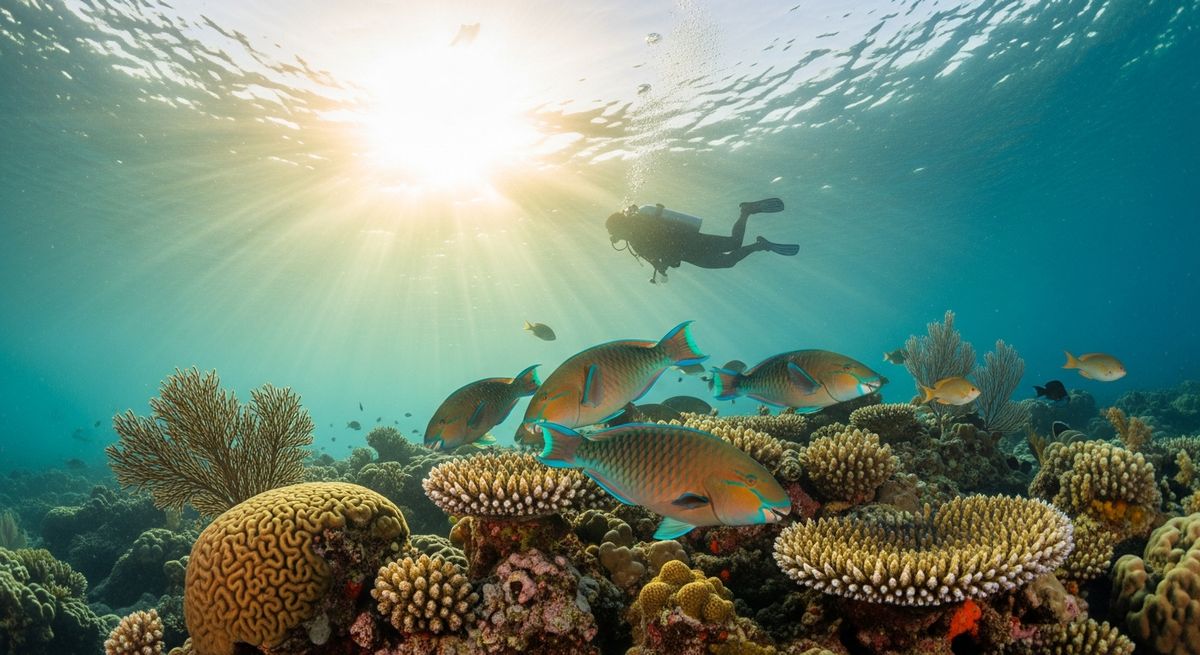
Hol Chan Marine Reserve
Protected Area
Hol Chan
Why dive here
With 192+ marine species recorded in the area - including barracuda, dolphins, lemon sharks, nurse sharks and sea turtles - Hol Chan Marine Reserve offers some of Ambergris Caye's richest reef diving. Water ranges 27-31°C, warmest August, September, October.
Hol Chan is busy, no getting around that. You'll share the water with snorkelers, other dive boats, and plenty of local traffic, but for good reason. It’s shallow, maxing out at about 11 metres, so you get incredible bottom time to really explore the cut. We love drifting through the channel, watching the schools of fusiliers part as you approach, a shimmering curtain of silver. Look for the big southern stingrays gliding over the sand, often in pairs, and the nurse sharks tucked under ledges. It's a great spot for newer divers, or anyone who wants a relaxed dive with a reliable chance of seeing those larger Caribbean residents. We'd suggest going early, before the crowds really pick up, to get the best of it.
Nearest Dive Centres to Hol Chan Marine Reserve
Dive shops near Hol Chan Marine Reserve
Suya Tours and Dive Center
Belize Pro Dive Center
Scuba School Belize
Ramon's Beach Divers
Scuba School And Family Dive Center Belize
San Pedro Water Sports
Reviews for Hol Chan Marine Reserve
Conditions
Ocean conditions, forecast and tides for Hol Chan Marine Reserve
Hol Chan Marine Reserve Ocean Conditions
Monthly averages for Hol Chan Marine Reserve, sourced from Open-Meteo marine data + Copernicus Marine (EU) - nearest station: Open-Meteo marine grid (17.98, -87.92) (0km away)
October Averages
Sea Temperature
30°C
86°F · Range: 28.6–31.5°C
Current Speed
4 cm/s
Direction: N (0°)
Chlorophyll-a
0.045 mg/m³
Very clear (oligotrophic)
Salinity
35.42 PSU
Based on 4 years of monitoring data · Data sources: Open-Meteo marine data + Copernicus Marine (EU)
Plan & book
Ways to dive Ambergris Caye, from day trips to liveaboards.
Day trips & courses
via GetYourGuideGuided dives, courses and snorkel trips with instant booking.
Find dive trips in Ambergris CayePlaces to stay
via Booking.comHotels and dive resorts near Ambergris Caye.
Search stays in Ambergris CayeDive insurance
Most travel insurance excludes or limits scuba. Check what you need before you go.
Dive insurance explainedPartner links: we may earn a commission if you book, at no extra cost to you. How we make money
Where to Stay near Hol Chan Marine Reserve
Prices from Booking.com. We may earn a commission at no extra cost to you.