Bear’s Den
Protected Area
Islas de la Bahía
Why dive here
With 168+ marine species recorded in the area - including barracuda, orcas, sea turtles, whale sharks and pufferfish - Bear’s Den offers some of Roatán's richest reef diving. Water ranges 27-30°C, warmest August, September, October.
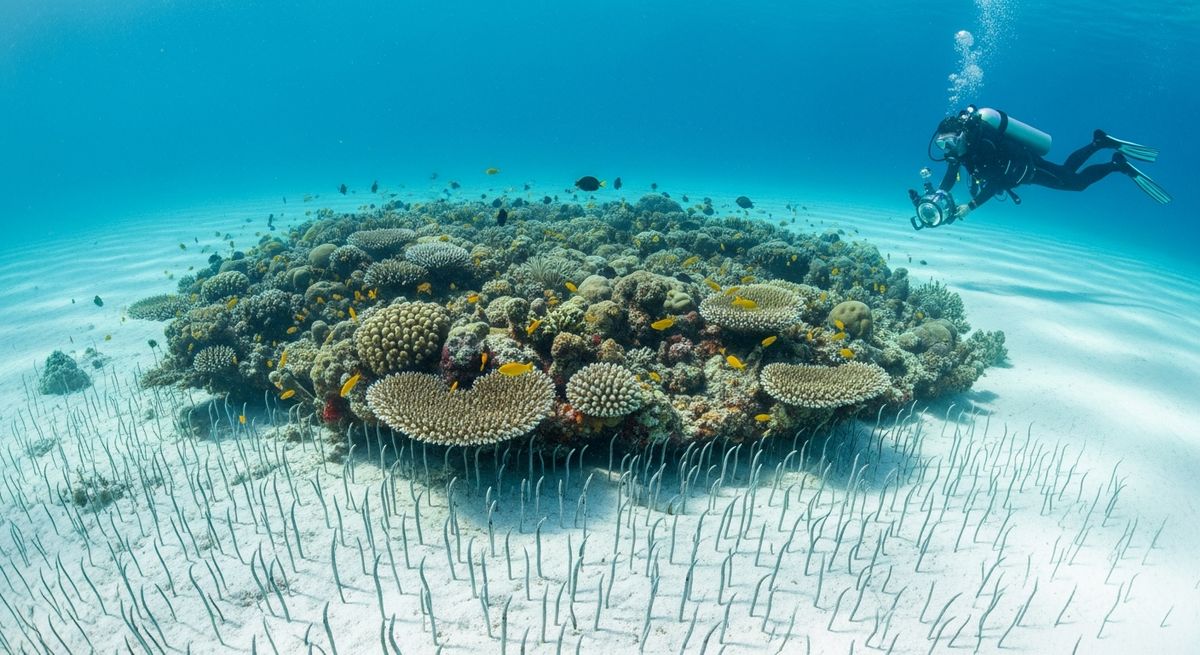
Bear’s Den is a standout in Roatán, one we always circle back to. Forget grand canyons; this site offers a delightful, intimate cave experience, and it's our favourite in the area for a quiet exploration. The real draw is the den itself, a few minutes east of the mooring, sitting around 12 metres. It’s not a squeeze, plenty big for a handful of divers to comfortably hover inside, the light from the entrance shifting and playing on the walls. We’ve spent whole dives just poking around its nooks, spotting dusky cardinalfish tucked into every cranny, their eyes glinting in the gloom. Beyond the cave, the reef stretches out, dropping to a maximum of 22 metres. You’ll find some striking black coral down deeper, and the shallows are covered in impressive sea whips and giant barrel sponges – some truly enormous. Look closely for mimic blennies and banded jawfish peeking from the sand near the entrance. Visibility usually holds around 22 metres, making for easy navigation. It’s a site for divers who appreciate the subtle beauty of a well-formed cave and the chance to observe some of the smaller, shier residents of the reef.
Nearest Dive Centres to Bear’s Den
Dive shops near Bear’s Den
Best Dive Roatan
Sandy Bay Divers
Blue Island Divers
Octopus Dive School
Centro de Buceo Jackson
Moana Divers
Reviews for Bear’s Den
Conditions
Ocean conditions, forecast and tides for Bear’s Den
Bear’s Den Ocean Conditions
Monthly averages for Bear’s Den, sourced from Open-Meteo marine data + Copernicus Marine (EU) - nearest station: Open-Meteo marine grid (16.27, -86.6) (5km away)
October Averages
Sea Temperature
30°C
86°F · Range: 29–31.6°C
Current Speed
1.41 cm/s
Direction: NW (315°)
Chlorophyll-a
0.052 mg/m³
Very clear (oligotrophic)
Salinity
35.96 PSU
Based on 4 years of monitoring data · Data sources: Open-Meteo marine data + Copernicus Marine (EU)
Plan & book
Ways to dive Roatán, from day trips to liveaboards.
Day trips & courses
via GetYourGuideGuided dives, courses and snorkel trips with instant booking.
Find dive trips in RoatánPlaces to stay
via Booking.comHotels and dive resorts near Roatán.
Search stays in RoatánDive insurance
Most travel insurance excludes or limits scuba. Check what you need before you go.
Dive insurance explainedPartner links: we may earn a commission if you book, at no extra cost to you. How we make money
Where to Stay near Bear’s Den
Prices from Booking.com. We may earn a commission at no extra cost to you.