Big Rock
Protected Area
Sistema de Humedales de la Isla de Utila
Why dive here
With 168+ marine species recorded in the area - including barracuda, orcas, sea turtles, whale sharks and pufferfish - Big Rock offers some of Roatán's richest reef diving. Water ranges 27-30°C, warmest August, September, October.
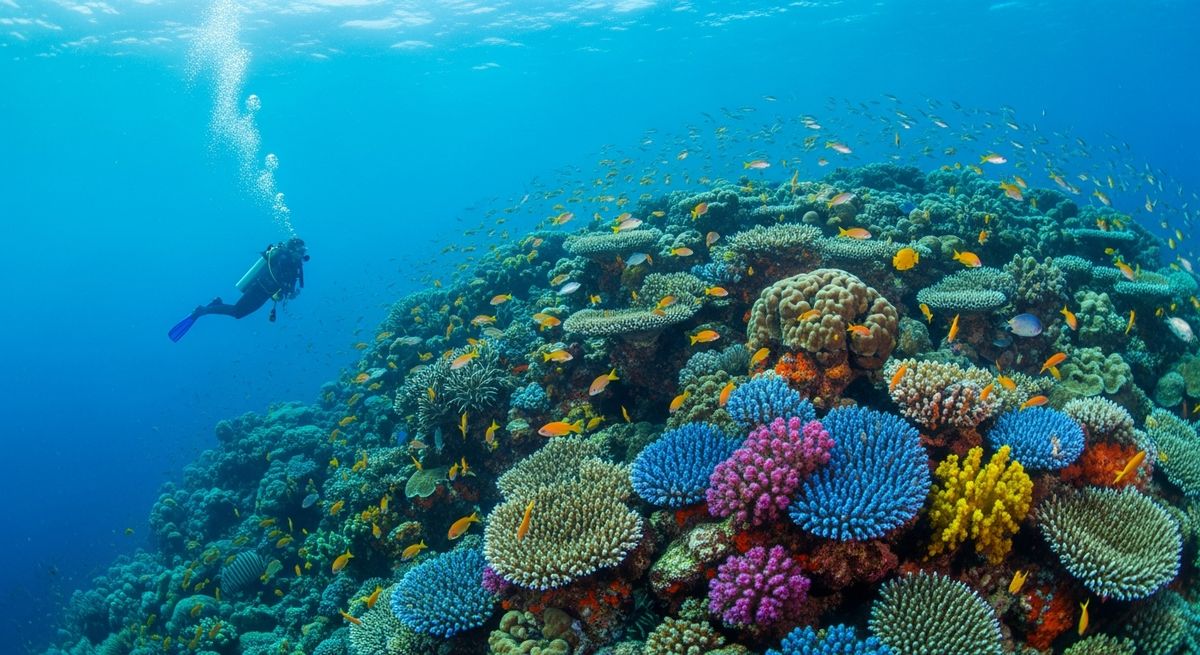
Big Rock in Roatán? It’s a site we always enjoy, particularly for its distinct personality. While often busy with students on the shallower parts, the real magic happens when you drop onto the wall itself. The reef here isn't about dramatic canyons; it’s a beautifully contoured wall, full of nooks and crannies where we often spot sleepy parrotfish tucked away. We love the sandy patch that spills from the wall’s edge. It’s not just a barren expanse; we’ve spent ages here watching squadrons of horse-eye jacks sweep past and the unusual sight of those enormous needlefish hanging perfectly still, almost invisible against the surface shimmer. For macro lovers, keep an eye out for the redlip blennies popping their heads from tiny holes, or the intricate patterns of a chain moray peeking from the rock. Visibility typically sits around 18m, giving you a good view of the overall structure, and the current is usually pretty mellow, making it a relaxing dive. Our tip? Go early to beat the crowds, or check with your dive shop for their quietest times. It’s a perfect dive for those who enjoy taking their time and really exploring the smaller details of a healthy Caribbean reef.
Typical Big Rock Dive Profile
Illustrative profile based on site depth and type. Actual dive profiles vary - always follow your dive computer and training.
Nearest Dive Centres to Big Rock
Dive shops near Big Rock
Coral View Utila Dive Center
Captain Morgans Dive Center
Alton's Dive Center
Freedive Utila
Underwater Vision Dive Center
Utila Dive Center
Reviews for Big Rock
Conditions
Ocean conditions, forecast and tides for Big Rock
Big Rock Ocean Conditions
Monthly averages for Big Rock, sourced from Open-Meteo marine data + Copernicus Marine (EU) - nearest station: Open-Meteo marine grid (16.27, -86.6) (5km away)
October Averages
Sea Temperature
30°C
86°F · Range: 29–31.6°C
Current Speed
1.41 cm/s
Direction: NW (315°)
Chlorophyll-a
0.052 mg/m³
Very clear (oligotrophic)
Salinity
35.96 PSU
Based on 4 years of monitoring data · Data sources: Open-Meteo marine data + Copernicus Marine (EU)
Plan & book
Ways to dive Roatán, from day trips to liveaboards.
Day trips & courses
via GetYourGuideGuided dives, courses and snorkel trips with instant booking.
Find dive trips in RoatánPlaces to stay
via Booking.comHotels and dive resorts near Roatán.
Search stays in RoatánDive insurance
Most travel insurance excludes or limits scuba. Check what you need before you go.
Dive insurance explainedPartner links: we may earn a commission if you book, at no extra cost to you. How we make money
Where to Stay near Big Rock
Prices from Booking.com. We may earn a commission at no extra cost to you.