El Aguila (Wreck)
Protected Area
Islas de la Bahía
Why dive here
With 168+ marine species recorded in the area - including barracuda, orcas, sea turtles, whale sharks and pufferfish - El Aguila (Wreck) offers some of Roatán's richest wreck diving. Water ranges 27-30°C, warmest August, September, October.
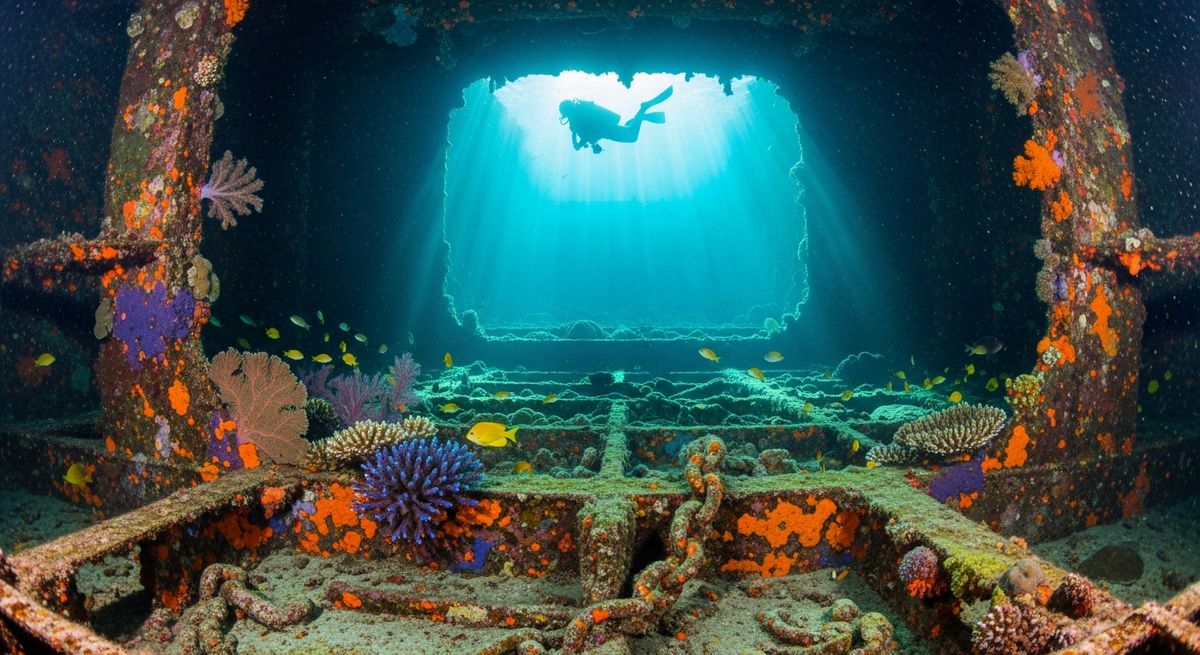
El Aguila is a Roatán classic for a reason. This 75-meter freighter, purposely sunk in 1997, sits broken in three pieces at around 30 meters, making it a proper wreck dive with plenty to explore. We love finning through the open cargo holds, where the sunlight filters down, illuminating schools of snapper and the occasional grumpy-looking grouper hiding in the shadows. The bow section, in particular, is beautiful, often patrolled by barracuda, and we’ve even spotted reef sharks cruising the perimeter on a good day. The wreck acts as a huge artificial reef, and the coral growth, especially on the top decks, is impressive. Look for nimble blennies peeking from crevices and the vibrant colours of peppermint bass flitting about. Our top tip: get there early. This site gets busy, and having El Aguila to yourself, even for a few minutes, changes the whole vibe. Currents can be mild to moderate, so keep an eye on the dive briefing. It's a solid wreck dive for those comfortable at depth, offering plenty of nooks and crannies for curious eyes and some excellent wide-angle photo opportunities.
Typical El Aguila (Wreck) Dive Profile
Illustrative profile based on site depth and type. Actual dive profiles vary - always follow your dive computer and training.
Safety Notes
Wreck site - avoid penetration without wreck diving certification. Watch for sharp metal and entanglement hazards.
Always perform a 3-minute safety stop at 5m before surfacing.
Nearest Dive Centres to El Aguila (Wreck)
Dive shops near El Aguila (Wreck)
Sandy Bay Divers
Best Dive Roatan
Octopus Dive School
Centro de Buceo Jackson
Moana Divers
Native Sons
Reviews for El Aguila (Wreck)
Conditions
Ocean conditions, forecast and tides for El Aguila (Wreck)
El Aguila (Wreck) Ocean Conditions
Monthly averages for El Aguila (Wreck), sourced from Open-Meteo marine data + Copernicus Marine (EU) - nearest station: Open-Meteo marine grid (16.27, -86.6) (5km away)
October Averages
Sea Temperature
30°C
86°F · Range: 29–31.6°C
Current Speed
1.41 cm/s
Direction: NW (315°)
Chlorophyll-a
0.052 mg/m³
Very clear (oligotrophic)
Salinity
35.96 PSU
Based on 4 years of monitoring data · Data sources: Open-Meteo marine data + Copernicus Marine (EU)
Plan & book
Ways to dive Roatán, from day trips to liveaboards.
Day trips & courses
via GetYourGuideGuided dives, courses and snorkel trips with instant booking.
Find dive trips in RoatánPlaces to stay
via Booking.comHotels and dive resorts near Roatán.
Search stays in RoatánDive insurance
Most travel insurance excludes or limits scuba. Check what you need before you go.
Dive insurance explainedPartner links: we may earn a commission if you book, at no extra cost to you. How we make money
Where to Stay near El Aguila (Wreck)
Prices from Booking.com. We may earn a commission at no extra cost to you.