Seaquest Deep
Protected Area
Islas de la Bahía
Why dive here
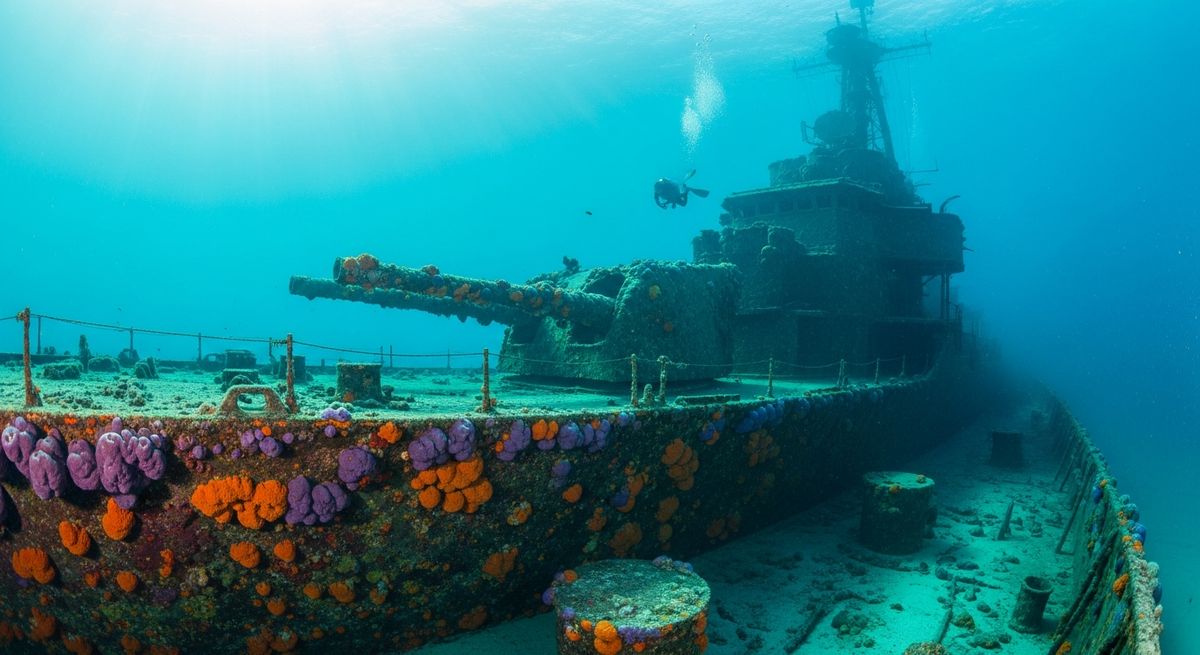
With 168+ marine species recorded in the area - including barracuda, orcas, sea turtles, whale sharks and pufferfish - Seaquest Deep offers some of Roatán's richest wreck diving. Water ranges 27-30°C, warmest August, September, October.
Seaquest Deep is one of those sites we always hit up when we're in Roatán, despite the "Deep" in the name being a bit of a misnomer given the 20m max. It’s popular, sure, but for good reason. What we really love here is the sheer density of small, unusual critters in the sand. You’ll be finning along, eyes peeled for a Yellowhead Jawfish peeking out from its burrow, and then suddenly you're spotting a Warteye Stargazer buried, just its eyes twitching above the sand. We’ve had some cracking dives just hovering over the sandy patches, finding Sharpnose Pufferfish trundling by, or watching a pair of Shark nose gobies tend to their home. Visibility here is consistently good, usually around 20m, which helps immensely when you're trying to pick out a tiny Mimic Blenny. Our favourite tip for Seaquest Deep? Go slow. Really slow. Bring a good macro lens if you're into photography, because the real show here is in the details, not the big stuff. It’s perfect for divers who appreciate the subtle beauty of sand dwellers and aren’t afraid to spend twenty minutes admiring a well-hidden flounder.
Safety Notes
Wreck site - avoid penetration without wreck diving certification. Watch for sharp metal and entanglement hazards.
Nearest Dive Centres to Seaquest Deep
Dive shops near Seaquest Deep
Clearwater Adventures
Blue Moon Scuba
Roatan Freediving
West Bay Divers
Kotos Adventures
Centro de Buceo de Splash Inn
Reviews for Seaquest Deep
Conditions
Ocean conditions, forecast and tides for Seaquest Deep
Seaquest Deep Ocean Conditions
Monthly averages for Seaquest Deep, sourced from Open-Meteo marine data + Copernicus Marine (EU) - nearest station: Open-Meteo marine grid (16.27, -86.6) (5km away)
October Averages
Sea Temperature
30°C
86°F · Range: 29–31.6°C
Current Speed
1.41 cm/s
Direction: NW (315°)
Chlorophyll-a
0.052 mg/m³
Very clear (oligotrophic)
Salinity
35.96 PSU
Based on 4 years of monitoring data · Data sources: Open-Meteo marine data + Copernicus Marine (EU)
Plan & book
Ways to dive Roatán, from day trips to liveaboards.
Day trips & courses
via GetYourGuideGuided dives, courses and snorkel trips with instant booking.
Find dive trips in RoatánPlaces to stay
via Booking.comHotels and dive resorts near Roatán.
Search stays in RoatánDive insurance
Most travel insurance excludes or limits scuba. Check what you need before you go.
Dive insurance explainedPartner links: we may earn a commission if you book, at no extra cost to you. How we make money
Where to Stay near Seaquest Deep
Prices from Booking.com. We may earn a commission at no extra cost to you.