Diving in Fakarava
Why dive here
Fakarava offers some of French Polynesia's richest diving, with 197+ marine species recorded in the area - including barracuda, blacktip reef sharks, dolphins, giant moray eels and grey reef sharks.
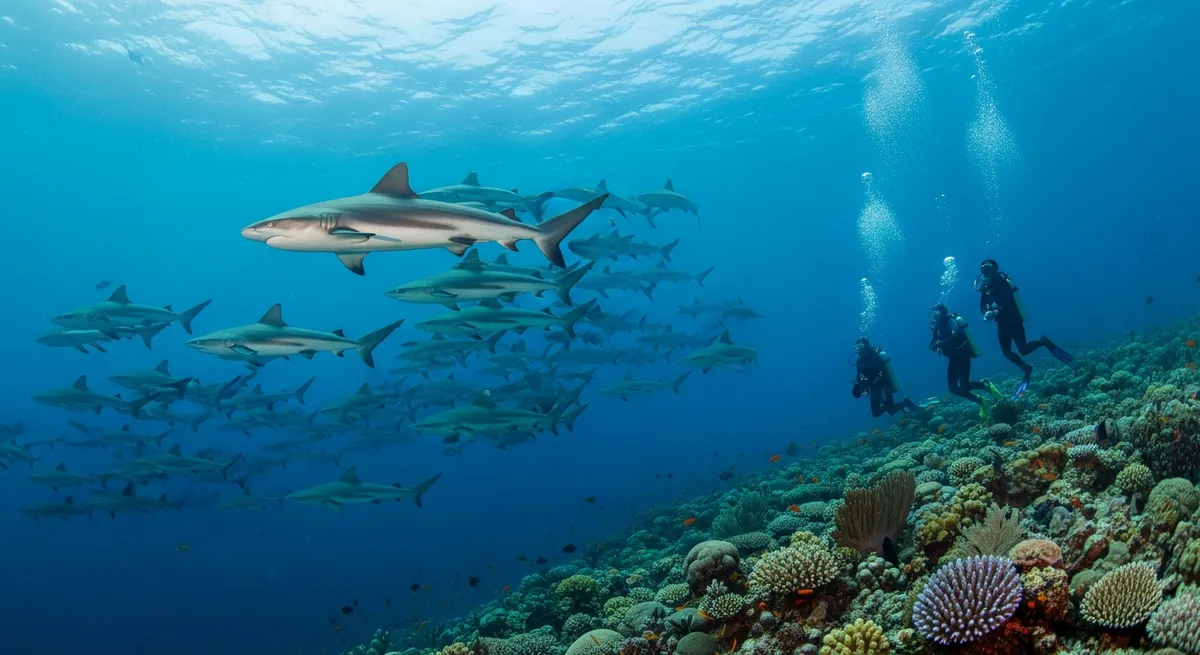
Fakarava isn't just a place; it's an experience of raw, untamed ocean. We've spent weeks here, and every time, the South Pass, Garuae, still blows our minds. Forget "wall of sharks"-it's a *river* of grey reef sharks, hundreds strong, just riding the current like it’s their own private highway. You feel the current push and pull, the water vibrating with the energy of all those apex predators. We’d suggest timing your dive for an incoming tide; that's when the action really kicks off, though it means a faster drift. Beyond the famous pass, the outer reef dives offer a more relaxed pace. We’ve had some cracking encounters with humphead unicornfish and massive schools of bluelined surgeonfish swirling around the coral heads. Keep an eye out for ringtail maori wrasse; they're surprisingly curious here. Visibility is usually excellent, often reaching 30 meters, and the reef itself feels incredibly healthy. It’s a proper drift dive destination, so you spend less time finning and more time just watching the world go by. For a truly unforgettable dive, we love dropping in at the start of an incoming tide and just letting the current carry us through Garuae, surrounded by those silent hunters. It’s truly special.
Fakarava Dive Site Map
Dive sites and dive centres in Fakarava
Fakarava Dive Sites
7 dive sites in Fakarava
Alibaba
Alibaba in Fakarava is an intermediate dive, reaching a maximum depth of 28 metres. We often find ourselves drifting along a gentle current here, keeping an eye out for grey reef sharks patrolling the outer reef. It's a relaxed dive, good for getting your bearings in the atoll, and suits those comfortable with mild drift conditions. Expect a decent scattering of fusiliers and the occasional napoleon wrasse.
Garuae Pass
Garuae Pass is a showstopper, one of those dives that genuinely lives up to the hype. It's the sheer volume of sharks that gets you, not just a few circling, but hundreds of grey reef sharks stacked up in the current, shoulder to shoulder. We’re talking about a moving wall of muscle and teeth, a truly humbling sight. When the tide is incoming, the pass acts like a funnel, bringing in all sorts of pelagics. You’ll drift along, feeling the push of the water, watching the sharks cruise by, and then boom, a pod of dolphins might shoot past, or a massive Napoleon wrasse will eye you up. We've even been lucky enough to spot orcas here a couple of times – a proper heart-in-throat moment. Our advice? Go early. Beat the crowds and catch that morning light filtering through the water. The colours on the reef, especially the bannerfish and wrasse flitting between the corals, really pop. It's a drift dive, so you just go with the flow, making it surprisingly accessible, though the currents can be strong. It’s perfect for anyone who wants to witness nature on a grand scale.
Garuae Pass
Dropping into Garuae Pass means riding the incoming current, a drift that can feel like flying. You’re looking for grey reef sharks, lots of them, often schooling in the hundreds at the mouth of the pass. Keep an eye out for mantas and eagle rays gliding by too. It’s a site best suited for experienced divers comfortable with strong currents and navigating open water.
Pufana
Pufana, tucked inside the Fakarava lagoon, offers a relaxed dive suitable for beginners. You'll find a gentle slope here, bottoming out around 15 metres, which is perfect for refining buoyancy or for a long, easy exploration. Look out for reef sharks cruising by and small schools of snapper sheltering in the coral heads. It's a peaceful spot for a second dive or for those new to French Polynesia's currents.
The channel
Drifting through Fakarava's channel is a unique experience, especially during an incoming tide. We often see reef sharks, sometimes in large numbers, along with schools of snapper and barracuda. The current can be brisk, so it’s best for experienced divers comfortable with drift dives. It’s less about intricate reef features and more about the pelagic action.
Tombant d Ohotu
Tombant d'Ohotu is a gentle introduction to Fakarava's wall diving, perfect for easing into the local scene. Dropping to a comfortable 23 meters, it’s a mellow drift along the reef face, where you can take your time soaking it all in. We often spot reef sharks cruising by and plenty of smaller reef fish darting between the coral heads. It’s a great spot for newer divers to practice their buoyancy and get comfortable with the current, which is usually quite mild here.
Tumakohua Pass
Tumakohua Pass, on Fakarava’s south side, offers a drift dive through a wide channel. We’ve seen good numbers of grey reef sharks here, often patrolling the drop-off where the pass meets the outer reef. It’s a classic drift, suitable for divers comfortable with current and negative entries. Look for eagle rays gliding past in the blue.
Fakarava Dive Centres
6 dive shops and operators in Fakarava
Ocean Wildlife in Fakarava
197 species recorded in Fakarava
Fakarava Daylight & Sunrise/Sunset
Sunrise and sunset times for Fakarava, calculated from coordinates
Today - Sunday 11 October
Sunrise
05:19
Sunset
17:41
Daylight
12h 23m
Golden Hour
17:13
First light (dawn) at 04:57 · Last light (dusk) at 18:03
Monthly Averages
| Month | Sunrise | Sunset | Daylight |
|---|---|---|---|
| Jan | 05:23 | 18:22 | 12h 59m |
| Feb | 05:39 | 18:16 | 12h 38m |
| Mar | 05:46 | 17:59 | 12h 13m |
| Apr | 05:51 | 17:36 | 11h 45m |
| May | 05:59 | 17:21 | 11h 22m |
| JunShortest | 06:09 | 17:19 | 11h 10m |
| Jul | 06:12 | 17:26 | 11h 15m |
| Aug | 06:01 | 17:35 | 11h 33m |
| Sep | 05:39 | 17:39 | 11h 59m |
| OctNow | 05:16 | 17:42 | 12h 26m |
| Nov | 05:02 | 17:54 | 12h 51m |
| DecLongest | 05:06 | 18:11 | 13h 5m |
Times are approximate local times based on longitude. Actual times may vary slightly depending on the exact timezone observed in Fakarava.
Where to Stay near Fakarava
Prices from Booking.com. We may earn a commission at no extra cost to you.
Marine Protected Areas near Fakarava
18 protected areas near Fakarava - please respect local regulations when diving
Commune de Fakarava
Fakarava intracommunal
Atoll de Fakarava
Atoll de Toau est
Atoll de Fakarava
Atoll de Kauehi
Atoll de Raraka
Atoll de Fakarava
Atoll de Raraka
Atoll de Aratika
Atoll de Toau ouest
Atoll de Niau
Showing 12 largest of 18
Getting to Fakarava
Fakarava Airport
Papeete
Anaa
Plan & book
Ways to dive Fakarava, from day trips to liveaboards.
Day trips & courses
via GetYourGuideGuided dives, courses and snorkel trips with instant booking.
Find dive trips in FakaravaPlaces to stay
via Booking.comHotels and dive resorts near Fakarava.
Search stays in FakaravaDive insurance
Most travel insurance excludes or limits scuba. Check what you need before you go.
Dive insurance explainedPartner links: we may earn a commission if you book, at no extra cost to you. How we make money