Bikini Atoll
Protected Area
Bikini
Why dive here
With 266+ marine species recorded in the area - including blacktip reef sharks, giant moray eels, grey reef sharks, octopuses and pufferfish - Bikini Atoll offers some of Bikini Atoll's richest wreck diving. Water ranges 28-30°C, warmest August, September, October.
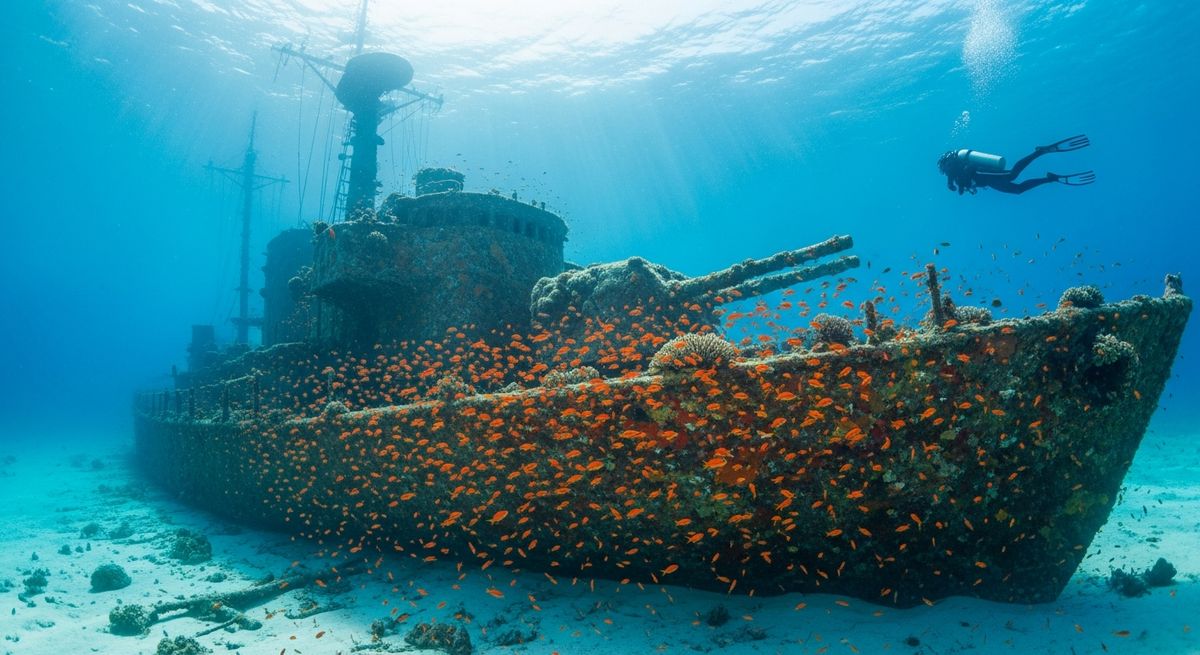
Diving Bikini Atoll isn't just about seeing big wrecks, it's about feeling the weight of history. We love the sheer scale of the USS Saratoga, an aircraft carrier sitting upright, its flight deck now a massive flat plain at 28 meters. Dropping into her colossal hangar bays, you almost expect to see planes still chained down. The HIJMS Nagato, Admiral Yamamoto's flagship, is another beast entirely, though she’s capsized; her enormous props are still a sight, encrusted with soft corals. The real magic here is the contrast: these steel giants, sunk by atomic tests, are now thriving artificial reefs. Barracuda patrol the bridges, and we’ve seen schools of fusiliers so thick they block the light in the hangars. Visibility in the lagoon is usually incredible, often 30 meters plus, which helps with the depths. You'll need solid deep diving experience and advanced nitrox for this trip; it's serious wreck diving, not for the casual visitor. For those who make the journey, it’s an unparalleled dive into a truly unique, somber, and beautiful underwater museum.
Typical Bikini Atoll Dive Profile
Illustrative profile based on site depth and type. Actual dive profiles vary - always follow your dive computer and training.
Safety Notes
Depth of 25m - Advanced Open Water certification recommended.
Wreck site - avoid penetration without wreck diving certification. Watch for sharp metal and entanglement hazards.
Always perform a 3-minute safety stop at 5m before surfacing.
Reviews for Bikini Atoll
Conditions
Ocean conditions, forecast and tides for Bikini Atoll
Bikini Atoll Ocean Conditions
Monthly averages for Bikini Atoll, sourced from Open-Meteo marine data - nearest station: Open-Meteo marine grid (11.58, 165.39) (4km away)
October Averages
Sea Temperature
30°C
85°F · Range: 28.7–30.7°C
Air Temperature
28°C
82°F
Wind Speed
7.91 m/s
15.4 knots
Atmospheric Pressure
1010.4 hPa
Based on 4 years of monitoring data · Data sources: Open-Meteo marine data
Plan & book
Ways to dive Bikini Atoll, from day trips to liveaboards.
Day trips & courses
via GetYourGuideGuided dives, courses and snorkel trips with instant booking.
Find dive trips in Bikini AtollPlaces to stay
via Booking.comHotels and dive resorts near Bikini Atoll.
Search stays in Bikini AtollDive insurance
Most travel insurance excludes or limits scuba. Check what you need before you go.
Dive insurance explainedPartner links: we may earn a commission if you book, at no extra cost to you. How we make money
Where to Stay near Bikini Atoll
Prices from Booking.com. We may earn a commission at no extra cost to you.