ADMIRAL WILEY
Why dive here
With 241+ marine species recorded in the area - including barracuda, blacktip reef sharks, grey reef sharks, sea turtles and sperm whales - ADMIRAL WILEY offers some of Milne Bay's richest wreck diving. Water ranges 27-30°C, warmest January, February, March.
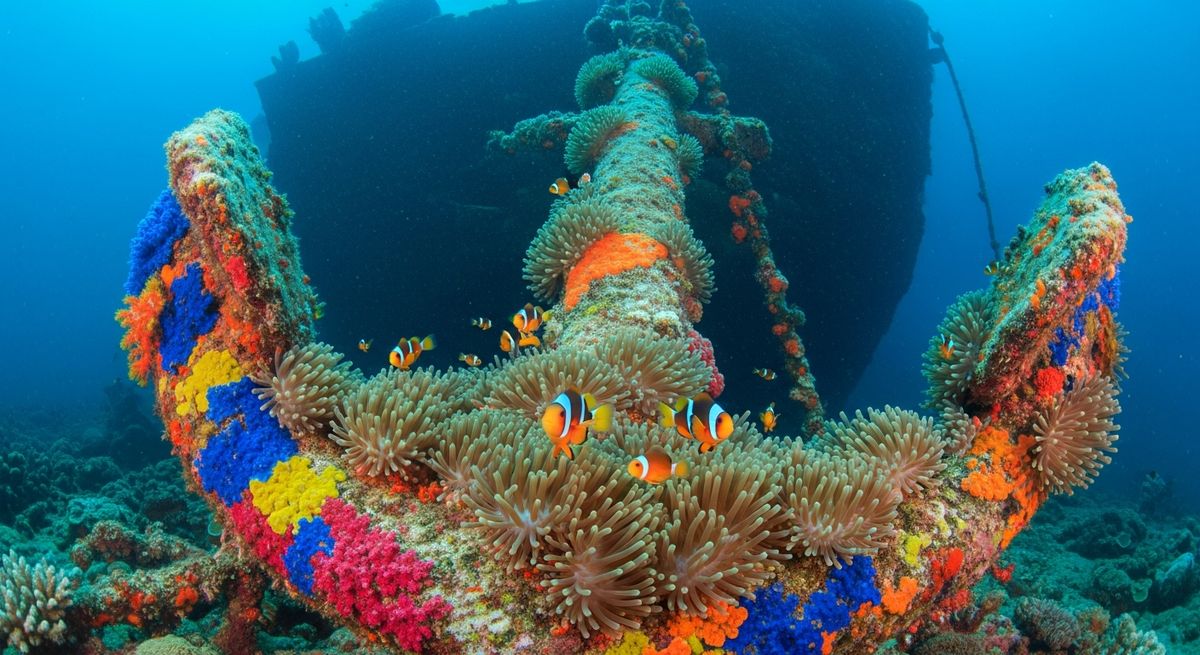
Admiral Wiley is more than just a wreck; it’s a time capsule off Kitava Island, and frankly, one of our favourite dives in Milne Bay. This 98-metre steamship, built in 1920, lies broken but still impressive. We love tracing the deck, noting the sheer scale, imagining the roar of those turbine engines before she went down. You’ll find schools of batfish here, curious and unafraid, often circling the superstructure as you descend. Look closely and you'll spot pygmy seahorses clinging to gorgonian fans near the deeper sections. The hull plates themselves are encrusted with colourful soft corals, a genuine explosion of reds and purples. We’d suggest focusing on the bow section first; the coral growth there is particularly lush, and the light often catches it just right in the morning. While the visibility can vary, on a good day, the wreck reveals itself gradually, loomimg out of the blue, making the dive genuinely atmospheric. It's an excellent dive for those who appreciate history intertwined with vibrant reef life.
Safety Notes
Wreck site - avoid penetration without wreck diving certification. Watch for sharp metal and entanglement hazards.
ADMIRAL WILEY Wreck History
Vessel Type
cargo ship
Cause
grounding
The SS Admiral Wiley was a classic example of early 20th-century American shipbuilding. Constructed in 1920 by the Submarine Boat Corporation of New Jersey, she was a standardized steam-powered cargo ship, part of a massive post-WWI effort to expand the U.S. merchant marine fleet. For years, she plied trade routes under the ownership of the American Trading & Shipping company, a workhorse of the sea carrying goods across the globe.
Her final voyage came to an abrupt end in the tropical waters of Papua New Guinea. While navigating the channels near Milne Bay, a region famous for its complex reefs and passages, the Admiral Wiley ran hard aground on Kitava Island. The forces of the ocean and the reef were unforgiving, and the vessel was declared a total loss, left where she came to rest. With a depth listed as 0 meters, the wreck remains partially exposed, breaking the surface of the water as a permanent, rusting monument to her final mistake.
For divers and snorkelers, the Admiral Wiley offers a uniquely accessible experience. The shallow, submerged sections of the hull have blossomed into a spectacular artificial reef, teeming with the vibrant coral and fish life that Milne Bay is renowned for. The dramatic sight of the ship's bow or superstructure jutting from the turquoise water provides a stunning backdrop for underwater exploration. It is a photographer's dream, blending maritime history with the raw beauty of a thriving marine ecosystem, and a must-see site for anyone visiting the historic waters of Kitava.
Reviews for ADMIRAL WILEY
Conditions
Ocean conditions, forecast and tides for ADMIRAL WILEY
ADMIRAL WILEY Ocean Conditions
Monthly averages for ADMIRAL WILEY, sourced from Open-Meteo marine data - nearest station: Open-Meteo marine grid (-10.2, 150.9) (22km away)
October Averages
Sea Temperature
28°C
83°F · Range: 27–29.8°C
Air Temperature
27°C
81°F
Wind Speed
7.28 m/s
14.2 knots
Atmospheric Pressure
1010.5 hPa
Based on 4 years of monitoring data · Data sources: Open-Meteo marine data
Plan & book
Ways to dive Milne Bay, from day trips to liveaboards.
Day trips & courses
via GetYourGuideGuided dives, courses and snorkel trips with instant booking.
Find dive trips in Milne BayPlaces to stay
via Booking.comHotels and dive resorts near Milne Bay.
Search stays in Milne BayDive insurance
Most travel insurance excludes or limits scuba. Check what you need before you go.
Dive insurance explainedPartner links: we may earn a commission if you book, at no extra cost to you. How we make money
Where to Stay near ADMIRAL WILEY
Prices from Booking.com. We may earn a commission at no extra cost to you.