KEN LUNG
Why dive here
With 176+ marine species recorded in the area - including dugongs, sperm whales, spinner dolphins, nautiluses and pufferfish - KEN LUNG offers some of Andaman Islands's richest wreck diving. Water ranges 28-31°C, warmest April, May, June.
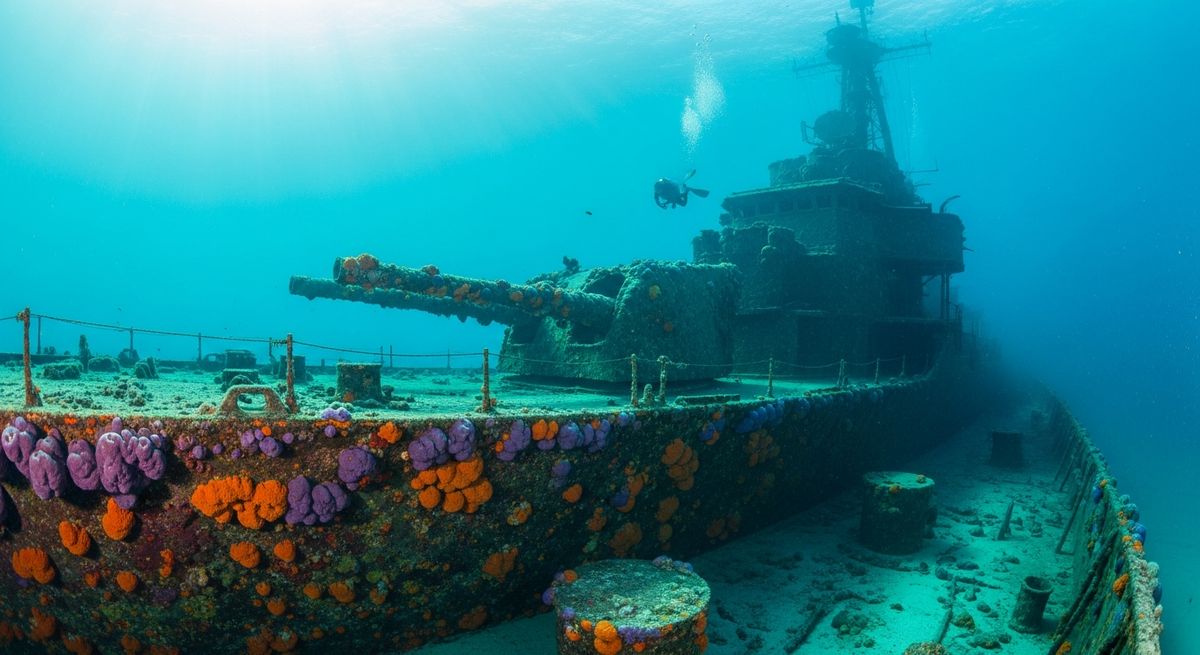
Ken Lung is one of those big, sprawling wrecks that just keeps giving. This isn't some dinky fishing boat; it's a bulk carrier, over 150 metres long, which went down in 1977. We love its sheer size, the way it’s split into sections, hinting at the force that put it on the seabed. You can spend an entire dive just exploring the cargo holds, imagining the goods it once carried. The stern is our favourite spot. The propeller is still there, massive and encrusted, and we've often seen giant groupers lurking in the shadows of the engine room. Visibility here can be a bit variable, but when it's good, say 15-20 metres, the light shafts piercing the hull are incredible. Look out for schools of fusiliers and bannerfish swirling around the superstructure. It's a great dive for experienced wreck enthusiasts who appreciate a good penetration, but even just finning over the top offers plenty to see. Just keep an eye on your depth and bottom time; 20 metres might not sound deep, but there's a lot to cover.
Typical KEN LUNG Dive Profile
Illustrative profile based on site depth and type. Actual dive profiles vary - always follow your dive computer and training.
Safety Notes
Depth of 20m - Advanced Open Water certification recommended.
Wreck site - avoid penetration without wreck diving certification. Watch for sharp metal and entanglement hazards.
Always perform a 3-minute safety stop at 5m before surfacing.
Nearest Dive Centres to KEN LUNG
Dive shops near KEN LUNG
Lacadives at Havelock
ScubaLov
Seahawks Watersports
Barefoot Scuba
Dive India
Continental Scuba
Reviews for KEN LUNG
Conditions
Ocean conditions, forecast and tides for KEN LUNG
KEN LUNG Ocean Conditions
Monthly averages for KEN LUNG, sourced from Open-Meteo marine data - nearest station: Open-Meteo marine grid (12.04, 92.99) (8km away)
October Averages
Sea Temperature
30°C
85°F · Range: 28.4–30.5°C
Air Temperature
27°C
80°F
Wind Speed
4.76 m/s
9.3 knots
Atmospheric Pressure
1009.2 hPa
Based on 4 years of monitoring data · Data sources: Open-Meteo marine data
Plan & book
Ways to dive Andaman Islands, from day trips to liveaboards.
Day trips & courses
via GetYourGuideGuided dives, courses and snorkel trips with instant booking.
Find dive trips in Andaman IslandsPlaces to stay
via Booking.comHotels and dive resorts near Andaman Islands.
Search stays in Andaman IslandsDive insurance
Most travel insurance excludes or limits scuba. Check what you need before you go.
Dive insurance explainedPartner links: we may earn a commission if you book, at no extra cost to you. How we make money
Where to Stay near KEN LUNG
Prices from Booking.com. We may earn a commission at no extra cost to you.