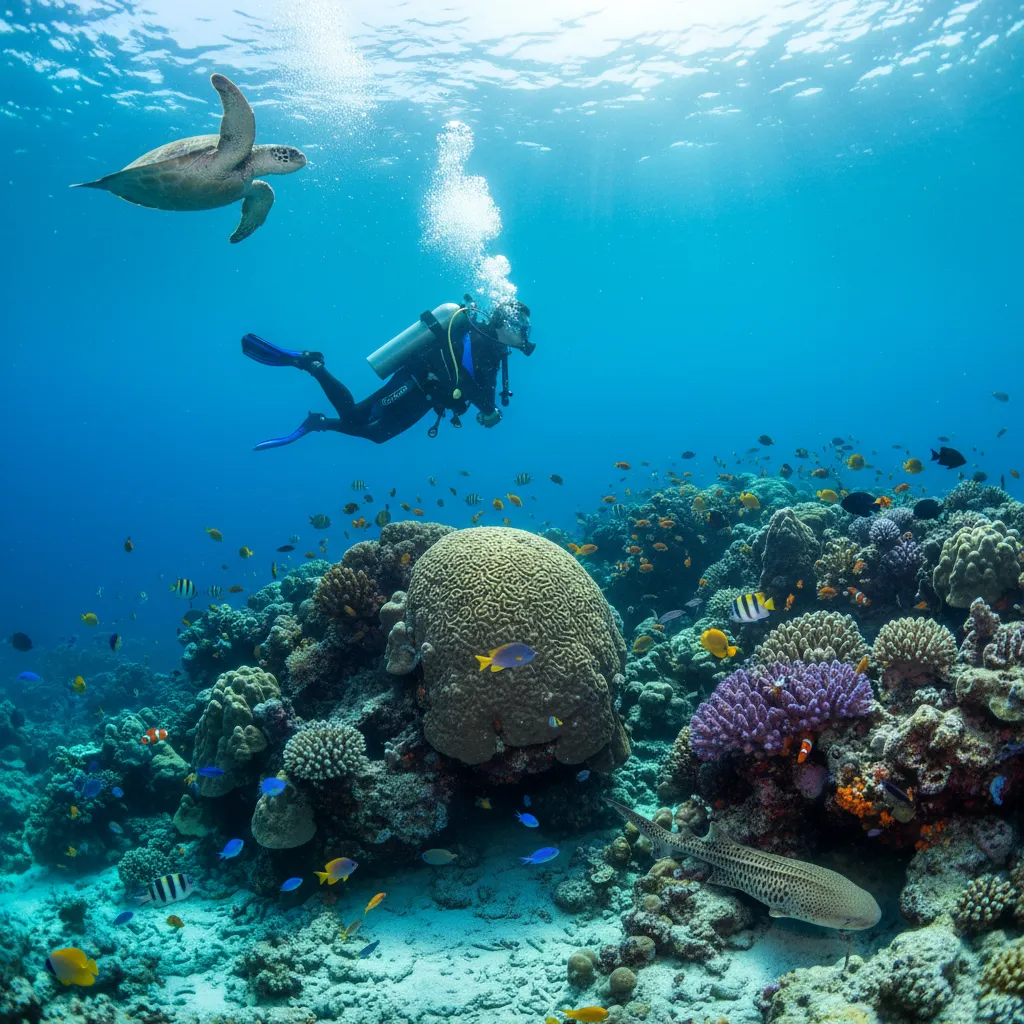
Diving in Andaman Islands
Why dive here
Andaman Islands offers some of India's richest diving, with 176+ marine species recorded in the area - including dugongs, sperm whales, spinner dolphins, nautiluses and pufferfish. Water ranges 28-31°C, warmest April, May, June.
The Andaman Islands, way out in the Bay of Bengal, feel genuinely remote. We love the feeling of being somewhere so far off the beaten path, and the diving really delivers on that promise. Around Havelock and Neil Islands, you'll find healthy reefs, still vibrant and full of fish. We've often seen schools of fusiliers so thick they block the light, a real sensory overload. Keep an eye out for the big pelagics too - manta rays cruise through the deeper sections, and we've had some incredible encounters with dugongs, just placidly grazing. Our favourite spots often involve a bit of current, particularly around the pinnacles, where you’re practically guaranteed to see giant trevally hunting. The drift dives here are exhilarating, pulling you past walls decorated with colourful sponges and soft corals. For something a bit different, the chance of spotting a chambered nautilus is a huge draw, especially on night dives. While the Andaman Sea can kick up a bit, particularly during monsoon season, the visibility during the drier months is generally excellent, often reaching 20-30 metres, giving you plenty of time to take it all in. Beginner and intermediate divers will find plenty to explore here.
Andaman Islands Dive Site Map
Dive sites and dive centres in Andaman Islands
Andaman Islands Dive Sites
58 dive sites in Andaman Islands
Anchor Point
Anchor Point is a straightforward dive, shallow at just 9 metres, making it an ideal spot for new divers to find their fins. You’ll spend your time here exploring sandy patches and small coral bommies. It’s a good place to spot crabs, blennies, and occasionally some smaller reef fish, perfect for a relaxed first dive or a skills refresher.
Anthony’s Reef
Anthony's Reef, off the Andaman coast, is a solid choice for an easy dive. It’s a gentle slope down to about 28 metres, a nice depth for those still building their confidence. We often spot schools of snapper moving in unison here, and the occasional turtle glides by. The conditions are usually calm, so you can take your time to really explore the nooks and crannies. It’s a great spot for a relaxed afternoon dive, especially if you’re newer to diving or just want a chill day underwater.
Aquarium
Aquarium is a shallow, gentle reef site in the Andaman Islands, ideal for newer divers or those getting back into the water. The maximum depth of 12m makes it a relaxed spot for navigating among scattered coral patches. You’ll typically spot parrotfish grazing, small schools of fusiliers, and perhaps a moray eel peering from a crevice. It’s a good choice for a comfortable first dive.
Aquarium - Neil
Aquarium at Neil Island is a really nice spot for new divers to get comfortable. At a maximum depth of 11 metres, it’s shallow and usually pretty calm. We've seen a good variety of reef fish here, parrotfish grazing on the corals and often some clownfish peeking out from anemones. It's a gentle introduction to the Andaman underwater world, perfect for building confidence before tackling deeper, more current-swept sites.
Barren Island
Barren Island brings divers close to India's only active volcano. We've often found schooling barracuda here, along with reef sharks patrolling the deeper sections. The black volcanic sand creates a stark contrast to the healthy hard corals. It's an intermediate dive, best for those comfortable with potential currents and a boat ride to get there.
Broken Ledge
Broken Ledge sits at 24 metres, an easy dive well suited for newer divers. We've seen plenty of reef fish here, parrotfish and snapper usually make an appearance. It’s a good spot to get comfortable with the Andaman underwater world, without strong currents to contend with. Visibility can be decent, often 15 metres or so.
Bus Stop
Bus Stop in the Andamans is a gentle slope that bottoms out around 19 meters. It’s a good spot for new divers to get comfortable, with generally mild currents. You’ll find schools of snappers here, and often a few reef sharks patrolling the edges. We’d suggest it as a second or third dive for those getting their fins wet.
Busy Buro
Busy Buro sits at a comfortable 20 metres, making it a good spot for newer divers finding their fins. The bottom here is mostly sand with scattered patches of hard coral, attracting a decent variety of smaller reef fish. We often spot groups of fusiliers darting around, and there’s a good chance of seeing clownfish tucked into their anemones. It’s a relaxed dive, suitable for shaking off the rust or practicing buoyancy without strong currents to worry about.
Campbell Shoal
Campbell Shoal is a solid intermediate dive, a pinnacle that rises from the deeper surrounding seabed. Dropping to a maximum of 22 metres, it’s a good spot to drift along with the current and watch the action unfold. We’ve seen good-sized dogtooth tuna here, along with schools of fusiliers swirling so thick they almost block out the light. It's a great choice for divers who appreciate a healthy reef structure and don't mind a bit of current to keep things moving.
Channel 62
Channel 62 is a straightforward drift dive, best for divers comfortable with moving water. We’ve found the currents here tend to push you gently along, making for an easy ride over a sloping reef. Keep an eye out for various reef fish darting amongst the coral patches. It’s a good choice for intermediate divers looking for a relaxed exploration rather than a complex navigation challenge.
Dicksons Pinnacle
Dicksons Pinnacle sits out there in the blue, a solitary tower rising from the seabed. We usually drop onto the top at around 18 metres, then spiral down to its base at 28. Keep an eye out for larger pelagics cruising by; we've seen dogtooth tuna darting past the edges here, and sometimes a grey reef shark makes a lazy pass. It’s an intermediate dive, the kind where you drift around the structure, watching the schools of fusiliers swirl, and it's a good spot for those who enjoy a bit of current and open water.
Dixon's
Dixon's in the Andamans offers a relaxed dive, good for stretching out your bottom time. We've often found ourselves drifting along here, spotting things like the distinctive Variable Stromb inching across the sand or the subtle beauty of a Savigny's Brittle Star tucked into a crevice. Look closely, and you'll catch the Linear bell hydroids waving in the gentle current, alongside the common Blue Green Chromis flitting amongst the patches of Paddle Grass and Cymodocea seagrass. It’s a pleasant, easy dive, probably best for those who enjoy taking it slow and observing the smaller, more intricate life.
Show all 58 dive sites in Andaman Islands
- Duncan's Wreck
- Eco Diver
- Fish Slate
- F’n Missed It !!
- Goldies' Garden
- Guoddus Garden
- HMS Statesman
- Hospital
- I-95
- INCHKEITH
- Jackson's Bar
- Jeep Wreck
- Johnny's Gorge
- Johnson's Reef
- Juvies
- KEN LUNG
- K-Rock
- Lighthouse
- Little fins (Mini nursery-neil)
- Margarita’s Mischief
- Minerva Ledge
- MV Mars
- MV Mars (Wreck)
- Neil Lighthouse
- Nursery - Neil
- Orange Oasis
- Oval Reef
- Pilot Reef
- PRIMROSE
- Purple Haze
- Red Pillar / Peel Island Reef
- Romba
- RUSLI
- RUSTEY
- Sea Fan City
- Slope
- Small World
- South Button
- SS Inchkett
- Step Up
- Sync City
- The Junction
- The Wall
- Tribe Gate
- Turtle Beach
- Whitehouse Rock
Andaman Islands Dive Centres
8 dive shops and operators in Andaman Islands
Ocean Wildlife in Andaman Islands
176 species recorded in Andaman Islands
Andaman Islands Daylight & Sunrise/Sunset
Sunrise and sunset times for Andaman Islands, calculated from coordinates
Today - Sunday 11 October
Sunrise
05:38
Sunset
17:33
Daylight
11h 55m
Golden Hour
17:05
First light (dawn) at 05:17 · Last light (dusk) at 17:54
Monthly Averages
| Month | Sunrise | Sunset | Daylight |
|---|---|---|---|
| Jan | 06:13 | 17:43 | 11h 30m |
| Feb | 06:11 | 17:56 | 11h 45m |
| Mar | 05:57 | 17:59 | 12h 3m |
| Apr | 05:37 | 18:00 | 12h 23m |
| May | 05:25 | 18:05 | 12h 40m |
| JunLongest | 05:25 | 18:14 | 12h 49m |
| Jul | 05:32 | 18:17 | 12h 46m |
| Aug | 05:38 | 18:09 | 12h 32m |
| Sep | 05:38 | 17:50 | 12h 12m |
| OctNow | 05:38 | 17:31 | 11h 53m |
| Nov | 05:46 | 17:21 | 11h 35m |
| DecShortest | 06:01 | 17:27 | 11h 26m |
Times are approximate local times based on longitude. Actual times may vary slightly depending on the exact timezone observed in Andaman Islands.
Where to Stay near Andaman Islands
Prices from Booking.com. We may earn a commission at no extra cost to you.
Marine Protected Areas near Andaman Islands
10 protected areas near Andaman Islands - please respect local regulations when diving
Sundarban Reserve Forest
Chilika Lake
Mannar Valaiguda in Tamil
Parc national des Sundarbans
Thane Creek
Thillai Vanam
Gulf of Mannar
Sunderban
Ashtamudi Wetland
Point Calimere Wildlife and Bird Sanctuary
Getting to Andaman Islands
Port Blair
IAF Camp
Plan & book
Ways to dive Andaman Islands, from day trips to liveaboards.
Day trips & courses
via GetYourGuideGuided dives, courses and snorkel trips with instant booking.
Find dive trips in Andaman IslandsPlaces to stay
via Booking.comHotels and dive resorts near Andaman Islands.
Search stays in Andaman IslandsDive insurance
Most travel insurance excludes or limits scuba. Check what you need before you go.
Dive insurance explainedPartner links: we may earn a commission if you book, at no extra cost to you. How we make money