Diving in Watamu & Malindi
Why dive here
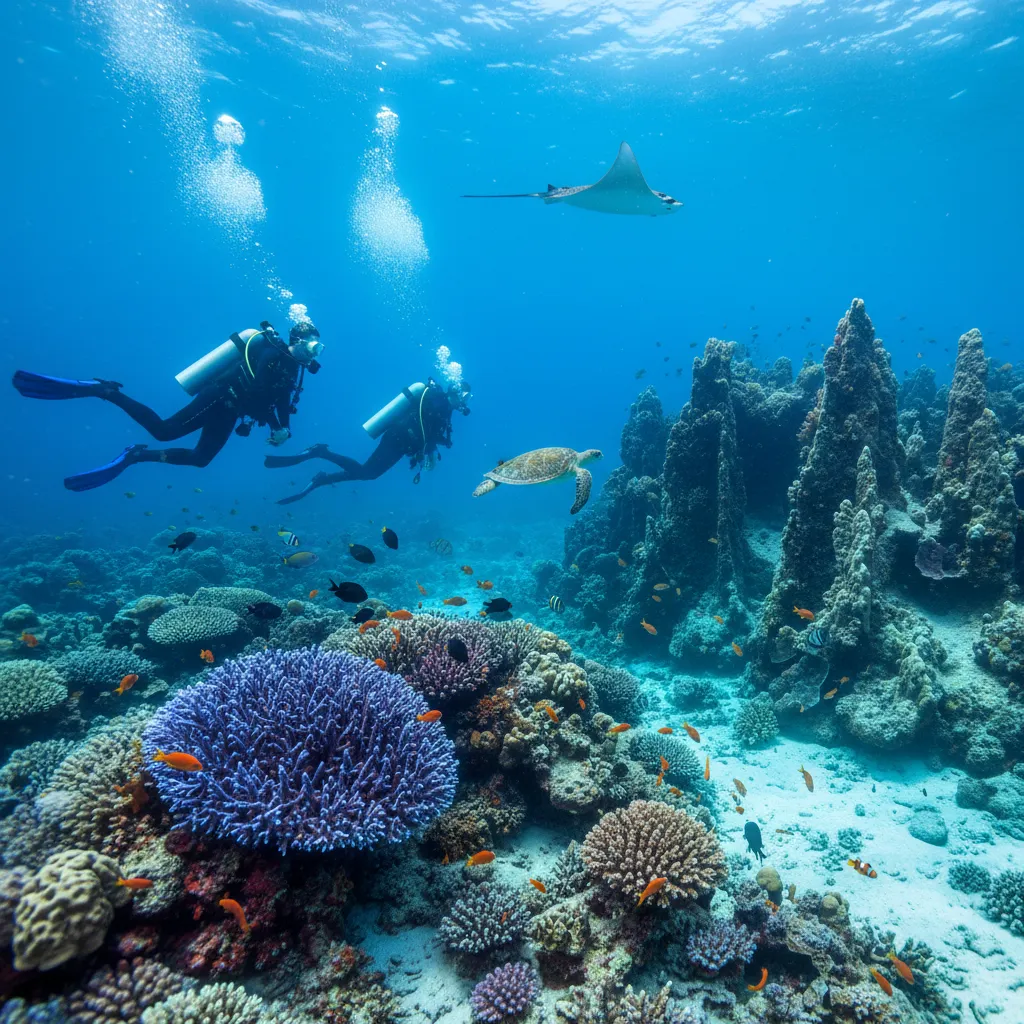
Watamu & Malindi offers some of Kenya's richest diving, with 225+ marine species recorded in the area - including barracuda, blue-spotted stingrays, great white sharks, humpback whales and octopuses. Water ranges 26-30°C, warmest March, April, December.
Watamu and Malindi deliver quintessential Indian Ocean diving, but with a uniquely Kenyan flavour. We’re talking shallow, colourful reef dives within the protected marine park - no crazy depths needed to see the good stuff. Think dense coral gardens, big schools of fusiliers, and the occasional frogfish tucked amongst the bommies if you’ve got a good guide and a sharp eye. Our favourite time to dive here is between November and March, when the water is warm and calm, and those whale sharks cruise through. You won’t always spot them, but the possibility adds a real buzz. Beyond the gentle reef exploration, there’s a small wreck, the MV Dania, which is a fun, easy dive for beginners and a decent photography subject. We’d suggest focusing your time on the outer reefs for the best chance at pelagics, especially around dawn. The currents can pick up a bit there, so it’s worth checking conditions if you’re not a fan of drift dives. Overall, it’s a solid pick for relaxed, colourful diving without the crowds you might find elsewhere.
Watamu & Malindi Dive Site Map
Dive sites and dive centres in Watamu & Malindi
Watamu & Malindi Dive Sites
9 dive sites in Watamu & Malindi
Brain Coral Garden
Brain Coral Garden lives up to its name, but it’s more than just big lumps of coral. Dropping to 15 metres, the sheer scale of the brain coral here is what makes it special. We’re talking domes so large you could almost shelter behind them, creating these lovely, winding alleys to explore. It’s an easy dive, perfect for newer divers or anyone wanting a relaxed second dive. We love how much macro life hides among the coral’s folds. Keep an eye out for octopus tucked into crevices – they’re fairly common here, often peeking out from under a ledge. We’ve also spotted a fair few moray eels, their heads swaying gently. Schools of orbicular batfish often cruise slowly overhead, their fins trailing, and sometimes a curious knife razorfish darts past. Our favourite time to visit is mid-morning, just as the sun really starts to dapple through the water, making those coral patterns pop. It’s a gentle, beautiful dive, great for photography and just soaking in the details.
HAMAR
The Hamar is a shallow wreck with a somber history. This sailing vessel went down in 1991, tragically capsizing with Somali refugees aboard. Now, sitting upright at 11 meters, it’s been well and truly claimed by the sea. We’ve found plenty of small stuff here, a decent nursery for juvenile snappers and parrotfish darting through the skeleton of its hull. The main deck is largely gone, but the ribs of the ship provide a labyrinth for morays and lobsters. It’s a good spot for newer wreck divers looking for an easy, contemplative dive, and photographers will appreciate the soft light filtering through the clear Watamu waters.
LEE CHRISTINE
The *Lee Christine* is a shallow wreck that we just adore. At only five metres, it’s a perfect chill-out dive, especially if you’ve had a few deeper ones and want to extend your bottom time. The old trawler went down in 1970 and has become a genuine haven for critters. We’re talking big schools of snapper and fusiliers that swirl around the remains of the wooden superstructure, sometimes so thick you can barely see the concrete hull beneath. Our favourite part is poking around the bow, where the light plays beautifully through the gaps, illuminating all sorts of nudibranchs and flatworms clinging to the metal. It’s also home to a couple of grumpy moray eels we often spot peeking from under plates, and the resident lionfish are always a striking sight against the rusted metal. It’s an easy, calm dive, ideal for photographers or anyone who just wants to soak in the atmosphere of a wreck that’s truly become part of the reef. We always hit it mid-morning when the sun is high for the best visibility and light penetration.
NAIROBI
Nairobi. At just a metre deep, this isn't about pushing your depth limits. It’s about history you can practically touch. The old steam trawler, a Castle-class minesweeper from WW1, went down in 1923, and what’s left of her is now a tangled, sun-drenched playground just beneath the surface. We love finning slowly over the skeletal remains of the hull, spotting the way the light plays through the gaps where the deck once was. It’s shallow enough for snorkelers, but divers get a real appreciation for the sheer size and the way the coral has started to claim the metal. You’ll see small reef fish darting in and out of every nook – damselfish, juvenile snappers, and the occasional moray eel peeking from a dark corner. It’s perfect for long, relaxed dives, especially if you’re into underwater photography. The ambient light is incredible. Go at high tide for the best visibility; the shallower water means stirred-up sediment can cloud things quickly after a rough patch.
SHAKWE
The Shakwe wreck, a former Kenyan government trawler, settled onto the seabed in 1986 after springing a leak. Lying at a comfortable 12 meters, it's a relaxed dive, perfect for newer wreck enthusiasts or those looking for an easy second tank. We often find schooling snapper and fusiliers congregating around the superstructure, while moray eels peek from shadowy corners. The wreck itself, about 22 meters long, has broken down nicely over the years, offering swim-throughs and plenty of crevices for smaller critters to hide in. It’s a gentle introduction to wreck diving, with enough to explore without ever feeling overwhelming.
South Canyon Watamu
South Canyon Watamu offers a real sense of exploration, even though it’s only 10 minutes from the jetty. We’ve always found the name a bit confusing because it's not a canyon in the typical sense; think more of a deep cut in the reef that shelters a surprisingly busy ecosystem. Our favourite thing about this spot is the consistent presence of juvenile fish. You’ll see schools of them flitting through the coral, almost like a nursery. It feels intimate, like you’re peering into a secret garden. Maximum depth here is a comfortable 20 metres, making it approachable for most divers. Visibility averages around 12 metres, which is decent enough for spotting the white tip reef sharks that sometimes cruise the edges. We’d suggest going early in the morning, before any potential boat traffic, to really soak up the quiet energy of the place. Look out for the orbicular batfish that often hang around, and if you have a keen eye, you might even spot an Eyebrow Goby peeking from a crevice. It’s a site that rewards slow, deliberate diving.
South Dolphin
South Dolphin is one of our favourites in Watamu, especially if you’re looking for a relaxed dive with plenty to see without going too deep. The plateau itself starts around 12 metres, then gently slopes off to about 20. We usually descend on the buoy line, then drift along the edge, letting the gentle current guide us. What really sells South Dolphin for us is the coral coverage. It’s beautifully overgrown, a real mix of hard and soft corals that seem to just melt into each other. You get these lovely purple soft corals swaying with the surge, interspersed with brain corals and plate corals. It creates so many little nooks and crannies, perfect for spotting the smaller stuff. We’ve had some great encounters with scorpionfish here, perfectly camouflaged, and moray eels peeking out from every crevice. Schools of fusiliers often hang above the plateau, shimmering as they move. Keep an eye out for grey sweetlips too, sometimes huddled in small groups. Visibility averages around 14 metres, which is usually more than enough to appreciate the details. This site is ideal for those who prefer a less strenuous dive but still want a vibrant, healthy reef experience.
The Canyon
The Canyon. You hear the name and expect something dramatic, and Watamu’s version doesn’t disappoint. We usually hit this one in the late morning, when the sun angles just right, sending shafts of light down into the main gully. It’s an intermediate dive, dropping from a reef top at 15m down to a sandy floor at 30m. What we love here is the sheer scale of the place. You drift along, often with a gentle push from the current, watching massive schools of orbicular batfish just hang in the blue. Keep an eye out for giant trevally, too. They patrol the edges, sleek and fast. Our favourite moment is always drifting over the sandy patches at the bottom, looking for knife razorfish burying themselves or catching a glimpse of a black teatfish. It's a deep blue dive, perfect for those who enjoy feeling small in a big underwater landscape, rather than picking through macro life.
Watamu Marine Park
Watamu Marine Park is our easy choice for a warm-up dive in Kenya, especially if you’re new to the Indian Ocean or haven't dived in a while. The maximum depth is 18 metres, usually shallower, which means longer bottom times and lots of light hitting the coral. We've spent many an afternoon here drifting over the reef, just watching the busy activity. It’s a site that always delivers on the smaller stuff: look for knife razorfish dancing above the sand, and we’ve often spotted green turtles cruising past, completely unbothered by divers. The big draw here, though, are the resident grey sweetlips. They often hang out in schools, looking almost silver in the clear water. You can get surprisingly close to them, watching their fins ripple. We recommend an early morning dive if you can swing it – the light is softer, and the reef feels a bit more awake. Currents are generally mild, making it a truly relaxing dive.
Watamu & Malindi Dive Centres
4 dive shops and operators in Watamu & Malindi
Ocean Wildlife in Watamu & Malindi
225 species recorded in Watamu & Malindi
Watamu & Malindi Daylight & Sunrise/Sunset
Sunrise and sunset times for Watamu & Malindi, calculated from coordinates
Today - Sunday 11 October
Sunrise
06:02
Sunset
18:12
Daylight
12h 10m
Golden Hour
17:44
First light (dawn) at 05:41 · Last light (dusk) at 18:33
Monthly Averages
| Month | Sunrise | Sunset | Daylight |
|---|---|---|---|
| Jan | 06:21 | 18:38 | 12h 17m |
| Feb | 06:28 | 18:41 | 12h 13m |
| Mar | 06:26 | 18:33 | 12h 8m |
| Apr | 06:19 | 18:21 | 12h 2m |
| May | 06:18 | 18:16 | 11h 58m |
| JunShortest | 06:23 | 18:19 | 11h 56m |
| Jul | 06:28 | 18:24 | 11h 57m |
| Aug | 06:25 | 18:25 | 12h 0m |
| Sep | 06:13 | 18:18 | 12h 5m |
| OctNow | 06:01 | 18:11 | 12h 11m |
| Nov | 05:57 | 18:13 | 12h 16m |
| DecLongest | 06:06 | 18:25 | 12h 18m |
Times are approximate local times based on longitude. Actual times may vary slightly depending on the exact timezone observed in Watamu & Malindi.
Where to Stay near Watamu & Malindi
Prices from Booking.com. We may earn a commission at no extra cost to you.
Marine Protected Areas near Watamu & Malindi
14 protected areas near Watamu & Malindi - please respect local regulations when diving
Tana River Delta Ramsar Site
Mombasa
Kiunga
Malindi
Diani Chale Marine
Kisite
Mombasa
Mpunguti
Watamu
Malindi
Wasini
Mkokoni
Showing 12 largest of 14
Getting to Watamu & Malindi
Malindi
Mombasa
Arusha
Plan & book
Ways to dive Watamu & Malindi, from day trips to liveaboards.
Day trips & courses
via GetYourGuideGuided dives, courses and snorkel trips with instant booking.
Find dive trips in Watamu & MalindiPlaces to stay
via Booking.comHotels and dive resorts near Watamu & Malindi.
Search stays in Watamu & MalindiDive insurance
Most travel insurance excludes or limits scuba. Check what you need before you go.
Dive insurance explainedPartner links: we may earn a commission if you book, at no extra cost to you. How we make money