Halaveli Wreck
Protected Area
Karibeyru Thila
Why dive here
With 98+ marine species recorded in the area - including blue sharks, sea turtles, spinner dolphins and whale sharks - Halaveli Wreck offers some of Rasdhoo Atoll's richest wreck diving. Water ranges 29-31°C, warmest April, May, July.
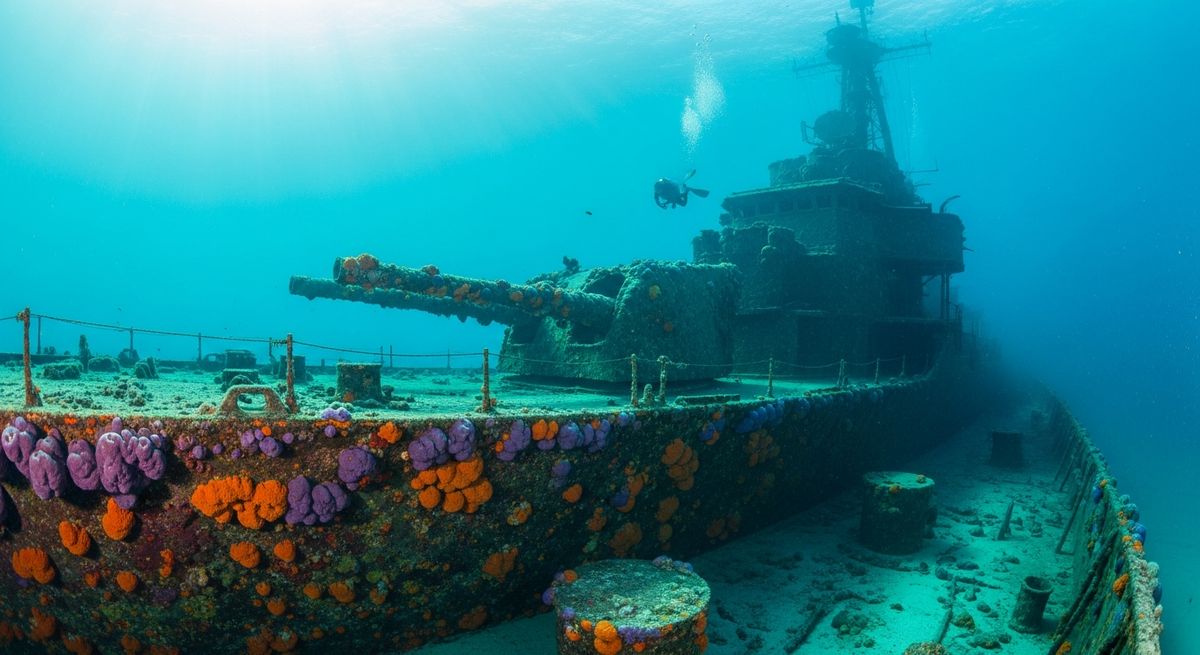
The Halaveli Wreck in Rasdhoo Atoll always delivers a solid dive. This 33-metre freighter, sunk in 1990, now rests upright at 28 metres, about 50 metres off the main reef. We usually drop down the line, descending to the main deck around 20 metres. The wreck is nicely covered in soft corals and home to plenty of glassfish, often swirling so thick they almost obscure the superstructure. Look closely and you’ll find scorpionfish camouflaged on the deck plates, and we’ve often spotted white-tip reef sharks patrolling the sand around the bow. It’s an easy wreck to navigate, great for photographers, and generally suitable for divers with a bit of experience under their belts.
Typical Halaveli Wreck Dive Profile
Illustrative profile based on site depth and type. Actual dive profiles vary - always follow your dive computer and training.
Safety Notes
Wreck site - avoid penetration without wreck diving certification. Watch for sharp metal and entanglement hazards.
Always perform a 3-minute safety stop at 5m before surfacing.
Nearest Dive Centres to Halaveli Wreck
Dive shops near Halaveli Wreck
TGI Maldives Halaveli Diving
Ellaidhoo Chaaya Reef
Nakai Maayafushi Diving Center
Noovilu Sports
Joy Dive Safari Island
Diving Centers Werner Lau Bathala
Reviews for Halaveli Wreck
Conditions
Ocean conditions, forecast and tides for Halaveli Wreck
Halaveli Wreck Ocean Conditions
Monthly averages for Halaveli Wreck, sourced from Open-Meteo marine data + Copernicus Marine (EU) - nearest station: Open-Meteo marine grid (4.03, 72.87) (3km away)
October Averages
Sea Temperature
30°C
85°F · Range: 28.1–31.1°C
Current Speed
14.32 cm/s
Direction: E (102.1°)
Chlorophyll-a
0.094 mg/m³
Very clear (oligotrophic)
Salinity
35.24 PSU
Based on 4 years of monitoring data · Data sources: Open-Meteo marine data + Copernicus Marine (EU)
Plan & book
Ways to dive Rasdhoo Atoll, from day trips to liveaboards.
Day trips & courses
via GetYourGuideGuided dives, courses and snorkel trips with instant booking.
Find dive trips in Rasdhoo AtollPlaces to stay
via Booking.comHotels and dive resorts near Rasdhoo Atoll.
Search stays in Rasdhoo AtollDive insurance
Most travel insurance excludes or limits scuba. Check what you need before you go.
Dive insurance explainedPartner links: we may earn a commission if you book, at no extra cost to you. How we make money
Where to Stay near Halaveli Wreck
Prices from Booking.com. We may earn a commission at no extra cost to you.