Matswa
Why dive here
With 273+ marine species recorded in the area - including barracuda, blue sharks, bull sharks, great white sharks and grey reef sharks - Matswa offers some of Tofo & Inhambane's richest reef diving. Water ranges 24-28°C, warmest January, February, March.
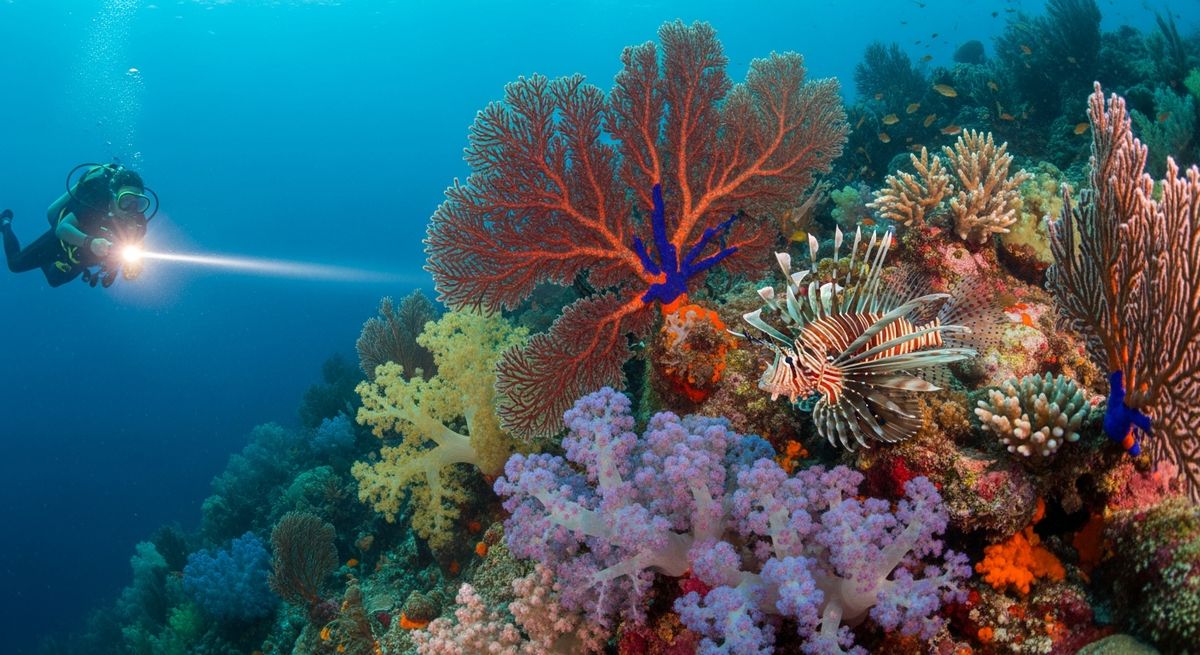
Matswa sits a little further north than some of Tofo’s more frequently visited sites, and we think that’s a big part of its charm. Dropping onto the reef, usually around 20-25m, you’re greeted by sprawling coral formations that genuinely seem to go on forever. It’s an intricate landscape of bommies, overhangs, and swim-throughs, all just begging to be explored. We’ve spent whole dives here just poking into crevices and watching the cleaning stations, which are perpetually busy with a mix of Natal Sergeants and various butterflyfish like the Big Long-nosed and Sunburst. The current can pick up out here, so it’s definitely one for experienced divers who are comfortable with a drift. But that current often brings the bigger stuff. We’ve had incredible encounters with loggerhead turtles gliding past, and the reef sharks – blacktips and whitetips – are frequent visitors. Keep an eye out for leopard sharks resting on the sandy patches, and if you’re lucky, a tiger shark might cruise by in the blue. The sheer density of reef here means there’s always something new to spot, whether it's a tiny Banded Toby peeking out or a school of Coastal Trevally flashing in the distance. Matswa offers a deeper, more adventurous dive, perfect for those hoping for pelagics while appreciating the endless reef topography.
Nearest Dive Centres to Matswa
Dive shops near Matswa
View all dive centres in Tofo & InhambaneReviews for Matswa
Conditions
Ocean conditions, forecast and tides for Matswa
Matswa Ocean Conditions
Monthly averages for Matswa, sourced from Open-Meteo marine data - nearest station: Open-Meteo marine grid (-23.17, 35.59) (6km away)
October Averages
Sea Temperature
25°C
77°F · Range: 22.7–26.3°C
Air Temperature
24°C
75°F
Wind Speed
6.24 m/s
12.1 knots
Atmospheric Pressure
1017 hPa
Based on 4 years of monitoring data · Data sources: Open-Meteo marine data
Plan & book
Ways to dive Tofo & Inhambane, from day trips to liveaboards.
Day trips & courses
via GetYourGuideGuided dives, courses and snorkel trips with instant booking.
Find dive trips in Tofo & InhambanePlaces to stay
via Booking.comHotels and dive resorts near Tofo & Inhambane.
Search stays in Tofo & InhambaneDive insurance
Most travel insurance excludes or limits scuba. Check what you need before you go.
Dive insurance explainedPartner links: we may earn a commission if you book, at no extra cost to you. How we make money
Where to Stay near Matswa
Prices from Booking.com. We may earn a commission at no extra cost to you.