Diving in Tofo & Inhambane
Why dive here
Tofo & Inhambane offers some of Mozambique's richest diving, with 273+ marine species recorded in the area - including barracuda, blue sharks, bull sharks, great white sharks and grey reef sharks. Water ranges 24-28°C, warmest January, February, March.
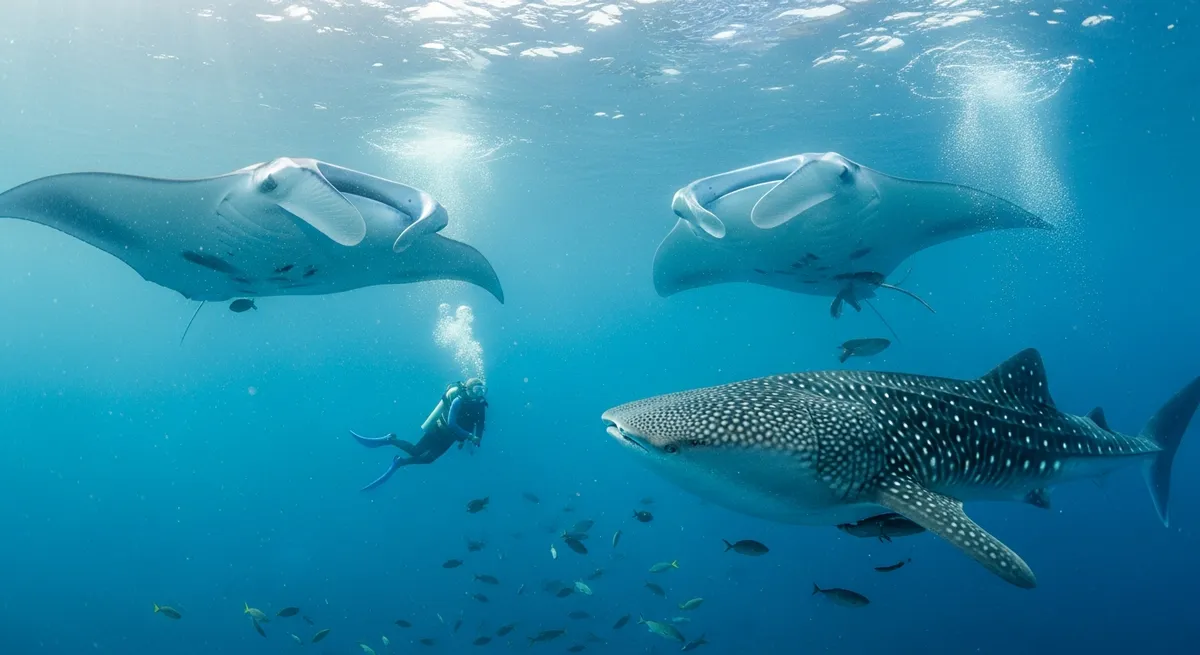
Tofo, and its quieter neighbour Inhambane, offers a different kind of dive experience. It’s not about finding a new species on every dive; it’s about the big stuff, and the powerful feeling of being in a truly wild ocean. We've spent weeks here, chasing the dream of close encounters. The visibility can be temperamental, swinging from 5 to 25 metres depending on the plankton blooms, but those blooms are exactly what draws in the headline acts. We love the raw energy of the open ocean sites. Drift dives are common, propelled along by a current that feeds the entire ecosystem. We’ve had incredible luck with whale sharks and manta rays here, especially during the warmer months from November to April when the water hits a comfortable 27°C. The humpback whale season, June to October, is another standout, with their songs sometimes audible underwater. Sure, you’ll spot Checkerboard wrasse zipping around, and some healthy Staghorn coral, but our favourite dives are those where you just hang, eyes wide, waiting for a shadow to emerge from the blue. It’s an intermediate diver’s playground, best suited for those comfortable with strong currents and open-water ascents.
Tofo & Inhambane Dive Site Map
Dive sites and dive centres in Tofo & Inhambane
Tofo & Inhambane Dive Sites
12 dive sites in Tofo & Inhambane
Barra Reef
Barra Reef, just a short boat ride from Tofo, feels like swimming through an enormous, warm fish tank. At a maximum depth of 12 metres, it’s a brilliant choice for newer divers or those who just want to soak up the sun and spend some serious bottom time. We love the sheer density of reef fish here. Clouds of Blue and Gold Fusiliers often obscure the reef entirely, parting just enough for a Half-circled Angelfish or a curious Limespot Butterflyfish to peek through. While Barra is famous for its manta ray and whale shark encounters – and yes, we've had some cracking ones here – what often gets overlooked are the resident guitar sharks and leopard sharks lounging on the sand patches. Our favourite time to dive Barra is early morning, before the thermoclines kick in and the visibility is at its best, usually around 15-20 metres. Be mindful of the surge though; it can be quite active, making it a bit of a workout for photographers trying to get that perfect shot of a cruising Narrow-barred Spanish Mackerel. It’s a genuinely joyful dive, full of light and life.
Benchmark
Benchmark sits just offshore from Peri-Peri Dive Camp, a solid 30-minute boat ride that often delivers a bonus dolphin or hammerhead sighting on the way out. Down at a max depth of 27 metres, it’s a healthy coral reef. We’ve found plenty of activity here, particularly with potato groupers that seem to enjoy a close inspection. Keep an eye out under the ledges for rays and giant trevally, and in the blue, we’ve spotted basketfish and red rovers. Visibility averages around 14 metres. It’s a solid dive, a good pick for those who appreciate a relaxed drift with plenty of fish life.
Benchmark
Benchmark sits just offshore from Peri-Peri Dive Camp, a solid 30-minute boat ride that often delivers a bonus dolphin or hammerhead sighting on the way out. Down at a max depth of 27 metres, it’s a healthy coral reef. We’ve found plenty of activity here, particularly with potato groupers that seem to enjoy a close inspection. Keep an eye out under the ledges for rays and giant trevally, and in the blue, we’ve spotted basketfish and red rovers. Visibility averages around 14 metres. It’s a solid dive, a good pick for those who appreciate a relaxed drift with plenty of fish life.
Caves
Caves is a solid shallow dive, topping out around 15 metres, and a nice change of pace from Tofo's usual deep reef action. What really grabs you here is the topography. It’s a maze of swim-throughs and small caverns, and we’d definitely suggest bringing a torch to cut through the shadows and really appreciate the rock formations. We’ve bumped into loggerhead turtles cruising through, and if you’re lucky, sometimes a great white shark will make a fleeting appearance in the bigger openings. This spot shines on calm days, making for an easy entry and relaxed exploration.
Grand Canyon
Grand Canyon is a solid choice when the wind is up and we’re looking for something a bit more sheltered around Tofo. It's a series of sandy gullies and rock formations, forming natural channels that offer a nice drift. You’ll often find white-tip reef sharks resting in the sand, and the deeper sections usually have honeycomb moray eels poking out from crevices. It’s a good intermediate dive, generally calm and a comfortable 24m, making it a reliable option for a relaxed second dive.
Matswa
Matswa sits a little further north than some of Tofo’s more frequently visited sites, and we think that’s a big part of its charm. Dropping onto the reef, usually around 20-25m, you’re greeted by sprawling coral formations that genuinely seem to go on forever. It’s an intricate landscape of bommies, overhangs, and swim-throughs, all just begging to be explored. We’ve spent whole dives here just poking into crevices and watching the cleaning stations, which are perpetually busy with a mix of Natal Sergeants and various butterflyfish like the Big Long-nosed and Sunburst. The current can pick up out here, so it’s definitely one for experienced divers who are comfortable with a drift. But that current often brings the bigger stuff. We’ve had incredible encounters with loggerhead turtles gliding past, and the reef sharks – blacktips and whitetips – are frequent visitors. Keep an eye out for leopard sharks resting on the sandy patches, and if you’re lucky, a tiger shark might cruise by in the blue. The sheer density of reef here means there’s always something new to spot, whether it's a tiny Banded Toby peeking out or a school of Coastal Trevally flashing in the distance. Matswa offers a deeper, more adventurous dive, perfect for those hoping for pelagics while appreciating the endless reef topography.
Ponta Backdoor (Surf)
Ponta Backdoor, right where the surf breaks, isn’t your typical easy-peasy Tofo dive. This spot lives up to its name, best dived when the swell is low. We’re talking about a more exposed site, so you need to pick your day carefully, but when it’s good, it’s really good. The thrill here is in the potential for big pelagics, especially those bull sharks that cruise through. We’ve had incredible encounters, just hanging out watching them glide by. Visibility can be a bit variable, certainly not the consistent 20m you get on the deeper reefs, but that wild card element is part of the appeal. Keep an eye out for the cleaner mimic blennies darting around, and if you’re lucky, you might even spot a stargazer buried in the sand. This site suits divers comfortable with a bit of surge and keen for something a little different, a bit more adventurous than the usual Tofo reef. It's less about the corals and more about the raw marine encounters.
Ponta Tofinho (Surf)
Ponta Tofinho (Surf) isn’t the deepest dive in Tofo, but it’s absolutely one of our favourite spots for a truly wild experience. This site gets its name from the surface waves, and that energy translates underwater into a lively, often exhilarating drift. We've seen oceanic mantas cruise by here, totally unfazed by the surge, and the schools of fusiliers are so thick they sometimes block out the sun for a moment. The trick here is timing: aim for a dropping tide, and you'll ride a gentle conveyor belt past rocky outcrops and sand patches. Keep an eye out for the smaller stuff in the calmer pockets – we’ve found everything from alligator pipefish tucked into the sand to stargazers peeking out. The visibility can vary quite a bit with the swell, but when it’s good, the light plays beautifully through the water. It's a site that rewards a confident diver who enjoys a bit of movement, offering that raw, untamed Indian Ocean feel.
Rainbow Reef
Rainbow Reef is a solid pick for a second dive, especially after hitting one of Tofo's deeper spots. The reef crest sits around 10 meters, then slopes off to a max depth of 20 meters, making it comfortable for just about any diver. We often spot loggerhead turtles cruising by, and if you’re lucky, a Great White or a Leatherback might make a fleeting appearance in the blue. Keep an eye out for nudibranchs, particularly the vibrant orange and white Spanish Dancer – a real treat. Visibility hovers around 10 meters, sometimes better, and the coral colours here really pop, giving the reef its name.
SILVER HARVESTER
The Silver Harvester wreck sits in just 9 metres of water, a fishing vessel that capsized back in '68 after hitting a sandbar. It’s a shallow, straightforward dive, perfect for warming up or for divers who prefer less depth. We like to cruise over the old hull, now well-colonised with whip corals and sea fans, where we often spot scorpionfish hunkering down or a curious moray eel peeking from the shadows. The structure is pretty broken up, but you can still make out the general shape, offering little nooks for juvenile reef fish to shelter. It’s a comfortable, easygoing dive, not for pelagic hunters but great for macro enthusiasts and photographers.
Tokyo Drift
Tokyo Drift. The name itself suggests motion, and that's exactly what you get here in Tofo. We love dropping in and letting the current do the work, carrying us over a patchwork of coral and rock formations. You'll want to keep your eyes peeled for the smaller stuff flitting about – Natal sergeants always seem to be dancing, and those sunburst butterflyfish really do catch the light. It’s a site for those who enjoy a good drift, a chance to really cover some ground and see what pops up next. Our favourite spots are the cleaning stations; if you’re patient and don't fidget too much, you might just catch a glimpse of a leopard shark or even a manta ray gliding in for a scrub. Visibility averages around 14 metres, which is usually enough to spot a loggerhead turtle cruising past, looking completely unbothered by the drift. This site suits divers who are comfortable with currents and appreciate a relaxed, observational dive.
Two Mile Reef
Two Mile Reef is a solid dive, a good way to spend a morning when conditions are right. You’ll typically find a gentle drift here, making it a nice easy cruise over the reef. We’ve seen a decent variety of the usual suspects, like Scorpionfish tucked into the coral, along with Redtail Scad schooling above. Keep an eye out for larger visitors too, we’ve spotted Bull Sharks cruising by and even Leatherback and Loggerhead turtles on occasion. It’s a comfortable dive, good for divers who want to explore without a lot of fuss.
Tofo & Inhambane Dive Centres
8 dive shops and operators in Tofo & Inhambane
Ocean Wildlife in Tofo & Inhambane
273 species recorded in Tofo & Inhambane
Tofo & Inhambane Daylight & Sunrise/Sunset
Sunrise and sunset times for Tofo & Inhambane, calculated from coordinates
Today - Sunday 11 October
Sunrise
05:10
Sunset
17:41
Daylight
12h 31m
Golden Hour
17:11
First light (dawn) at 04:47 · Last light (dusk) at 18:03
Monthly Averages
| Month | Sunrise | Sunset | Daylight |
|---|---|---|---|
| Jan | 05:06 | 18:30 | 13h 24m |
| Feb | 05:27 | 18:19 | 12h 52m |
| Mar | 05:40 | 17:55 | 12h 15m |
| Apr | 05:51 | 17:25 | 11h 34m |
| May | 06:05 | 17:05 | 11h 1m |
| JunShortest | 06:17 | 17:01 | 10h 43m |
| Jul | 06:19 | 17:09 | 10h 50m |
| Aug | 06:04 | 17:22 | 11h 18m |
| Sep | 05:36 | 17:32 | 11h 57m |
| OctNow | 05:06 | 17:42 | 12h 36m |
| Nov | 04:47 | 18:00 | 13h 13m |
| DecLongest | 04:47 | 18:20 | 13h 33m |
Times are approximate local times based on longitude. Actual times may vary slightly depending on the exact timezone observed in Tofo & Inhambane.
Where to Stay near Tofo & Inhambane
Prices from Booking.com. We may earn a commission at no extra cost to you.
Marine Protected Areas near Tofo & Inhambane
2 protected areas near Tofo & Inhambane - please respect local regulations when diving
Bazaruto
Cabo de São Sebastião
Getting to Tofo & Inhambane
Inhambane
Beira
Maputo
Plan & book
Ways to dive Tofo & Inhambane, from day trips to liveaboards.
Day trips & courses
via GetYourGuideGuided dives, courses and snorkel trips with instant booking.
Find dive trips in Tofo & InhambanePlaces to stay
via Booking.comHotels and dive resorts near Tofo & Inhambane.
Search stays in Tofo & InhambaneDive insurance
Most travel insurance excludes or limits scuba. Check what you need before you go.
Dive insurance explainedPartner links: we may earn a commission if you book, at no extra cost to you. How we make money