Diving in São Tomé
Why dive here
São Tomé offers some of São Tomé & Príncipe's richest diving, with 61+ marine species recorded in the area - including barracuda, humpback whales, frogfish and pufferfish.
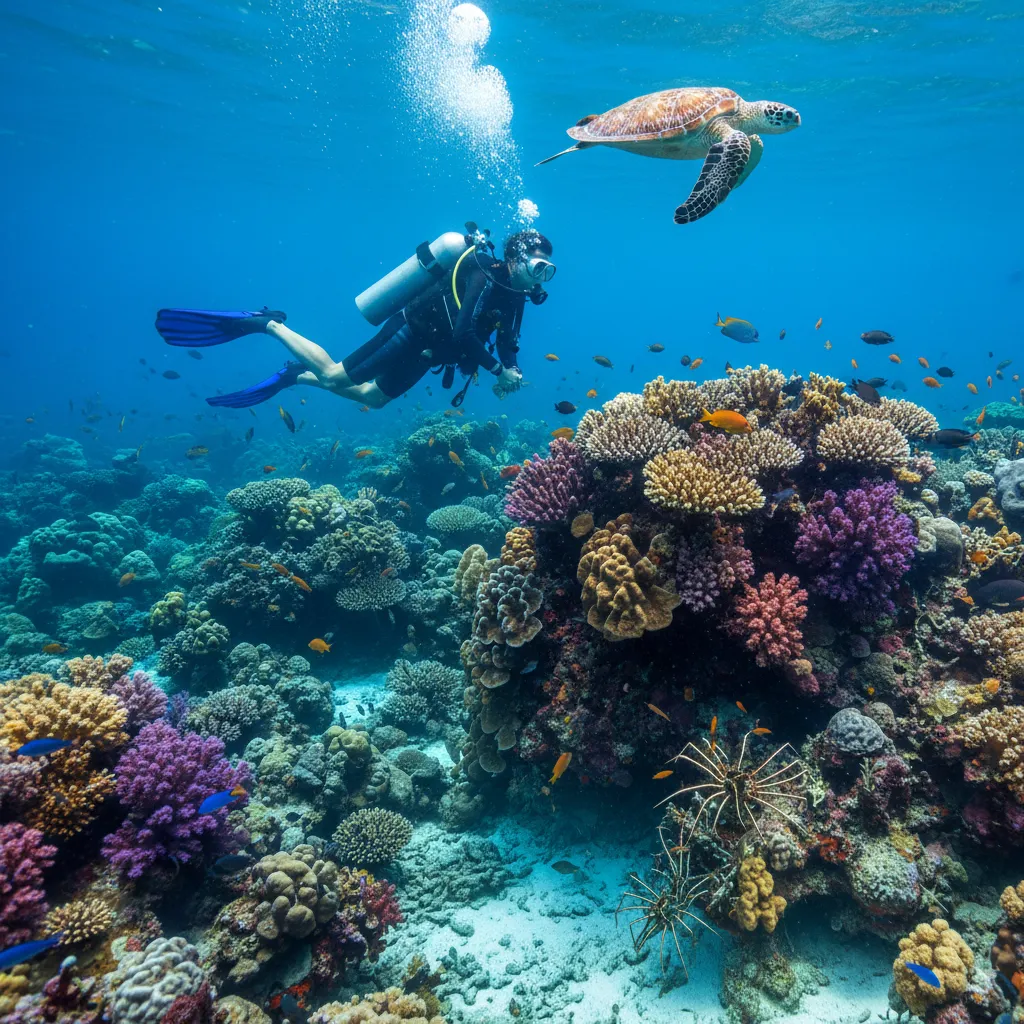
São Tomé feels like diving on the edge of the world, and that’s precisely what we love about it. The volcanic reef walls drop dramatically into the deep, often revealing schools of African forktail snapper and horse-eye jacks swirling off the current-swept corners. We’ve found the best encounters here come from simply hanging back and watching the ocean’s rhythm - you’ll see plenty of Molly Miller blennies darting in and out of the cracks, and keep an eye out for curious cleaver wrasse. Our favourite dives often involve the old colonial shipwrecks, where barracuda and silent silky sharks occasionally cruise past. If you’re here between July and October, definitely keep an eye out for whale sharks; they are reliably present, drifting along the coastline.
São Tomé Dive Site Map
Dive sites and dive centres in São Tomé
São Tomé Dive Sites
6 dive sites in São Tomé
Ilhéu das Cabras
Ilhéu das Cabras is a gentle introduction to São Tomé’s underwater world. We’ve found it’s usually calm here, tucked away from the main swell, which makes it an easy dive down to 16 metres. The sandy bottom gives way to rocky patches closer to the islet, a good place to spot morays poking from crevices or a shy opossum pipefish clinging to the weeds. It’s certainly a spot for newer divers, or those looking for a relaxed afternoon with a decent chance of seeing a few green turtles grazing. We’ve even seen a barracuda school here, shimmering just off the rocks.
Lagoa Azul
Lagoa Azul is a good pick for an easy shore dive on São Tomé, especially if you're looking to stretch out your bottom time. The entry is simple, straight off the beach, and the maximum depth of 16m means you can really take your time exploring. We've often seen trumpetfish here, sometimes even a turtle or two cruising through. It’s a site that suits new divers getting comfortable, or anyone keen on a relaxed night dive. The rocks and sandy patches hold a surprising amount of smaller stuff if you look closely: cardinalfish huddle in crevices, and we’ve spotted various wrasse and even needlefish patrolling the open sand. Keep an eye out for larger schools of sardines too, depending on the season, which can make for some exciting flashes of silver.
MICAU
Micau is one of those easy-going wreck dives we always appreciate, especially when you’re looking for a relaxed second dive. The wreck itself is a small tugboat, sitting upright in just seven metres of water. We’ve found the hull is fairly intact, providing some nice swim-throughs and plenty of nooks for small fish. Batfish often hang out around the stern, and we’ve spotted moray eels peeking from the darker recesses. It’s a gentle dive, perfect for photographers wanting to take their time or newer divers getting comfortable with wreck exploration.
PICO DOURO
Pico Douro sits in a relatively shallow 20 metres, making it an inviting dive for many. It's an old fishing trawler, not one of those imposing warships, but it’s got real character. We love the way the light filters through the superstructure, catching the schools of glasseyes that swarm inside the hull. You can duck into the wheelhouse, imagining the last moments of the crew. The wreck itself is remarkably intact, considering its age and the currents that sometimes sweep through here. The metalwork is encrusted with sponges and tunicates, a real explosion of colour against the rust. Keep an eye out for resident moray eels peeking from crevices, and we’ve often spotted eagle rays cruising past the bow. Our favourite time to dive it is early morning, before the thermocline pushes up, when the visibility often hits its peak and the light is just right. Be mindful of occasional strong surge, particularly on an outgoing tide.
PICO DOURO
Pico Douro sits in just six metres of water, a shallow wreck dive that’s full of character. We love a wreck that tells a story, and this one, a cargo ship that hit the rocks back in the 1960s, is slowly being reclaimed by the ocean. It’s a broken skeleton of a vessel, with ribs and plates scattered across the sandy bottom. You can poke around the remains of the hold, imagining the cargo it once carried. The real stars here are the fish. Schools of tiny glassfish shimmer in the shadows, and we’ve spotted plenty of moray eels peering out from gaps in the metalwork. Parrotfish graze on the algae, their colours popping against the rusted steel. It’s a great spot for photographers, especially with good light, as the clarity can be superb. Our tip: go at high tide; it gives you a little more room to move over the scattered debris without stirring up the sand. Suitable for almost any diver, it’s a relaxed exploration of history and the marine life that now calls it home.
ZAIRE
The ZAIRE wreck, resting in just four metres of water, is a delightful shallow dive right off São Tomé. This isn't some deep, dark mystery; it's an accessible wreck, perfect for a long bottom time or even snorkelling. The hull is well broken up, forming a series of nooks and crannies that are home to schools of snapper and curious damselfish. You'll spend your time peering into shadowed corners, spotting juvenile puffers and the occasional moray eel peeking out. It's a great spot for newer divers, or anyone who enjoys a relaxed exploration of history now claimed by the reef.
São Tomé Dive Centres
2 dive shops and operators in São Tomé
Ocean Wildlife in São Tomé
61 species recorded in São Tomé
São Tomé Daylight & Sunrise/Sunset
Sunrise and sunset times for São Tomé, calculated from coordinates
Today - Sunday 11 October
Sunrise
05:17
Sunset
17:24
Daylight
12h 6m
Golden Hour
16:56
First light (dawn) at 04:57 · Last light (dusk) at 17:45
Monthly Averages
| Month | Sunrise | Sunset | Daylight |
|---|---|---|---|
| Jan | 05:40 | 17:46 | 12h 6m |
| Feb | 05:45 | 17:51 | 12h 6m |
| Mar | 05:40 | 17:47 | 12h 7m |
| Apr | 05:30 | 17:38 | 12h 7m |
| May | 05:26 | 17:34 | 12h 8m |
| JunLongest | 05:30 | 17:38 | 12h 9m |
| Jul | 05:35 | 17:44 | 12h 8m |
| Aug | 05:35 | 17:43 | 12h 8m |
| Sep | 05:26 | 17:33 | 12h 7m |
| OctNow | 05:17 | 17:23 | 12h 6m |
| Nov | 05:15 | 17:21 | 12h 6m |
| DecShortest | 05:26 | 17:32 | 12h 6m |
Times are approximate local times based on longitude. Actual times may vary slightly depending on the exact timezone observed in São Tomé.
Where to Stay near São Tomé
Prices from Booking.com. We may earn a commission at no extra cost to you.
Marine Protected Areas near São Tomé
2 protected areas near São Tomé - please respect local regulations when diving
Parque Natural Obô do Príncipe
Ilots Tinhosas
Getting to São Tomé
São Tomé
Port Gentil
Corisco Island
Plan & book
Ways to dive São Tomé, from day trips to liveaboards.
Day trips & courses
via GetYourGuideGuided dives, courses and snorkel trips with instant booking.
Find dive trips in São ToméPlaces to stay
via Booking.comHotels and dive resorts near São Tomé.
Search stays in São ToméDive insurance
Most travel insurance excludes or limits scuba. Check what you need before you go.
Dive insurance explainedPartner links: we may earn a commission if you book, at no extra cost to you. How we make money