Auberge Reef
Protected Area
North East Point Shell Reserve
Why dive here
With 183+ marine species recorded in the area - including barracuda, dolphins, sea turtles, sperm whales and lionfish - Auberge Reef offers some of Inner Islands's richest reef diving. Water ranges 27-30°C, warmest March, April, May.
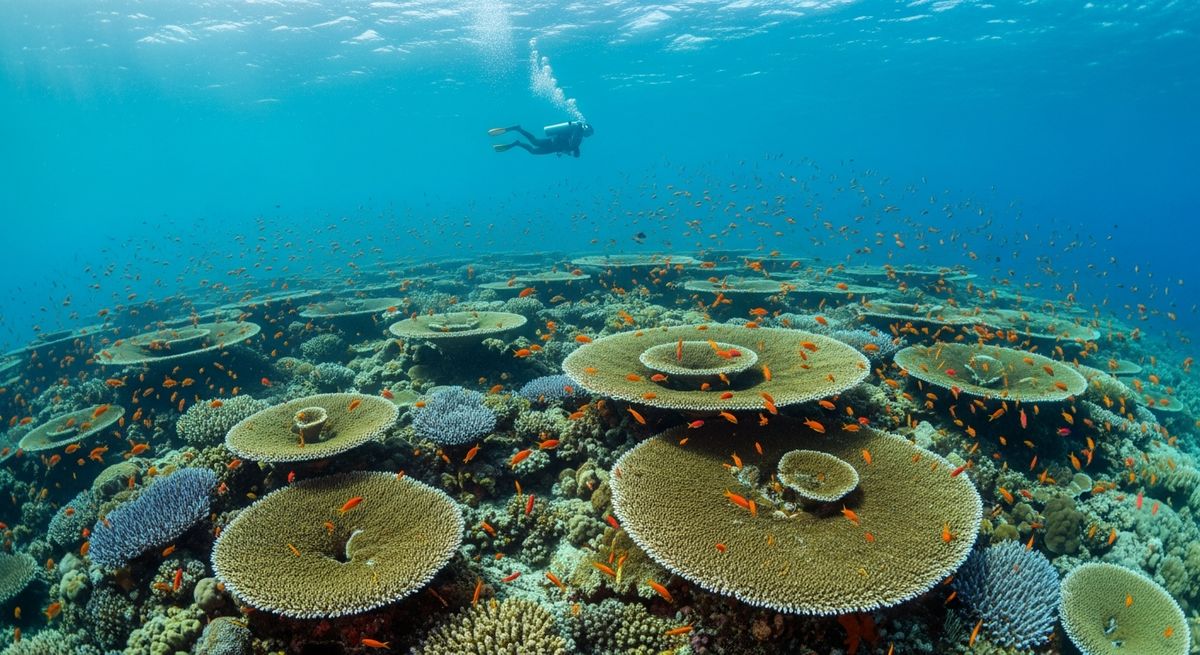
Auberge Reef is one of those sites that just feels good, perfect for a relaxed second dive or when you’re not in the mood for anything too gnarly. We usually drop anchor on the sand patch nearby and then drift onto the reef itself. It’s shallow, topping out at 13 metres, so you get plenty of bottom time, which we always appreciate. The reef here has a nice mix of staghorn coral and sandy patches where we often spot Dragonfish or the tiny Leopard Blennies doing their thing. Keep an eye out for the Hotlips Triplefin – their vibrant colours really pop against the coral. We've seen decent numbers of Whitetail Surgeonfish cruising by, and if you’re lucky, a Spinner shark might make an appearance in the blue. We love how the light plays on the coral in the shallows, especially on a sunny day. Current can be a bit of a mixed bag; sometimes it’s a gentle drift, other times it really rips, so be prepared for a bit of a workout. It’s a great spot for newer divers to build confidence, but seasoned photographers will also find plenty to focus on.
Nearest Dive Centres to Auberge Reef
Dive shops near Auberge Reef
Big Blue Divers
Ocean Dream Divers
Blue Sea Divers
Dive Seychelles Underwater Centre
Silhouette Cruises
Oceanika Diving Club
Reviews for Auberge Reef
Conditions
Ocean conditions, forecast and tides for Auberge Reef
Auberge Reef Ocean Conditions
Monthly averages for Auberge Reef, sourced from Open-Meteo marine data + Copernicus Marine (EU) - nearest station: Open-Meteo marine grid (-4.5, 55.52) (2km away)
October Averages
Sea Temperature
28°C
82°F · Range: 26.1–30.1°C
Current Speed
7.28 cm/s
Direction: W (285.9°)
Chlorophyll-a
0.213 mg/m³
Clear water
Salinity
35.24 PSU
Based on 4 years of monitoring data · Data sources: Open-Meteo marine data + Copernicus Marine (EU)
Plan & book
Ways to dive Inner Islands, from day trips to liveaboards.
Day trips & courses
via GetYourGuideGuided dives, courses and snorkel trips with instant booking.
Find dive trips in Inner IslandsPlaces to stay
via Booking.comHotels and dive resorts near Inner Islands.
Search stays in Inner IslandsDive insurance
Most travel insurance excludes or limits scuba. Check what you need before you go.
Dive insurance explainedPartner links: we may earn a commission if you book, at no extra cost to you. How we make money
Where to Stay near Auberge Reef
Prices from Booking.com. We may earn a commission at no extra cost to you.