L’Ilot
Protected Area
North East Point Shell Reserve
Why dive here
With 183+ marine species recorded in the area - including barracuda, dolphins, sea turtles, sperm whales and lionfish - L’Ilot offers some of Inner Islands's richest wreck diving. Water ranges 27-30°C, warmest March, April, May.
L’Ilot, or The Islet, is one of our favourite drifts off Mahé, a proper shot of adrenaline. You're basically getting pulled through a narrow channel between the islet and the main island, which means things move fast. We've seen eagle rays here in crazy numbers, sometimes fifty at once, just gliding along with the flow. If the current is ripping, and it often is, you’ll be whipping past smooth cauliflower coral and huge staghorn formations, eyes peeled for grey reef sharks cruising by. The maximum depth is 17m, making it a great option for advanced open water divers comfortable with a bit of a push. We love dropping in on an incoming tide, ideally in the morning, to catch the best light filtering through the schools of fusiliers. Keep an eye out for the smaller stuff too, like the vibrant spottail coris darting between the rocks or a dragon wrasse hunting on the sand. This site is a high-octane ride for those who enjoy a speedy tour and the chance of big pelagic encounters.
Safety Notes
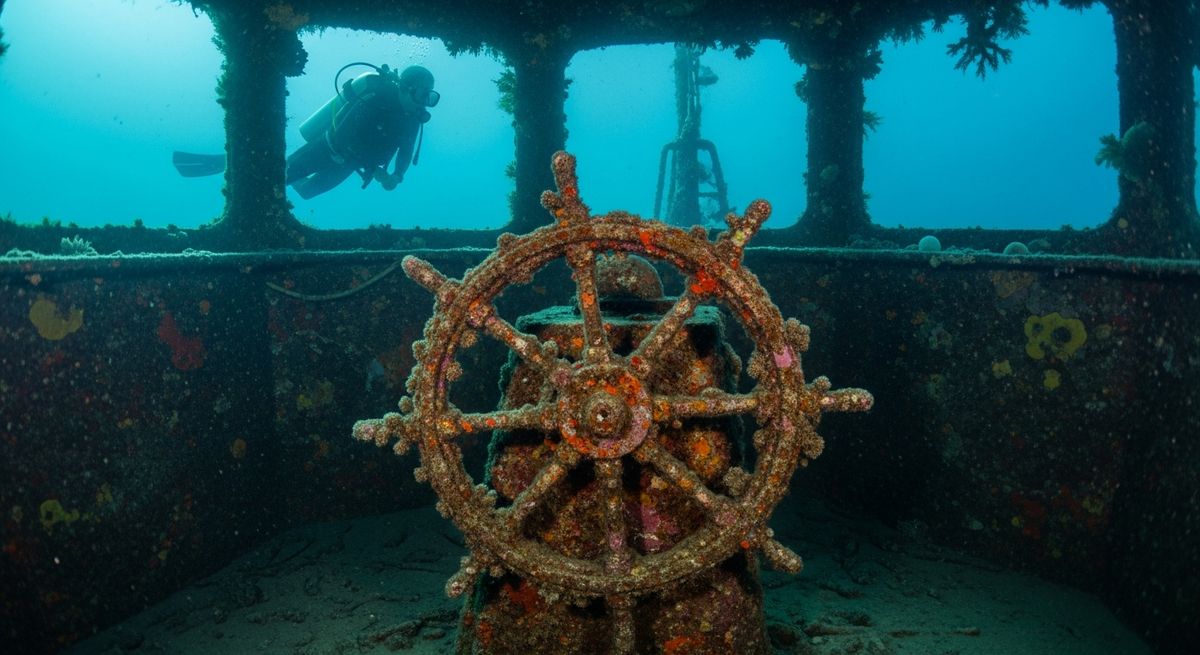
Wreck site - avoid penetration without wreck diving certification. Watch for sharp metal and entanglement hazards.
Nearest Dive Centres to L’Ilot
Dive shops near L’Ilot
Big Blue Divers
Ocean Dream Divers
Blue Sea Divers
Dive Seychelles Underwater Centre
Silhouette Cruises
Oceanika Diving Club
Reviews for L’Ilot
Conditions
Ocean conditions, forecast and tides for L’Ilot
L’Ilot Ocean Conditions
Monthly averages for L’Ilot, sourced from Open-Meteo marine data + Copernicus Marine (EU) - nearest station: Open-Meteo marine grid (-4.5, 55.52) (2km away)
October Averages
Sea Temperature
28°C
82°F · Range: 26.1–30.1°C
Current Speed
7.28 cm/s
Direction: W (285.9°)
Chlorophyll-a
0.213 mg/m³
Clear water
Salinity
35.24 PSU
Based on 4 years of monitoring data · Data sources: Open-Meteo marine data + Copernicus Marine (EU)
Plan & book
Ways to dive Inner Islands, from day trips to liveaboards.
Day trips & courses
via GetYourGuideGuided dives, courses and snorkel trips with instant booking.
Find dive trips in Inner IslandsPlaces to stay
via Booking.comHotels and dive resorts near Inner Islands.
Search stays in Inner IslandsDive insurance
Most travel insurance excludes or limits scuba. Check what you need before you go.
Dive insurance explainedPartner links: we may earn a commission if you book, at no extra cost to you. How we make money
Where to Stay near L’Ilot
Prices from Booking.com. We may earn a commission at no extra cost to you.