Shark rock
Protected Area
La Digue Shell Reserve
Why dive here
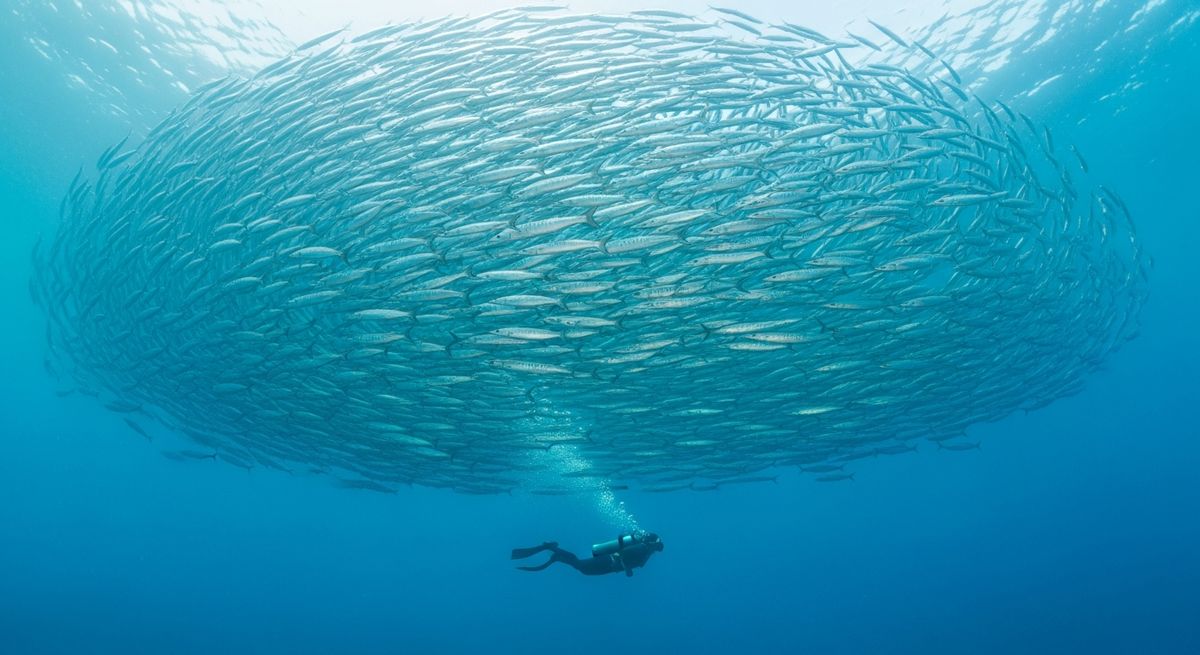
With 183+ marine species recorded in the area - including barracuda, dolphins, sea turtles, sperm whales and lionfish - Shark rock offers some of Inner Islands's richest diving. Water ranges 27-30°C, warmest March, April, May.
Shark Rock feels like diving a giant's marble collection. South-east of Praslin, it's a 30 to 40-minute boat ride, depending on how choppy the ocean feels that day. The site itself is a jumble of massive granite boulders, stacked and scattered, creating tunnels and swim-throughs you can spend an entire dive exploring. We've often found ourselves in a silent procession through a narrow gap, a soft light filtering down from above, before popping out into a sun-drenched amphitheater. What we love here are the encrusting corals and sponges that paint every surface of those boulders. They are vibrant, a real contrast to the grey rock. Look closely, and you'll spot the little residents: tiny Slender Groupers tucked into crevices, Palespot Eviotas darting about. We’ve had great luck finding Hawksbill Turtles munching on sponges, seemingly oblivious to us. The schools of yellowfin soldierfish here are dense, creating shimmering walls of silver and gold that swirl and part as you approach. Keep an eye out for the Giant Trevallies, they often cruise the edges of the rock formations, looking for an easy meal. This site is a great choice for divers who enjoy intricate topography and macro life, though the occasional white-tip reef shark does cruise through, adding a bit of pelagic excitement.
Nearest Dive Centres to Shark rock
Dive shops near Shark rock
Azurro Pro Dive
Plongee Sous Marine
Trek Divers
Hawksbill Dive Centre
Octopus Diving Centre
Whitetip Divers
Reviews for Shark rock
Conditions
Ocean conditions, forecast and tides for Shark rock
Shark rock Ocean Conditions
Monthly averages for Shark rock, sourced from Open-Meteo marine data + Copernicus Marine (EU) - nearest station: Open-Meteo marine grid (-4.5, 55.52) (2km away)
October Averages
Sea Temperature
28°C
82°F · Range: 26.1–30.1°C
Current Speed
7.28 cm/s
Direction: W (285.9°)
Chlorophyll-a
0.213 mg/m³
Clear water
Salinity
35.24 PSU
Based on 4 years of monitoring data · Data sources: Open-Meteo marine data + Copernicus Marine (EU)
Plan & book
Ways to dive Inner Islands, from day trips to liveaboards.
Day trips & courses
via GetYourGuideGuided dives, courses and snorkel trips with instant booking.
Find dive trips in Inner IslandsPlaces to stay
via Booking.comHotels and dive resorts near Inner Islands.
Search stays in Inner IslandsDive insurance
Most travel insurance excludes or limits scuba. Check what you need before you go.
Dive insurance explainedPartner links: we may earn a commission if you book, at no extra cost to you. How we make money
Where to Stay near Shark rock
Prices from Booking.com. We may earn a commission at no extra cost to you.