White Bank
Protected Area
La Digue Shell Reserve
Why dive here
With 183+ marine species recorded in the area - including barracuda, dolphins, sea turtles, sperm whales and lionfish - White Bank offers some of Inner Islands's richest wreck diving. Water ranges 27-30°C, warmest March, April, May.
White Bank, a short boat ride east of Praslin, is our pick for a leisurely, colourful dive. It’s perfect when you want to take your time, poke around, and really look at the smaller stuff. We love how the submerged granite boulders create these little nooks and crannies, covered in sponges and soft corals that glow a deep orange in the torchlight. You won't find dramatic drop-offs here, but rather a gentle slope to a maximum of 17 metres, making it a comfortable spot for newer divers or those who prefer longer bottom times. Visibility averages around 16 metres, which is decent enough to spot schools of yellowfin soldierfish hanging in the current, their scales catching the light. We often see hawksbill turtles cruising past, completely unbothered by our presence. Keep an eye out for the cleaner mimics, tiny fish doing a great impression of blennies, and we’ve had luck spotting the odd freckled anglerfish tucked into a crevice. It’s a gentle site, rewarding patience and a keen eye.
Safety Notes
Wreck site - avoid penetration without wreck diving certification. Watch for sharp metal and entanglement hazards.
White Bank Wreck History
Vessel Type
barge
Cause
scuttled
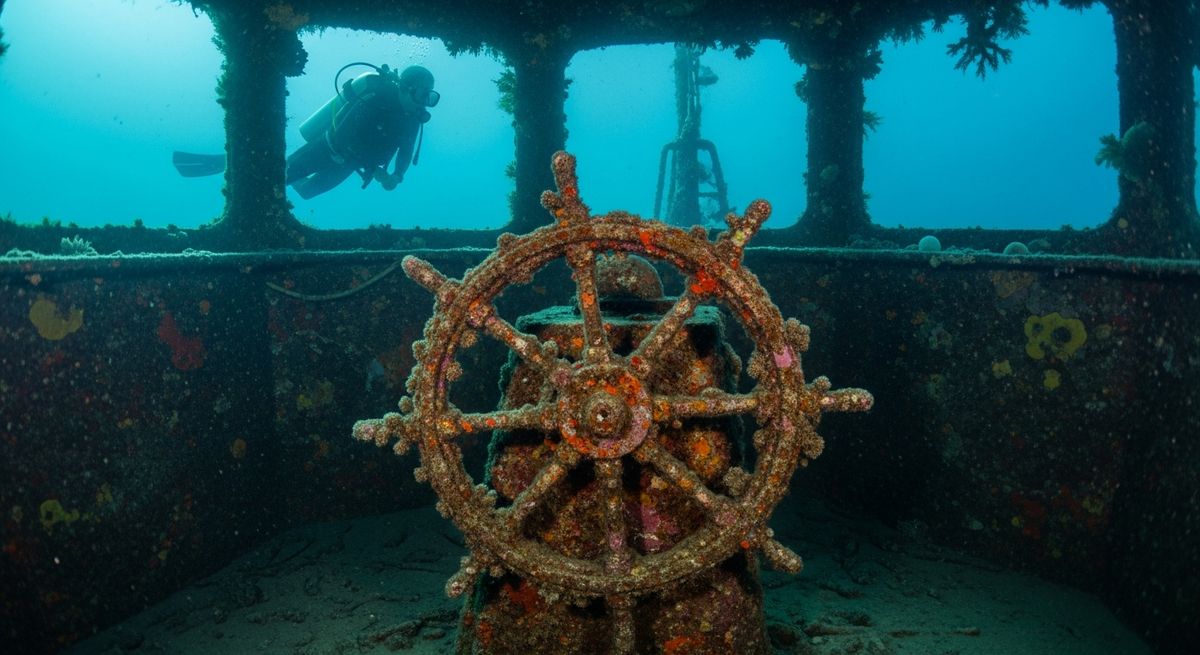
This 130-foot barge is not a victim of storm or war, but a key feature of North Carolina's highly successful artificial reef program. It was intentionally sunk to create a marine habitat at site AR-140, also known as the New River Reef. This program transforms retired vessels and other materials into thriving underwater ecosystems, bolstering fish populations and providing incredible destinations for scuba divers.
Diving on this barge offers a classic artificial reef experience. Its simple, open structure provides an ideal substrate for corals and sponges to grow, which in turn attracts a dense population of fish. Divers can expect to be greeted by schools of baitfish, spadefish, and barracuda. The waters off North Carolina are famous for larger visitors as well, and it's not uncommon to encounter sand tiger sharks cruising lazily around the structure during the summer months. This barge is a perfect example of how we can give old vessels a new purpose beneath the waves.
Nearest Dive Centres to White Bank
Dive shops near White Bank
Plongee Sous Marine
Trek Divers
Azurro Pro Dive
Hawksbill Dive Centre
Octopus Diving Centre
Whitetip Divers
Reviews for White Bank
Conditions
Ocean conditions, forecast and tides for White Bank
White Bank Ocean Conditions
Monthly averages for White Bank, sourced from Open-Meteo marine data + Copernicus Marine (EU) - nearest station: Open-Meteo marine grid (-4.5, 55.52) (2km away)
October Averages
Sea Temperature
28°C
82°F · Range: 26.1–30.1°C
Current Speed
7.28 cm/s
Direction: W (285.9°)
Chlorophyll-a
0.213 mg/m³
Clear water
Salinity
35.24 PSU
Based on 4 years of monitoring data · Data sources: Open-Meteo marine data + Copernicus Marine (EU)
Plan & book
Ways to dive Inner Islands, from day trips to liveaboards.
Day trips & courses
via GetYourGuideGuided dives, courses and snorkel trips with instant booking.
Find dive trips in Inner IslandsPlaces to stay
via Booking.comHotels and dive resorts near Inner Islands.
Search stays in Inner IslandsDive insurance
Most travel insurance excludes or limits scuba. Check what you need before you go.
Dive insurance explainedPartner links: we may earn a commission if you book, at no extra cost to you. How we make money
Where to Stay near White Bank
Prices from Booking.com. We may earn a commission at no extra cost to you.