A CAPELLINI
Why dive here
With 46+ marine species recorded in the area - including dolphins, sea turtles and cuttlefish - A CAPELLINI offers some of Istria Peninsula's richest wreck diving. Water ranges 12-26°C, warmest July, August, September.
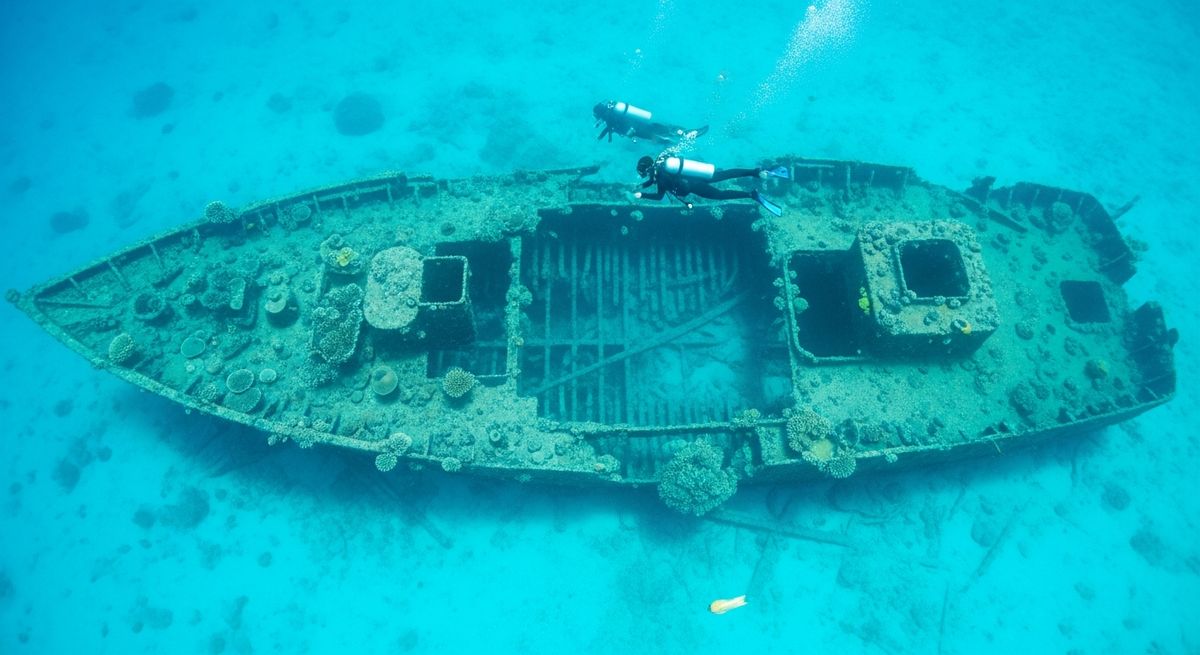
A Capellini isn't your typical grand wreck dive, and that's precisely why we love it. Lying at a shallow 11 meters, this isn't a site for deep exploration, but rather a chance to intimately explore a piece of history. What remains is a scatter of ceramic tiles, the skeletal ribs of the hull, and a few other identifiable pieces of the former cargo ship. The shallow depth means fantastic ambient light, letting you really appreciate the way the Mediterranean has reclaimed this space. We've spent many a no-decompression minute here, gently finning over the debris, watching damselfish dart between the broken plates. Look closely, and you'll spot nudibranchs grazing on the algae-covered metal and the occasional inquisitive octopus peering from a shadowed crevice. It’s an easy dive, perfect for photographers wanting to practice their macro skills, or for newer divers getting their first taste of a wreck without any depth anxiety. Our favourite time to visit is mid-morning, when the sun is high and filters down, making the scattered ceramics almost glow. Just be mindful of other divers stirring up the fine sediment, as visibility can drop quickly. It’s not about penetration here; it’s about the quiet observation of nature's slow takeover.
Typical A CAPELLINI Dive Profile
Illustrative profile based on site depth and type. Actual dive profiles vary - always follow your dive computer and training.
Safety Notes
Wreck site - avoid penetration without wreck diving certification. Watch for sharp metal and entanglement hazards.
Always perform a 3-minute safety stop at 5m before surfacing.
A CAPELLINI Wreck History
Year Sunk
1918
Vessel Type
cargo ship
Cause
mine
Tonnage
1,435 GRT
The steamship *Alfredo Cappellini* was an Italian cargo vessel pressed into service during the final, intense year of World War I. Named after a hero of the Battle of Lissa, the ship played its part in the war effort, transporting supplies for the Italian military. In November 1918, just as the war was drawing to a close, the *Cappellini* was steaming near the Istrian Peninsula when it struck a naval mine laid by Austro-Hungarian forces. The massive explosion tore through the hull, and the ship sank quickly, taking its wartime secrets to the seafloor.
Today, the *Cappellini* is a popular and historically significant dive site off the coast of Croatia. Resting at a shallow depth of 11 meters, it is highly accessible to divers of all levels. The wreck is broken into several large sections, its boilers and engine parts clearly visible. Despite its "dangerous wreck" classification due to sharp, deteriorating metal, a careful exploration reveals a site teeming with life. Its WWI-era structure is now a haven for conger eels, lobsters, and a wide variety of fish, offering a poignant look at how nature reclaims the artifacts of human conflict.
Nearest Dive Centres to A CAPELLINI
Dive shops near A CAPELLINI
A.S.D. ELMOSCIOLO CLUB SUB FALCONARA M.MA
Sub Tridente
Centro immersioni Maceratasub
Reviews for A CAPELLINI
Conditions
Ocean conditions, forecast and tides for A CAPELLINI
A CAPELLINI Ocean Conditions
Monthly averages for A CAPELLINI, sourced from Open-Meteo marine data + Copernicus Marine (EU) - nearest station: Open-Meteo marine grid (45.08, 14.15) (21km away)
October Averages
Sea Temperature
20°C
68°F · Range: 18.4–22.3°C
Current Speed
3.16 cm/s
Direction: W (288.4°)
Salinity
37.74 PSU
Based on 4 years of monitoring data · Data sources: Open-Meteo marine data + Copernicus Marine (EU)
Plan & book
Ways to dive Istria Peninsula, from day trips to liveaboards.
Day trips & courses
via GetYourGuideGuided dives, courses and snorkel trips with instant booking.
Find dive trips in Istria PeninsulaPlaces to stay
via Booking.comHotels and dive resorts near Istria Peninsula.
Search stays in Istria PeninsulaDive insurance
Most travel insurance excludes or limits scuba. Check what you need before you go.
Dive insurance explainedPartner links: we may earn a commission if you book, at no extra cost to you. How we make money
Where to Stay near A CAPELLINI
Prices from Booking.com. We may earn a commission at no extra cost to you.