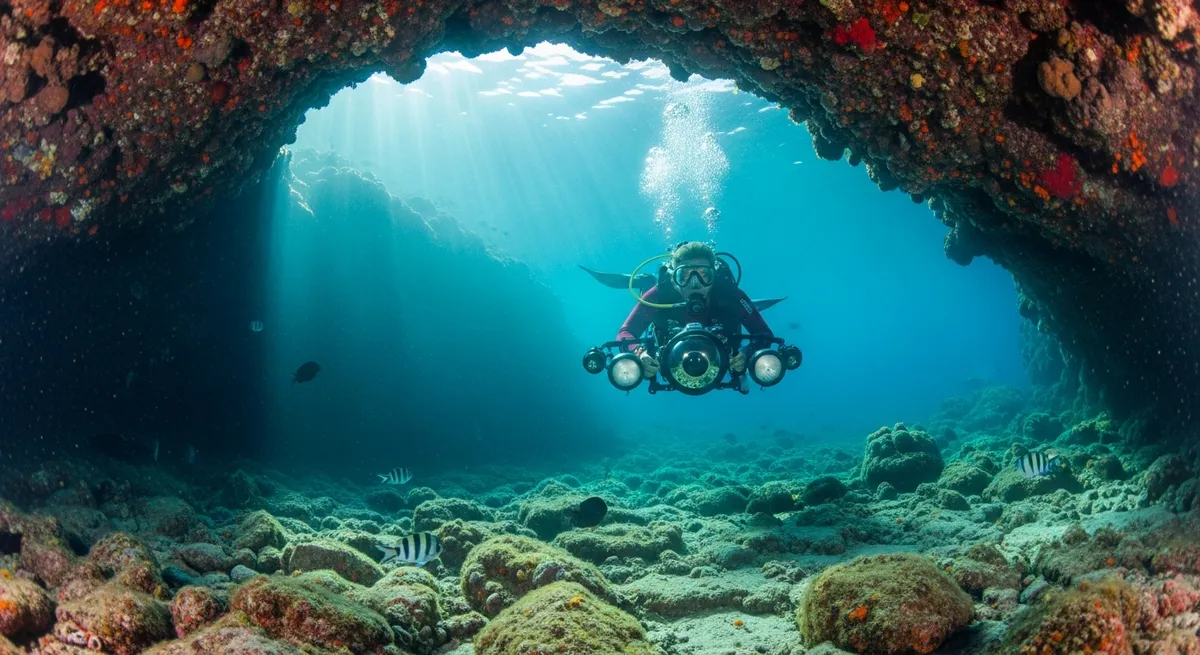
Diving in Istria Peninsula
Why dive here
Istria Peninsula offers some of Croatia's richest diving, with 46+ marine species recorded in the area - including dolphins, sea turtles and cuttlefish. Water ranges 12-26°C, warmest July, August, September.
Istria often gets overlooked for Croatia’s southern islands, and that’s a shame. Up here, it’s a different vibe, less about sheer visibility and more about the historical narrative. We’re talking proper Northern Adriatic diving, which means a certain character to the water - sometimes a bit greener, but always alive with history and surprisingly robust ecosystems. Our favourite here has to be the Baron Gautsch. We've spent hours on her, exploring the passenger decks, imagining those final moments. It’s a genuine experience, not just another wreck dive. The deck gun is still there, and you can swim through the main salon, where schools of small fry often hang, almost shimmering in the shafts of light. Nearby, you'll find plenty of colourful Mediterranean reef systems too, full of mullets nosing through the sand and brown combers darting between rocks. Keep an eye out for loggerhead turtles cruising past, especially in late summer. One insider tip: the Baron Gautsch can get busy, so aim for a weekday morning dive if you can. The currents can also pick up, so check conditions. You’ll find a surprising number of dogfish and smoothhounds if you look closely in the murkier, sandy patches. It’s not always about big pelagics here; it's about the intricate details and the stories these sites tell.
Istria Peninsula Dive Site Map
Dive sites and dive centres in Istria Peninsula
Istria Peninsula Dive Sites
818 dive sites in Istria Peninsula
100 Steps
100 Steps in Istria is a straightforward shore dive, handy for shaking off the rust or testing new gear. You'll find a rocky slope that levels out, dotted with damsel fish and the occasional common lobster tucked into crevices. Keep an eye out for sunset cup coral. It’s a good spot for a relaxed dive, especially if you’re keen to just get wet without a boat trip.
1. Niederbayerischer Tauchsportclub Plattling e.V.
1. Niederbayerischer Tauchsportclub Plattling e.V. offers diving in Istria Peninsula, Croatia.
3 Zinnen
3 Zinnen sits at a comfortable 18 metres, making it a good choice for newer divers. The main draw here is the series of three rock formations, giving the site its name, which offer some interesting swim-throughs and crevices to explore. You'll find plenty of small fish sheltering among the rocks – damselfish, wrasse, and gobies are common. It's a relaxed dive, ideal for a checkout dive or a gentle afternoon bimble.
A CAPELLINI
A Capellini isn't your typical grand wreck dive, and that's precisely why we love it. Lying at a shallow 11 meters, this isn't a site for deep exploration, but rather a chance to intimately explore a piece of history. What remains is a scatter of ceramic tiles, the skeletal ribs of the hull, and a few other identifiable pieces of the former cargo ship. The shallow depth means fantastic ambient light, letting you really appreciate the way the Mediterranean has reclaimed this space. We've spent many a no-decompression minute here, gently finning over the debris, watching damselfish dart between the broken plates. Look closely, and you'll spot nudibranchs grazing on the algae-covered metal and the occasional inquisitive octopus peering from a shadowed crevice. It’s an easy dive, perfect for photographers wanting to practice their macro skills, or for newer divers getting their first taste of a wreck without any depth anxiety. Our favourite time to visit is mid-morning, when the sun is high and filters down, making the scattered ceramics almost glow. Just be mindful of other divers stirring up the fine sediment, as visibility can drop quickly. It’s not about penetration here; it’s about the quiet observation of nature's slow takeover.
Allgäuer Taucherhof
Allgäuer Taucherhof is a shore dive site in Istria Peninsula, Croatia, reaching depths of around 5-15m.
Allmannshausen: Naturschutzgebiet
Located in Istria Peninsula, Croatia, Allmannshausen: Naturschutzgebiet is a dive site.
Allmannshausen: Seeburg
Allmannshausen: Seeburg offers diving in Istria Peninsula, Croatia.
Allmannshausen: Wasserwacht
Allmannshausen: Wasserwacht is a dive site in Istria Peninsula, Croatia.
Allmannshauser Steilwand
Allmannshauser Steilwand offers diving in Istria Peninsula, Croatia.
Almsee
Located in Istria Peninsula, Croatia, Almsee is a reef dive site.
Alpenblick
A shore dive site in Istria Peninsula, Croatia, Alpenblick is worth adding to your dive plan.
Alte Badanstalt
Alte Badanstalt offers diving in Istria Peninsula, Croatia.
Show all 818 dive sites in Istria Peninsula
- Alte Brücke-Flurlingersteg
- Alte Julierbrücke
- Alter Hafen
- Altersheim Breiten
- Alter Stollen
- Alte Zollbrücke
- Altstadt
- AMALFI
- Amslerbecken
- Anlegesteg der Autofähre
- ANNI
- Ansaugkörbe
- APOLLO
- Aquarium Grgur
- Aqua Tenero
- Army Tower
- Artatore Reef
- Asail
- ASD Bruno Loschi
- Attersee - Alexenau
- Attersee - Ebenmann-Aufsatz
- Attersee - Ferrari-Kapelle
- Attersee - Föttinger
- Attersee - Kohlbauernaufsatz
- Attersee - Liebesbrücke
- Attersee - Nautilus (Divesport)
- Attersee - Schlierwand
- Attersee - Twin Towers
- Attersee Wandl
- Attersee - Weißenbacheinlauf (Leitplanke)
- Attersee - Wrack Dixie
- Attinger Weiher 1
- Äuli
- Autobahnbrücke
- Autobahnsee Elchingen
- B-24 Liberator US Bomber
- Babino
- Babino Wall
- Bacheinlauf
- Bad Egg
- Badeplatz
- Badeplatz Nixe
- Bade- und Surfsee Thannhausen
- Badi
- Badi
- Baernkogl
- Baggersee Spöck
- Baggersee Untergrombach (Metzgerallmend)
- Bangladesh (Wreck)
- Banjol
- Barbakonac
- Baron Gautsch
- Baron Gautsch
- Baron Gautsch (Wreck)
- Baumgärtli
- Bay Camping Vestar
- Baywatch
- Bazen fakultete za šport
- Beckenried Rütenen Einstieg 1
- Beli
- Bellariva
- Bellerive 55
- Berg
- Big cave
- Big Kampanil Veliki
- Bildstock
- Bi village housereef
- Black Rocks
- Blindsee
- bluesub
- Blue Water Divers
- BMI Tauchstützpunkt
- BMW Dixi
- Bocchiaplatz
- Bommerstein Hafen West
- Bootshafen
- Bootshaus
- Bootsplatz
- Bootsrampe Rorschach Schlipf
- Bracol
- Brennsee
- Brestova
- Broder
- Brontallo
- Brsec pinnacle
- Brücke
- Brücke-Camping
- Brücke-Schifflände
- BRUNA
- Büchenauer See (Alte Allmend)
- Bucht Bobina (Wrack)
- Bucht Mrzlanovica (Wrack)
- Buco della Sovaglia
- Bumbiste
- Bumbište
- B.Y.M.S. 2053
- Camping-Hemishofen
- Campingplatz
- Camping-Strandbad
- Camping Valdaliso
- Camp Kovacine
- CANDIANO (PROBABLY)
- Canyon
- Capolupi Sport
- Cap Wörth Pool
- Cascata Riale Salto
- CASSIUS HUDSON (PROBABLY)
- Cavern Bay
- CAVOUR
- Cerboli Anchor
- Cesare Rosarol
- Chappeli
- Chiemsee
- Chlausenegg
- Cholplatz
- Chrüztrichter
- Clubhaus Tauchclub Orca
- Coluonnas
- CONTE DI SAVOIA
- Copacabana
- CorrectDiving Krk
- Cres Mezulin
- Crljena Greda
- Crna Punta
- Črni Mol
- Crvene Stene
- Čuf
- Cutin
- DC MIHURIC
- Diavolo
- Die Jura (Wrack)
- Diepoldsau Badi Einstieg
- Diepoldsau Sportplatz
- Diepoldsau Strandbad Einstieg 2 Winter
- Dietenheimer See
- Diga del Narèt
- Dingelsdorf
- Dive Life Diving Club
- Dive Loft Krk
- Diver's Indoor Tauchsportzentrum
- Dive Team Innsbruck - UNTER Bewusstsein e.V.
- Dive Tuscany
- Diving Centro Sub Cecina
- diving Cres
- diving platform
- Dolini Roncsok
- DON JUAN
- Dorfbach
- Duga Luka
- Echinger Weiher
- Egg
- Eichwald
- Eierhals
- Einbaum
- Elba Diving
- Elefäntli
- ELHAWI STAR
- El Hawi Star Wrack
- Ellikon am Rhein - Rüdlingen
- Epplesee
- Ermitage
- Eschenz-Stein am Rhein
- Euphemia (Figarola)
- EVDOKIA II
- Evdokia, wreck
- Fels Macinj
- Fels Merag
- FERRERO
- Fischchratte
- Fischerhütte
- Fisherman's Boat
- Fish Garden
- Flaschentauchen
- Foce del Casserate
- Fraskeric
- Fraskeric South
- Fratri
- Freibacher Stausee
- Friedberger Baggersee
- Frizital
- Gacice
- Galerie
- Galijola
- Galijola
- Galun - Amfore
- GILDA
- Gilda Wreck
- Girandella
- Giuseppe Dezza
- Glapni potok
- Glavotok
- Gobbo Reef
- Gola del Lupo (Wolfsrachen)
- Gola di Ponte Brolla
- Golubinjac
- Golubjera
- Gonar
- Gorgonien
- Grafenmatt
- Grafstatt
- Green Lantern
- Green Lighthouse
- Grenzstein
- Grillplatz Weissensee Ost
- Grosse Geröllhalde
- Großer Brombachsee - Tauchbasis Brombachsee
- Grotta
- Grotte Vrbnik
- Grottoni
- Gul
- Gurrensee
- Gustinja
- Hafen
- Hafen
- Hafen-Kloster
- Hafen Küsnacht
- Hafen Männedorf
- Halbinsel
- Halbinsel Sasc da Corn 2
- Hallenbad Klagenfurt
- Hallstätter See
- Hallstätter See Bus
- Hallstättersee - Landbettler
- Hans Schmidt Wreck
- Haus am See
- Hechenberg Süd
- Heiterwanger See - Tauchzone 1
- Heiterwanger See - Tauchzone 2
- Heiterwanger See - Tauchzone 3
- Hemishofen-Rheinklingen
- HM MGB 657
- HM MGB 663
- HMML 558
- HM MTB 655
- HMS Aldenham
- HMS Coriolanus
- HMS Coriolanus (Wreck)
- Holzlager
- Holzsegelschiff mit Geschützen
- Hotel Cristallina
- Hrid Masarine
- Hrid Piramida
- Hundloch-Quelle
- Hydroplane Wreck
- Igl Lai (Heidsee)-Seerestaurant
- Ilsesee Taucherbucht
- Im Gufer
- Immenhofener Weiher
- IMPERIA
- IMPERIO (OR C320)
- Indiana
- Insel Katarina
- Isola Corbella
- Jadrina
- Jakljan (Wreck)
- Jerolim
- Josen West
- Jurassic Park
- Kačjak
- Kaiser See
- Kalifront
- KALLIOPI (POSSIBLY)
- Kamenjak
- Kampanil Mali
- Kanjon
- Kap Jablanac
- Kap Kosaca
- Kap Marlera
- Kap Selzine
- Kap Silo
- Kap Tanki
- Kap Zašorga
- Katedrala, Premuda Island
- Kec Wreck
- Kehlhof
- Kehrsiten Forrest
- KEMAL KA
- Kembala reef
- Kempfenhausen
- Key West
- Kindli
- Kita
- Klacklboden
- Klauser See
- Kleiner Brombachsee
- Kleiner Hafen Küsnacht
- Kleiner Parkplatz Erlenbach Schipfe
- Kleine Steilwand
- Klopeinersee Strandbad Süd
- Kloster
- Kochelsee
- Koludarac Bay
- Kolumbarica
- Kormat
- Kornhaus Rorschach
- Kostrena
- Kraftwerk
- Kraj
- Krebsgarten Meersburg
- Kricin
- Krivica
- KRK - CAMPING ’KRK’
- Krnicadive
- Krnjacol
- Kron Diving
- Kurheim Ländli
- Lädine
- Laghetto di Godego
- Laghetto Moesola immersioni
- Lag la Cauma
- Lago Cadano
- Lago di Lugano-Acquedetto
- Lago di Lugano-Campeggio Paradiso
- Lago di Lugano-Il Deserto
- Lago di Lugano-Le Macchine
- Lago di Lugano-Lido di Riva S. Vitale
- Lago di Lugano-Lugano-Sub
- Lago di Lugano-Parete di Caslano
- Lago di Lugano-Parete di Riva
- Lago di Lugano-Relitto Milano
- Lago di Tomé
- Lago Maggiore-Centro Sub del Gambarogno
- Lago Maggiore-Sud
- Lago Ritom
- Laka
- Lamkra
- Landungssteg
- Landungssteg Aesch
- Landungssteg Obermeilen
- Landungssteg Rüschlikon
- Längsee Strandbad
- Laui
- Le Ancore
- LEDA (POSSIBLY)
- Lediwracks
- Leitgeringer See
- Lej da Champfèr
- Leuchturm
- Leuenhaab
- Liafels, Millstätter See
- Lido
- Lido
- Lido Locarno
- Liebesinsel
- Light house
- Lighthouse
- Lighthouse Peneda
- Lina wreck
- Lina Wreck
- Linthkanal Ausstieg
- Lonjica
- Lopper 1
- Lopper Acheregg
- Lopper Känzeli
- Lopper Rote Route 1
- Lorelei
- Los Pirangeles
- Lothenbach
- Luana
- Luberweiher
- LUCIA 11
- Ludwigshafen
- Lunga
- Lungo Wreck
- Lutzenberger See - Teil Ost
- Mafia Wreck
- Mala Dragica
- Male Srakane, Cave, Kroatien
- Malibu Bay
- Mali Lošinj Cikat Bay
- Mali Plavnik
- Malo Kolo
- Maman
- Maona wreck
- Mapraggsee-KSL
- MarelinoSub
- Mare Sub
- Margarina (Sanddüne)
- Maria Loretto, Wörthersee
- Maria Wörth, Wörthersee
- Marienschlucht
- Marneva
- Matterhorn
- Matz Einstieg
- MEDICEO
- MEDICEO (PART OF)(POSSIBLY)
- Medova Buža
- Medveja
- Medveja great wall
- Medveja little wall
- Meersburg s’Plätzle
- Megawand, Weißensee
- Mehrlesee
- Meilibach
- Metlikova
- Mettmenalp
- Mikado, Weißensee
- Millstätter See - Bucht von Döbriach;Millstätter See - Junfernsprung;Millstätter See - Liafelsen;Millstätter See - Ostufer;Millstätter See - Wrack `Möve`
- Miracine
- Misnjak (Sanddüne)
- M.L. 558
- Mole Ost
- Mondsee - Harnischwand
- Mondsee - Kienbergwand
- Mondsee - Kreuzstein
- Morgarten Denkmal
- MTB 697
- Murner See - Einstieg Rutsch'n
- Muzil
- Nagoldtalsperre / Erzgrube
- Nanos, wreck
- Nautilus
- Nemo Divers
- Nepotsnato Mjesto
- NETTUNO
- Neuer Erholungssee / Mooswaldsee West - östlicher Teil
- NIVIA
- no 268 utin
- Nöhmer
- Numidia
- Nußdorf Hausboot
- Obermatt
- Ober Nas
- Ofen
- Officine Elettriche
- Old lighthouse
- Omnisub
- Ossiacher See - Gemeindebad St. Andrä
- Ossiacher See - Kessel-Strandbad Christa
- Ossiacher See - Strandbad Sattendorf
- Pacug Reef
- PAGURO
- PALAMIDA
- Paradies
- Park Feldmeilen
- Park Horn
- Park Thalwil
- PAROS
- Patersriff
- Pellicano Sport
- Peltastis
- Petalon One Way
- Pflegeheim am See
- Pilsensee
- Pinia
- Pipeline
- Piran under the Church
- Pirusi
- Piscina Belluno
- Plan di Mort
- Plansee - Zone 1 (Schotterparkplatz Kaiserbrunnen)
- Plansee - Zone 2 (Hotel Forelle)
- Plansee - Zone 3 (Planseecamp)
- Plava punta
- Plavnic Cave
- PLAVNIK - II wall
- Plavnik Lighthouse
- Plic Mramori
- Plic Porer
- Plic Tenki
- Plomin
- Plovanov Stol
- Ponte
- Ponte Corippo
- Ponte del Diavolo
- PONZA
- Porer Island
- Porer Reef
- Porto
- Porto Ronco Beach Club
- Posse 2
- Pozzo del Diavolo
- Pozzo della Misura
- Pozzo San Rocco
- Pressegger See
- Pri Čolnarni, Velenjsko jezero
- PROMETHEUS
- Prst
- Pullinger Weiher
- Pumpihüsli
- Pumpwerk Horgen
- Pumpwerk Meilen
- Pumpwerk Moos
- Punta dello Zenòbito
- Punta Glavina
- Punta Kinkela
- Punta Silo
- Punta Šilo
- Punta Sokol
- QUINTINO SELLA
- QUINTINO SELLA (PART OF)(PROBABLY)
- Rabac Bay
- Rabenmättli
- Rampe
- Rastplatz
- Ravni
- Rebica
- Red Island House Reef
- Red Lantern
- Red Rocks
- Reifnitz Parkplatz 2
- Relitto della Piattaforma Paguro
- Remorker
- Restaurant Bellevue
- Restaurant Rhodannenberg
- Restaurant Schloss
- Restaurant Waaghaus
- REX
- Rheinau-Ellikon am Rhein
- Rheinklingen-Schupfen
- Riedsort
- Rietli Goldach Einstieg
- Riff Pal
- Riff Williams
- Rigiblick
- RINGO II
- RISORGIMENTO
- Risskiessee Laupheim
- R.L2
- Römerbrücke / Ponte dei Salti
- Romerbucht
- romital
- ROSA AMERICA
- Rossarol 1, Wreck
- Rossblatten
- Rothsee
- Rovinj Training Site
- Rt. Družinin
- Rt Lun
- Rt Sv Andrija Rabac
- RT Sveti Blac
- RT Zaglav
- Safari Reef Istria
- Saline
- Sallacher Strandbad
- Salza-Speichersee
- Samonjin
- Sandy Beach
- San Giovanni Nord
- SANTA MARIA
- Sassello
- Säulenbucht
- Scampi Felsen
- Scheggia
- Schiefernegg
- Schiessüberwachung
- Schifflände
- Schiffli
- Schiffsstation Stralegg
- Schildegg
- Schillerstein
- Schloss Heroldeck, Millstätter See
- Schlossvilla (Wreck)
- Schmitter Zoll Einstieg
- Schoggiwand
- Schupfen-Camping
- Schwarze Brücke
- Schwarzenau Süd
- Scoglio di Remaiolo
- Scuba Libre
- Scubalino
- Scuba-Team-Kärnten
- SC WÖRTH Taucher
- Sea mine
- Secca di Fonza
- Secca Ubac
- Secret beach
- Seealpsee
- Seebad Rüschlikon
- Seegarten
- Seegarten
- Seegüetli
- Seehalde
- Seehorn Felsblöcke
- Seehorn Wand
- Seemitte
- Seerettungsdienst
- Segelclub Herrliberg
- Sekirn Steilwand
- Selezine
- Sentiero di Gandria
- Siebel Ferry
- SIGRID
- Sika Lakosase
- Silbersee
- Silbersee Ranch
- Silbersee West
- Silent Beach
- Single Rock
- Sip
- SIRIUS
- Sisikon
- SKIPJACK
- Skvaranska
- S M S Streiter Wreck
- S Nicola Reef
- Sorgente Bossi-Sorgente Bossi
- Sottolonda
- Space Reef
- Sportpension Schober
- Sporttauchergruppe Ulm/Neu-Ulm e. V.
- Sprungbecken
- Sprungbecken
- Sprungturm
- Sprungturm
- Srakane Wall
- SS Albanien (Wreck)
- SS Regolo (Wreck)
- Star Fish
- Starnberger See - Ambach
- Starnberger See - Nordbad
- Starnberger See - Wintertauchplatz
- Stausee Soboth
- Steinberger See - Rutsche
- Steinrad
- Steinschlag - Tafel
- Steinwand
- STELLA MARIS
- Stijena
- Strandbad
- Strandbad
- Strandbad Erlenbach
- Strandbad Feldmeilen
- Strandbad Garatshausen
- Strandbad Kindli
- Strandbad Maiernigg
- Strandbad Maur
- Strandbad Niederuster
- Strandbad Pesenthein, Millstätter See
- Strandbad Thalwil
- Strick
- Stupova
- Sturago
- Sub Club Peschiera del Garda
- Sub-Net potapljanje
- Sub Sea
- Südlicher Mooswaldsee (West)
- Surfplatz
- Sust
- Sveta Marina Wall
- Sveti Blaz
- Sveti Marak
- Sv Nikol
- Sv. Nikola
- Sylvensteinsee / Sylvensteinspeicher
- TA 36 wreck
- Talalpsee
- Tauchbasis Ilsesee
- Tauchbasis Lorenc
- Tauchclub Octopus
- Tauchen
- Tauchgruppe Biber
- Tauchplatz Hinkelsteine
- Tauchplatz Sipplingen
- Tauchplatz Taucheinstieg 1/ Harry's Taucherbankerl
- Tauchplatz Taucheinstieg 2 / Schwabbelland
- Tauchschule Ing. Patterer
- Tauch-Sport-Club Bietigheim
- Tauchsport Vienna
- Tauchzentrum Pfullendorf
- TCI-Parcours
- Tegernsee
- Tegernsee - Bad Wiessee Yachtclub
- Tegernsee - Friedl
- Tegernsee - Hotel Guggemoos
- Tegernsee - Schorn
- Tegernsee - Schweinebucht
- Tegernsee - Tegernsee Yachtclub (Fischerei)
- Tegna Ponte Brolla
- Teixlbucht/Messnerspitz
- Tellenörtli
- Tenno lake rent
- Terlinden
- Teufwinkel
- The Beach
- The Romagna
- Thumsee - Parkplatz Ost
- Tihany
- Timos Caves
- Tina
- Toni House Reef
- Tössegg-Eglisau
- Traunfälle
- Traunsee - Beim Löwen
- Traunsee - Eisenau
- Traunsee - Fledermausbucht
- Traunsee - Hotel Traunsee
- Traunsee - Karbach
- Traunsee - Madonna
- Traunsee - Weißer Steinbruch
- Travel Divers
- Travnica, Cres
- Treca vala
- Tresorfabrik
- Trübsee
- Tunel Prvić
- Tunnel
- Tunnel 1
- Türlersee
- Two Sisters
- Two Towers
- U 65
- Überlingen Parkplatz Post
- Überlingen Seezeichen 24
- Überlingen Tennisplatz
- Uhland-Ansaugstutzen Horn
- Uhlandbucht Horn Einstieg
- Under Pressure
- Under Pressure Watersports
- Unterwasserwald
- Unterwilen
- Untiefe Maria Wörth
- Uvala Mrzlanovica
- Uvala Polje - Zid
- Uvala Ziva
- Uwala Metlikova
- Vajavine
- VAL
- Vale Inglese, Koludarac
- Valovine 1
- Valovine 2
- Vanjsko Silo
- Varese
- Vasca dei tuffi
- Vela Draga Goli
- Vereinsheim TC Bonito
- Vereinsheim TSC Bad Buchau e.V.
- Vidonjica 4
- Vidonjica I
- Vierwaldstättersee - Tellskapelle
- Villa Biser
- Villa Istra
- Villas Rubin Beach
- Villa Susmel
- VIRIBUS UNITIS
- Vis Wreck
- VITTORIA
- Vitznau
- Vordere Au
- Vorderer Gosausee - Bootshütte bis Bärnkogel
- vorderer Langbathsee - Nordufer / Murenabgang
- vorderer Langbathsee - Ostufer
- Vorstad
- VRMAC (PART OF)(PROBABLY)
- Vrmak
- Waginger See
- Wägitalersee
- Walchensee - Bootssteg Urfeld
- Walchensee - Einsiedlbucht
- Walchensee - Fleckerlspitz
- Walchensee - Galerie
- Walchensee - Hackl
- Walchensee - Herzogstand
- Walchensee - Katzeninsel
- Walchensee - Lobesau
- Walchensee - Pioniertafel
- Walchensee - Post
- Walchensee - Steinbruch
- Walchensee - Walchenseebucht
- Wallhausen Steilwand
- Wand im Nüüt
- Wassersportzentrum Zürich (WZT)
- Wasserstelz
- Weißensee - Große Steinwand
- Weißensee - Laka
- Weissensee Ost Hausriff
- Weißensee (Tauchbasis Yachtdiver)
- Weißensee - Tschelankofel
- Werkhof
- White Wall
- Widmerland
- Wiedenhorn
- Wiesli
- Wildsau
- WILLIAM HULME
- WILLIAM J PALMER
- Wird
- Wolfgangsee
- Wolfgangsee - Franzosenschanze/Parkplatz Abersee
- Wolfgangsee - Fürbergbucht/Falkensteinwand
- Wolfsprung
- Wörthersee Atlantis
- Wrack Coriolanus
- Wrack Lina
- Wreck John Gilmore
- Wreck Numidia
- Wreck of Costa Concordia
- Wreck of French brig Mercure
- Wreck of French frigate Danaé
- Wreck of SMS Viribus Unitis
- Wreck Romagna
- Wreck Tihany
- Wreck Varese
- Wreck VIS
- Wurzel
- WZT;Luftverbund
- Y-40 The Deep Joy
- Zabodaski
- Zabodaski South
- Zeca
- Zecevo
- Zelena Lanterna
- Zentenhof
- Zigeunerplätzli
- Zollerbucht
- Žusterna
Istria Peninsula Dive Centres
134 dive shops and operators in Istria Peninsula
100 x 100 Diving
ACQUASUB VICENZA TEAM asd
Albarella Diving Center SSDRL
Apnea Slovenija
Aquaemotion SSD SRL
Aquanautic Elba
AREA SUB (NAUTICA TREVISO)
Argentario Divers
Show all 134 dive centres in Istria Peninsula
- ASD Cormorano Sub Forli
- A.S.D. ELMOSCIOLO CLUB SUB FALCONARA M.MA
- A.S.D. Sub Nautilus
- ASSOCIAZIONE PROTEZIONE CIVILE GRADO
- ATJ 90 DIVER
- Baratti Diving
- Baroneblu
- BLUE DEEP SCUBA SHOP
- Blue Lagoon diving
- BLUSUB SNC
- Buborek DC
- Caccia e Pesca
- Campese Diving Center
- Centro Immersioni Civitavecchia
- CENTRO IMMERSIONI CORALLO SUB
- Centro immersioni Maceratasub
- Centro sub Livorno
- CLUB SUBACQUEO BELLUNO A.S.D.
- CPA PULA
- DC DiveStrong
- DC MIHURIC
- DEEP DIVING UDINE A.S.D.
- Dive Base Krk
- Dive Center Krk
- Dive City
- DIVE & FUN Tauch Center Szente
- Dive Life Diving Club
- Dive Loft Krk
- Dive Tuscany
- Diving Center
- Diving Center
- Diving Center Il Nostromo
- Diving Center Kostrena
- Diving Center Poreč
- Diving Center Puntizela
- Diving Center Puntizela (Mergus d.o.o.)
- Diving Center Shark
- diving Cres
- DIVING GROUP SOGIT GRADO
- Diving Rovinj
- Diving spiro sub
- Diving Weissensee / Feigl und Trum OG
- DIVING WORLD SAN MARINO
- Dragorlux
- Društvo Kisik - Oxygen
- Ekstrem Šport
- Elba Diving
- Enfola Diving Center
- Extremo
- Falle Tauchsport
- FOKA
- Foto Shark
- Freediving Elba Apnea Center
- Full Dive
- Fun Diving Krk
- Galathea Diving Center
- Gruppo Sommozzatori Riva
- Hang-Loose-Diving®
- Hippocampus Diving Center
- IDENTICI DIVING SCHOOL RAVENNA A.S.D.
- ILARIA D.O.O.
- Il Corsaro
- IL MARE srl
- Issimo ASD
- Krnicadive
- Kron Diving
- Lamkra
- Leonessa Diving
- Magic Dive
- Mandel Diving Center
- Manta d.o.o., Izola
- Manta Sub
- MarelinoSub
- Marine Sport Dive Center
- Mauges Tauchzentrum Ossiachersee
- Max Shark diving
- MEDITERRANEO SPORT
- Mediterraneum Mare Sport
- Mirko Diving Center
- Mirko Diving Center
- Moby Dick Diving Center
- Morski Puz
- MUP
- Nemo diving center
- NORDE DIVING TEAM
- Nucleo Sommozzatori - Gruppo Volontari del Garda
- Ocean Dive Team
- OceanDoc-Divers Austria
- Omnisub
- Orca Diving Centre
- Pelagos j.d.o.o.
- PLK Koper
- Potapljanje Bled
- Potapljaški center Nova sub Ljubljana
- Potapljaški klub DIVE-PRO Trebnje
- Potapljaski klub VRHNIKA
- Potapljasko drustvo Tiburon
- PRO DIVE club
- RARI NANTES TREVISO
- Red's Swimming & Diving Shop
- River Diving j.d.o.o.
- RK Roniti Se Mora
- Ronilački centar Marco Polo
- Rovinj Sub - Diving Center
- Scuba Center Sv. Marina
- Scuba Libre
- SCUBA TORTUGA S.S.D. A R.L.
- Sea Mates
- Sea Rabbit Diving Center
- Squatina Diving
- Star Fish
- Sub-Aquatic Diving Center
- SUB ATLANTIDE FORLI’
- Sub Riccione
- SUBSEASON Diving Mali Lošinj
- Sub Tridente
- Swim & Dive by Happy Smile
- Tauchschule Easy Dive
- Tauchshop Klagenfurt
- Tauchsportverein Blackdivers Austria
- Tek Evolution
- THE OLD DIVER
- Tre Pinne Sub
- UPC LJUBLJANA
- Y-40 The Deep Joy
- ZAKA SUB - BLED
Ocean Wildlife in Istria Peninsula
46 species recorded in Istria Peninsula
Istria Peninsula Daylight & Sunrise/Sunset
Sunrise and sunset times for Istria Peninsula, calculated from coordinates
Today - Sunday 11 October
Sunrise
06:24
Sunset
17:35
Daylight
11h 11m
Golden Hour
16:55
First light (dawn) at 05:54 · Last light (dusk) at 18:06
Monthly Averages
| Month | Sunrise | Sunset | Daylight |
|---|---|---|---|
| Jan | 07:53 | 16:51 | 8h 58m |
| Feb | 07:19 | 17:36 | 10h 18m |
| Mar | 06:29 | 18:17 | 11h 48m |
| Apr | 05:29 | 18:58 | 13h 29m |
| May | 04:42 | 19:37 | 14h 56m |
| JunLongest | 04:21 | 20:06 | 15h 45m |
| Jul | 04:35 | 20:03 | 15h 28m |
| Aug | 05:10 | 19:26 | 14h 15m |
| Sep | 05:50 | 18:28 | 12h 39m |
| OctNow | 06:28 | 17:30 | 11h 2m |
| Nov | 07:13 | 16:43 | 9h 30m |
| DecShortest | 07:48 | 16:27 | 8h 39m |
Times are approximate local times based on longitude. Actual times may vary slightly depending on the exact timezone observed in Istria Peninsula.
Where to Stay near Istria Peninsula
Prices from Booking.com. We may earn a commission at no extra cost to you.
Marine Protected Areas near Istria Peninsula
7 protected areas near Istria Peninsula - please respect local regulations when diving
Akvatorij zapadne Istre
Vrsarski otoci
Limski kanal - more
Limski zaljev
Datule Barbariga
Limski zaljev - rezervat
Otoci rovinjskog područja - podmorje
Getting to Istria Peninsula
Pula
Rijeka(Omišalj)
Ronchi dei Legionari/Trieste
Plan & book
Ways to dive Istria Peninsula, from day trips to liveaboards.
Day trips & courses
via GetYourGuideGuided dives, courses and snorkel trips with instant booking.
Find dive trips in Istria PeninsulaPlaces to stay
via Booking.comHotels and dive resorts near Istria Peninsula.
Search stays in Istria PeninsulaDive insurance
Most travel insurance excludes or limits scuba. Check what you need before you go.
Dive insurance explainedPartner links: we may earn a commission if you book, at no extra cost to you. How we make money