Diving in Strytan & North Iceland
Why dive here
Strytan & North Iceland is a diving destination where divers can encounter blue whales, dwarf minke whales, humpback whales, orcas and seals & sea lions.
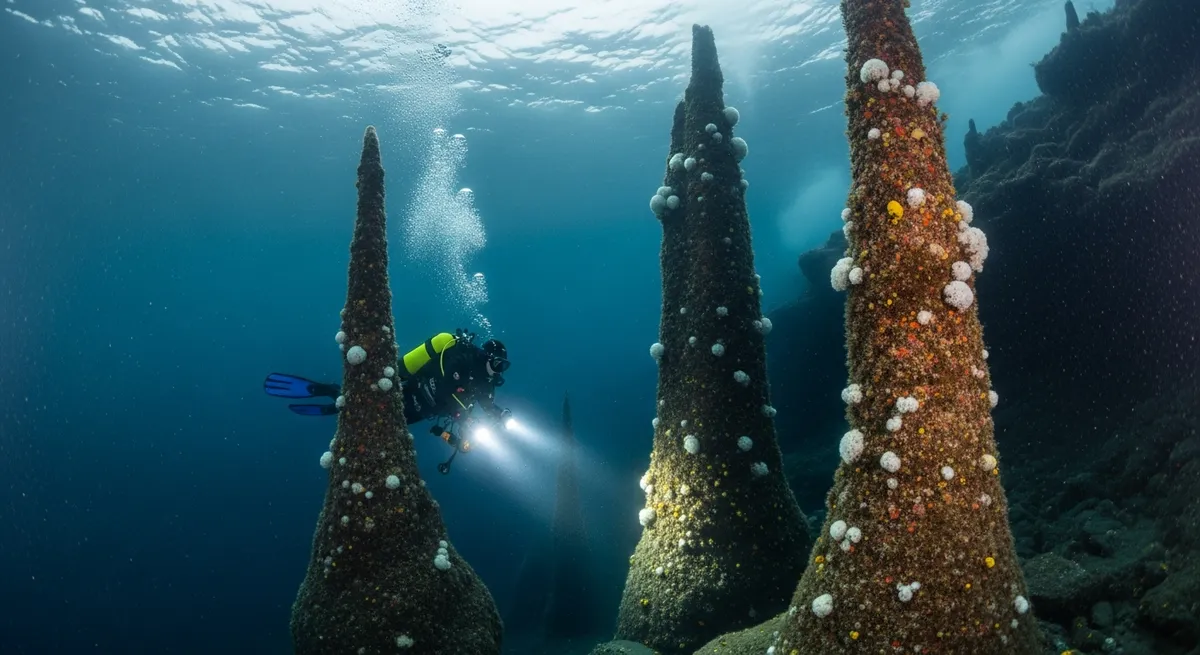
Strytan isn't just a dive site, it’s a geological phenomenon, a warm anomaly in the cold north. We love the feeling of descending onto the pinnacle itself, a hydrothermal chimney bubbling away, releasing warm water from the earth. The temperature shift is palpable, and that warmth attracts an unusual mix of Arctic marine life. You’ll see species like the Northern sea fern clinging to the towers, thriving in the geothermal heat. The surrounding reefs hold big Atlantic cod and schools of coalfish. This isn't your colourful tropical reef, but the scale of the geology and the sheer resilience of the life here is incredible. Visibility can be excellent, often around 20-30 metres, especially outside of the spring plankton bloom. We’d suggest focusing on the quieter morning dives if you can, before any potential boat traffic kicks up the silty bottom nearby. You might even spot a harbour porpoise zipping by or hear the distant calls of minke whales during the summer months. It's a stark, powerful place, and truly unique.
Strytan & North Iceland Dive Site Map
Dive sites and dive centres in Strytan & North Iceland
Strytan & North Iceland Dive Sites
8 dive sites in Strytan & North Iceland
DANIEL QUARE
Diving the Daniel Quare is a proper adventure, not your typical tropical wreck dive. This steamship, which ran aground back in '55, sits shallow, just five metres deep, meaning you get some decent bottom time without feeling rushed. We love how exposed she is, right off Langanes Point, absorbing the raw power of the North Atlantic. You’ll feel the surge pulling gently at you as you weave through the remains of the hull, an almost skeletal structure now. It’s less about intact rooms and more about the tough beauty of metal yielding to the sea. The visibility here can vary, but on a good day, the light filters down, illuminating the twisted plates and beams. Keep an eye out for the local critters making a home among the wreckage; we've seen plenty of inquisitive blennies peeking out and sometimes a hefty cod cruising by. This site is brilliant for photographers who appreciate a moody, atmospheric shot, and it suits anyone who enjoys a wreck with a real story, even if it’s told through rust and the cold embrace of the ocean.
HANS SIF
The Hans Sif sits in surprisingly shallow water, a real bonus for divers who want to stretch their bottom time. We're talking 5 metres, tops. She’s a Danish motor vessel, ran aground in 1968, and now lies nicely broken up across a rocky seabed off Rifstangi. We love how accessible she is, even for newer divers, though the entry can be a bit of a scramble over the rocks. You’ll find sections of the hull, some ribs, and parts of the superstructure scattered around, covered in kelp. It feels less like a single wreck and more like an archaeological site, spread out for you to explore piece by piece. Look closely amongst the plates; there are usually plenty of sculpins tucked into crevices, and we’ve often seen schooling saithe darting through the clearer patches above the wreck. It’s a completely different vibe from the deeper, more intact wrecks, offering a peaceful, slow exploration rather than a dramatic penetration. Ideal for a relaxed second dive of the day.
HOLMUR
We’re always on the hunt for something a little different, and Holmur absolutely delivers. This isn’t a deep dive, not even close, but the wreck herself, a 47.5-meter motor vessel stranded in 1978, has become a beautiful, albeit shallow, habitat. You’ll find her laid out on a sandy beach at the head of Olafsfjordhur, her hull and superstructure still largely intact. The shallow depth, just 2 meters, means you get fantastic light penetration, illuminating the kelp forests that have taken root all over her decks and inside her flooded compartments. Exploring Holmur feels less like a traditional wreck dive and more like an archaeological snorkel. The sheer scale of the vessel, despite the shallow water, is impressive. You can glide over the bridge, peer into the holds, and weave through the growth. Small crabs scuttle across the metal, and various fish flit between the kelp fronds. It's a great spot for photographers looking for unique wide-angle shots, or for newer divers and even snorkelers who want to experience the atmosphere of a shipwreck without the depth. We love how accessible it is, offering a truly unique perspective on a piece of maritime history.
Kolbeinsey
Kolbeinsey, a remote island north of mainland Iceland, offers a raw, exposed dive. We're talking about a volcanic pinnacle rising from deep water, often battered by Atlantic swells and strong currents. Visibility can vary wildly, but on a good day, the sheer walls are impressive, covered in cold-water corals and anemones. This dive is definitely for experienced cold-water divers keen on extreme environments and a true sense of exploration.
MAVUR
The Mavur, a 76-meter carrier vessel, sits upright at a shallow five meters, making it remarkably accessible. She went down in 1981, striking rocks on her way out of Eyjafjordur, and now offers a surprisingly intact wreck dive. We've found the wheelhouse and parts of the superstructure are still quite defined, allowing for easy navigation through the remaining sections. You'll spot lumpfish tucked into crevices and often schools of cod hanging around the bow, especially in the calmer summer months. It's an ideal spot for newer wreck divers or those looking for a relaxed second dive.
Strytan Hydrothermal Chimney
Diving the Strytan hydrothermal chimney is a truly singular experience, unlike anything else we've encountered. This colossal 55-meter cone, erupting from the seafloor, spews warm fresh water, creating a surreal environment that feels more like an alien planet than our own. We found the thermoclines fascinating, a visible shimmer where the warm water meets the cold Arctic current. Life here is sparse but utterly unique; you'll spot peculiar organisms thriving in the geothermal outflow, and the sheer scale of the chimney itself is humbling. It’s a dive best suited for experienced cold-water divers comfortable with deeper profiles and the unique conditions a hydrothermal vent presents.
SUSANNE REITH
The Susanne Reith, a carrier vessel that came to grief in a 1964 storm, sits right at the entrance to Raufarhofn Harbour. What remains is pretty shallow, just 2 metres, making it accessible to pretty much anyone who wants a peek. We’re talking about the hull and superstructure, enough to get a real feel for her 71-meter length. It’s not about grand swim-throughs here, but rather a chance to observe how the local creatures have made a home on the wreck, sometimes with surprising fish life tucked into the nooks. Perfect for a leisurely dive or even a snorkel if the conditions are calm.
TRY
TRY offers a shallow wreck dive, sitting at just 5m, making it approachable for those new to wreck exploration. What’s left of the hull is scattered across the seabed, giving you plenty of smaller sections to peer into. We've seen various bottom-dwelling fish taking shelter among the twisted metal, making it a decent spot for macro photography if you're patient. It’s a good option for an easy second dive or for divers looking to practice their wreck penetration skills without significant depth.
Strytan & North Iceland Dive Centres
No dive centres listed in Strytan & North Iceland yet. Browse all dive centres.
Ocean Wildlife in Strytan & North Iceland
12 species recorded in Strytan & North Iceland
Strytan & North Iceland Daylight & Sunrise/Sunset
Sunrise and sunset times for Strytan & North Iceland, calculated from coordinates
Today - Sunday 11 October
Sunrise
06:48
Sunset
17:03
Daylight
10h 15m
Golden Hour
15:49
First light (dawn) at 05:56 · Last light (dusk) at 17:56
Monthly Averages
| Month | Sunrise | Sunset | Daylight |
|---|---|---|---|
| Jan | 10:11 | 14:25 | 4h 14m |
| Feb | 08:21 | 16:26 | 8h 5m |
| Mar | 06:34 | 18:03 | 11h 30m |
| Apr | 04:32 | 19:47 | 15h 15m |
| May | 02:31 | 21:40 | 19h 9m |
| Jun | NaN:NaN | NaN:NaN | NaNh NaNm |
| JulLongest | 01:31 | 22:59 | 21h 28m |
| Aug | 03:40 | 20:48 | 17h 8m |
| Sep | 05:25 | 18:45 | 13h 20m |
| OctNow | 07:02 | 16:48 | 9h 46m |
| Nov | 08:55 | 14:52 | 5h 58m |
| DecShortest | 10:42 | 13:25 | 2h 43m |
Times are approximate local times based on longitude. Actual times may vary slightly depending on the exact timezone observed in Strytan & North Iceland.
Where to Stay near Strytan & North Iceland
Prices from Booking.com. We may earn a commission at no extra cost to you.
Marine Protected Areas near Strytan & North Iceland
5 protected areas near Strytan & North Iceland - please respect local regulations when diving
Arnarnesstrýtur
Hólmanes Friðland
Hverastrytur i Eyjafirdi, north of Arnanesnöfum
Hverastrytur i Eyjafirdi
Hverastrýtur
Getting to Strytan & North Iceland
Húsavík
Akureyri
Reykjavík
Plan & book
Ways to dive Strytan & North Iceland, from day trips to liveaboards.
Day trips & courses
via GetYourGuideGuided dives, courses and snorkel trips with instant booking.
Find dive trips in Strytan & North IcelandPlaces to stay
via Booking.comHotels and dive resorts near Strytan & North Iceland.
Search stays in Strytan & North IcelandDive insurance
Most travel insurance excludes or limits scuba. Check what you need before you go.
Dive insurance explainedPartner links: we may earn a commission if you book, at no extra cost to you. How we make money