ENOS - Ustica

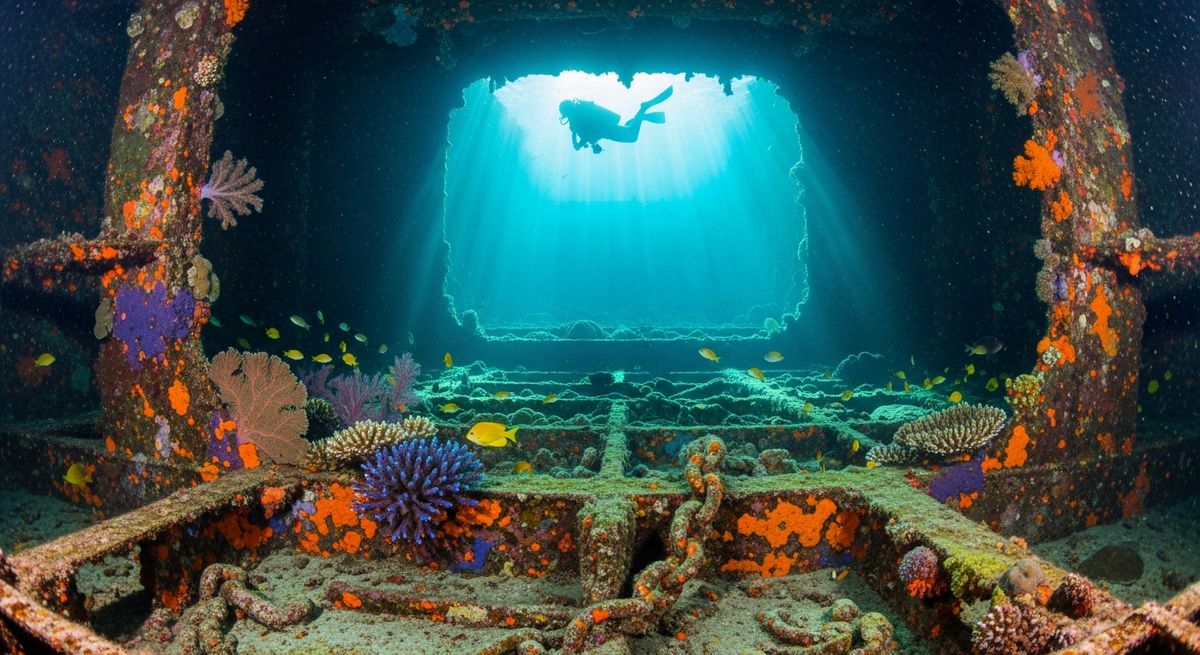
The ENOS wreck, sitting in just 5 metres of water, is a perfect, relaxed dive when the sun's high and you’re looking for something gentle. This old motor vessel, sunk back in 1970, stretches out at a generous 67 metres, making for a substantial structure to explore in such shallow depths. Even after all these years, you can still trace the outline of its hull and parts of its superstructure. We’ve seen octopuses tucked into crevices, schools of damselfish flitting through the open sections, and often a grumpy moray eel peeking from a dark corner. It’s a great site for photographers, especially when the light streams down onto the metal, creating some striking contrasts.

Location
Ustica, Italy, Mediterranean & Europe
Coordinates
37.284000, 13.533167
Type
wreck
Maximum Depth
5m

Marine Protected Area: Fondali di Torre Salsa

Best Time to Dive in Ustica

The warmest water temperatures in Ustica occur in January, averaging 15.5°C. The coolest conditions are in December at 15.5°C.

Monthly Water Temperatures

  • January: 15.5°C (air: 13.6°C)
  • February: 15.5°C (air: 13.5°C)
  • March: 15.5°C (air: 13.6°C)
  • April: 15.5°C (air: 15.0°C)
  • May: 15.5°C (air: 18.5°C)
  • June: 15.5°C (air: 22.7°C)
  • July: 15.5°C (air: 26.4°C)
  • August: 15.5°C (air: 27.0°C)
  • September: 15.5°C (air: 24.9°C)
  • October: 15.5°C (air: 21.6°C)
  • November: 15.5°C (air: 18.6°C)
  • December: 15.5°C (air: 15.3°C)

Nearby Dive Sites in Ustica

Nearest Dive Centres to ENOS

Marine Life in Ustica

Home to 63 recorded species including 41 reef fish, 4 whales & dolphins, 3 other, 3 hard corals, 3 crabs & lobsters, 2 seagrass & algae.

Notable Species

Recommended Packing List for ENOS

Based on average water temperature of 15.5°C.

  • Wetsuit (5-7mm) - recommended for 15°C water
  • Hood & Gloves (3-5mm) - helps retain warmth
  • Mask - essential for every dive
  • Fins
  • BCD - buoyancy compensator
  • Regulator - your most safety-critical piece of gear
  • Dive Computer - tracks depth, time, and NDL
  • Surface Marker Buoy (SMB) - essential for boat pickups
  • Dive Torch - useful for crevices and colour at depth
  • Underwater Camera - capture your diving memories

Frequently Asked Questions

What is the maximum depth an ENOS beacon is waterproof and functional for divers?
The provided data describes the ENOS dive site, a fascinating wreck off Ustica Island, Italy, which lies at a depth of 5m. However, the context does not contain any information regarding the maximum waterproof depth or functionality of an 'ENOS beacon' or any specific diving equipment. The data focuses solely on the characteristics of the historical motor vessel wreck.
What kind of information does the ENOS receiver display to the dive boat when a diver activates their beacon?
The available information details the ENOS dive site, a motor vessel sunk in 1970, with dimensions of 67.1m x 10.1m. There is no data provided about an 'ENOS receiver' or the information it might display to a dive boat upon beacon activation. The context is specific to the wreck's history and physical attributes.
How difficult is it for a diver to activate and use the ENOS transmitter in an emergency situation?
The difficulty rating provided in the context refers to diving the ENOS wreck itself, which is classified as an intermediate dive. The data does not contain any details about the activation or ease of use of an 'ENOS transmitter' or any emergency signaling equipment. Divers interested in equipment usage can explore our equipment section.
Under what sea conditions or times is the ENOS system most critical for diver safety and location?
The data mentions that the ENOS vessel sank in 1970 due to cargo shifting in heavy weather off Sciac. However, this refers to the conditions of the ship's loss, not the operational criticality of an 'ENOS system' for diver safety. The provided context does not offer insights into the performance of such a system under various sea conditions.
Are there any specific certifications or training required for divers to effectively use the ENOS system?
The provided information classifies the ENOS dive site as an intermediate difficulty dive, suggesting a certain level of diving proficiency is beneficial for exploring this wreck. However, the data does not specify any certifications or training requirements related to the effective use of an 'ENOS system' or any diver location equipment. For general diving certifications, please consult relevant training agencies.
How does the ENOS system's performance for diver location compare in areas with strong currents or challenging surface conditions?
The context describes the ENOS wreck, noting its sinking in 1970 due to heavy weather. This information pertains to the historical event of the vessel's loss, not the performance of an 'ENOS system' for diver location under strong currents or challenging surface conditions. The provided data does not offer any comparative analysis of equipment performance.