BLACKHEATH
Protected Area
Complexe du Bas Tahaddart
Why dive here
With 140+ marine species recorded in the area - including dolphins, ocean sunfish (mola mola), octopuses, sea turtles and sperm whales - BLACKHEATH offers some of Al Hoceima's richest wreck diving. Water ranges 16-23°C, warmest July, August, September.
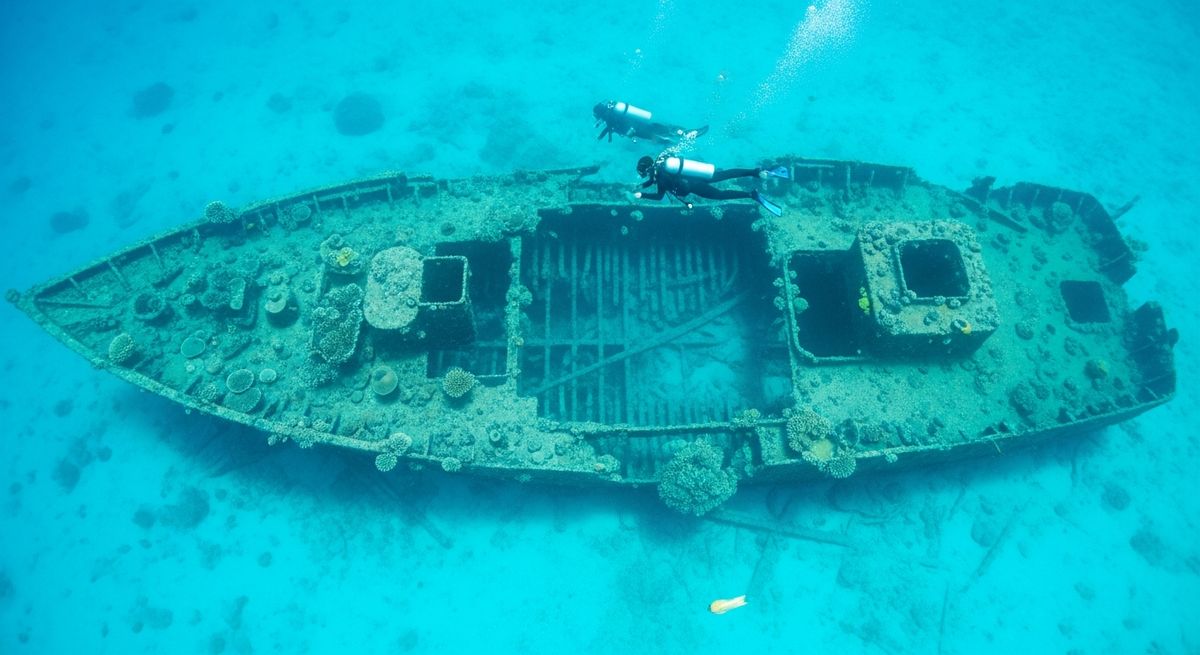
The Blackheath is a big wreck, and she sits upright in a way that just begs for exploration. We love how her sheer size at only 6m deep means you can really take your time, picking apart the details. Our favourite parts are the massive boilers, draped in a carpet of orange sponges, and the way schools of glasseyes dart in and out of the darker spaces. You'll spend an easy hour just swimming circuits, spotting nudibranchs on the hull plates and watching damselfish guard their patches of algae. It’s perfect for new wreck divers, or anyone who just wants a relaxed dive with plenty to see without worrying about depth or deco. She was a British steamship, torpedoed in 1945, and the years have been kind to her, covering her in an impressive array of Mediterranean growth. The visibility here is often quite good, maybe 15m on a calm day, and the light penetration at 6m is fantastic, making everything feel bright and accessible. We'd suggest going in the morning before any boat traffic picks up; you often get the whole site to yourself. Keep an eye out for resident groupers peering out from under collapsed sections of the deck, and we’ve even seen small octopuses tucked into crevices in the cargo holds.
Typical BLACKHEATH Dive Profile
Illustrative profile based on site depth and type. Actual dive profiles vary - always follow your dive computer and training.
Safety Notes
Wreck site - avoid penetration without wreck diving certification. Watch for sharp metal and entanglement hazards.
BLACKHEATH Wreck History
Year Sunk
1945
Vessel Type
cargo ship
Cause
torpedo
Tonnage
4,635 GRT
The SS Blackheath was a 4,635-ton British steamship that played a vital role during the Second World War. Built in 1936, she served diligently until the final months of the conflict. In January 1945, while sailing with the Allied Convoy UGS-67, she became a target for the German submarine U-870. On January 10, off the coast of Al Hoceima, Morocco, a torpedo from the U-boat found its mark. The explosion crippled the Blackheath, sending the vessel and its wartime cargo to the bottom of the Mediterranean Sea.
Today, the Blackheath is a remarkable and incredibly accessible piece of WWII history. The wreck rests in just 6 meters of water, making it an ideal site for novice divers and even snorkelers. The ship is broken apart but its major sections remain, allowing for a fascinating exploration of a wartime casualty. The clear Moroccan waters provide excellent visibility, showcasing the abundant marine life that has colonized the wreck over the decades, turning a relic of war into a vibrant underwater oasis.
Nearest Dive Centres to BLACKHEATH
Dive shops near BLACKHEATH
Scubamar
LEON MARINO Diving Center
FAISHASUB
Reviews for BLACKHEATH
Conditions
Ocean conditions, forecast and tides for BLACKHEATH
BLACKHEATH Ocean Conditions
Monthly averages for BLACKHEATH, sourced from Open-Meteo marine data - nearest station: Open-Meteo marine grid (36.14, -5.33) (13km away)
October Averages
Sea Temperature
20°C
68°F · Range: 17.3–22°C
Air Temperature
21°C
70°F
Wind Speed
5.48 m/s
10.7 knots
Atmospheric Pressure
1017.8 hPa
Based on 4 years of monitoring data · Data sources: Open-Meteo marine data
Plan & book
Ways to dive Al Hoceima, from day trips to liveaboards.
Day trips & courses
via GetYourGuideGuided dives, courses and snorkel trips with instant booking.
Find dive trips in Al HoceimaPlaces to stay
via Booking.comHotels and dive resorts near Al Hoceima.
Search stays in Al HoceimaDive insurance
Most travel insurance excludes or limits scuba. Check what you need before you go.
Dive insurance explainedPartner links: we may earn a commission if you book, at no extra cost to you. How we make money
Where to Stay near BLACKHEATH
Prices from Booking.com. We may earn a commission at no extra cost to you.