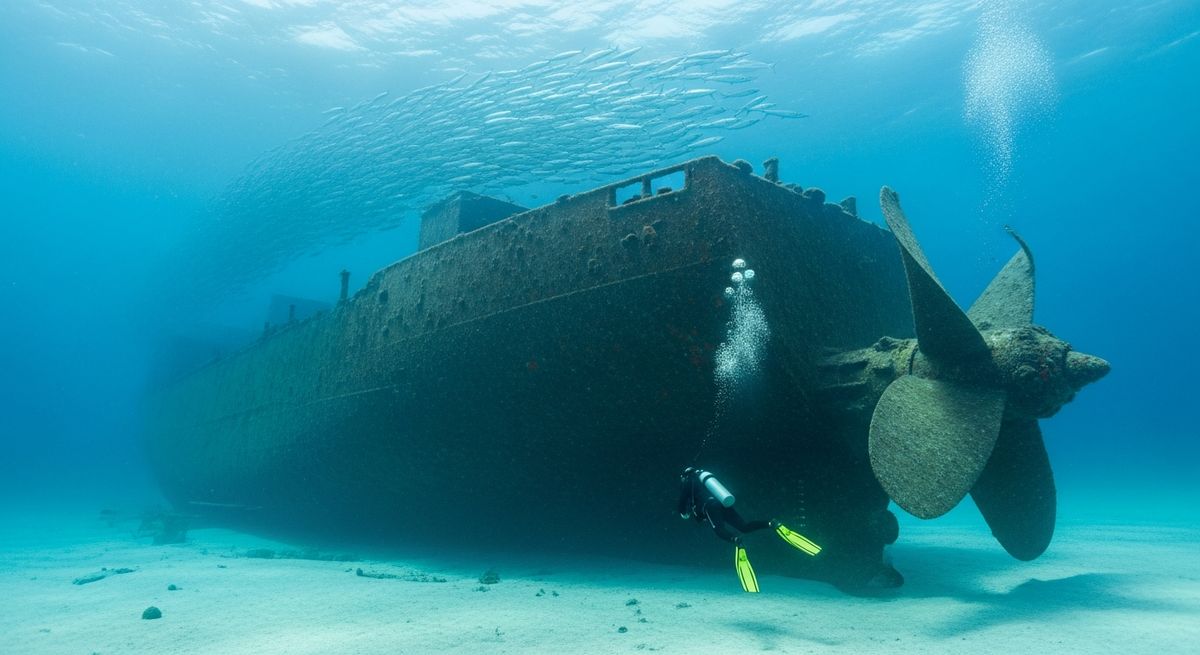
B24 Liberator PB4Y
Protected Area
Ria Formosa
Why dive here
With 116+ marine species recorded in the area - including blue sharks, blue whales, dolphins, dwarf minke whales and ocean sunfish (mola mola) - B24 Liberator PB4Y offers some of Algarve & Berlengas's richest wreck diving. Water ranges 15-19°C, warmest June, October, November.
The B24 Liberator PB4Y wreck off the Algarve coast is one of those dives that sticks with you. Dropping down, the sheer size of it immediately grabs your attention. This isn't just a pile of debris, it’s a proper aircraft, broken but still identifiable, sitting on the seabed. We love tracing the wing, imagining the sheer force that brought it down. The cockpit section is particularly poignant, a real window into history, and it’s become a haven for conger eels, their heads peeking out from the darker corners. Swimming around the fuselage, you’ll spot huge schools of barracuda often hanging motionless above the structure, catching the light just so. The metal skeleton provides plenty of nooks for octopuses, and if you’re patient, you might see them scuttling along, changing colour as they go. This site suits divers comfortable with a deeper profile and who appreciate the stories a wreck can tell. It's not about coral gardens here, it's about the tangible past and the marine life that has made it home. We’d suggest a slow descent, taking time to absorb the scale before focusing on the details.
Safety Notes
Wreck site - avoid penetration without wreck diving certification. Watch for sharp metal and entanglement hazards.
B24 Liberator PB4Y Wreck History
Year Sunk
1943
Vessel Type
aircraft
Cause
unknown
During the height of the Battle of the Atlantic, US Navy PB4Y-1 Liberators played a crucial role in hunting German U-boats. On November 30, 1943, this particular Liberator, attached to the US Navy's Patrol Bombing Squadron VPB-110, was on an anti-submarine patrol off the coast of Portugal. The aircraft suffered a catastrophic engine failure, causing it to lose control and crash into the Atlantic. All ten crew members on board were lost in the incident.
The wreck of the Liberator now lies at a depth of around 30 meters off the Algarve coast. Due to the depth and potential for strong currents, this is a dive best suited for experienced divers. The aircraft is not intact, having broken up on impact, but the debris field is extensive. Divers can identify significant components, including the four powerful Pratt & Whitney engines, sections of the massive wing, landing gear, and parts of the fuselage. It serves as an underwater memorial to the airmen who patrolled these waters during World War II, a silent testament to the perils they faced far from the main battlefields.
Nearest Dive Centres to B24 Liberator PB4Y
Dive shops near B24 Liberator PB4Y
Centro de Ciencias do Mar
Open Waters
EasyDivers Unipessoal Lda
DiveSpot
Diver´s Cove Portugal
Surf
Reviews for B24 Liberator PB4Y
Conditions
Ocean conditions, forecast and tides for B24 Liberator PB4Y
B24 Liberator PB4Y Ocean Conditions
Monthly averages for B24 Liberator PB4Y, sourced from Open-Meteo marine data - nearest station: Open-Meteo marine grid (37.92, -8.81) (40km away)
October Averages
Sea Temperature
19°C
65°F · Range: 16.7–20.2°C
Air Temperature
18°C
65°F
Wind Speed
8.24 m/s
16.0 knots
Atmospheric Pressure
1017.4 hPa
Based on 4 years of monitoring data · Data sources: Open-Meteo marine data
Plan & book
Ways to dive Algarve & Berlengas, from day trips to liveaboards.
Day trips & courses
via GetYourGuideGuided dives, courses and snorkel trips with instant booking.
Find dive trips in Algarve & BerlengasPlaces to stay
via Booking.comHotels and dive resorts near Algarve & Berlengas.
Search stays in Algarve & BerlengasDive insurance
Most travel insurance excludes or limits scuba. Check what you need before you go.
Dive insurance explainedPartner links: we may earn a commission if you book, at no extra cost to you. How we make money
Where to Stay near B24 Liberator PB4Y
Prices from Booking.com. We may earn a commission at no extra cost to you.