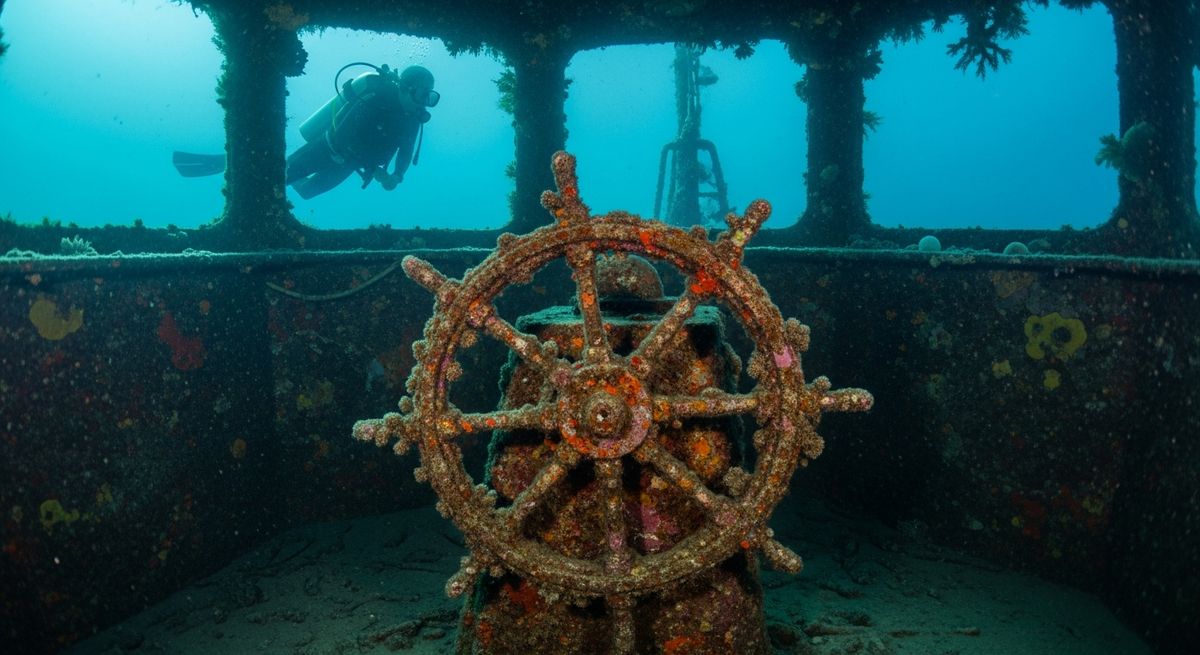
CRUSADER (POSSIBLY)
Protected Area
Kilkeel Steps
Why dive here
With 118+ marine species recorded in the area - including dolphins, dwarf minke whales, humpback whales, ocean sunfish (mola mola) and orcas - CRUSADER (POSSIBLY) offers some of Northumberland & Northeast's richest wreck diving.
The Crusader wreck, possibly. That “possibly” just adds to the intrigue, doesn’t it? We’re talking about a large steam yacht, down at 35 metres, sitting off the Northumberland coast. It’s a proper expedition, not a casual Sunday splash. What hits you first, finning down through that green northern water, is the sheer scale. This isn't some small fishing boat; at 64 metres long, it's substantial, and you can really feel the history of a vessel built for luxury, now a skeletal home for critters. Our favourite spots are around the twin shafts and where the engines would have been. There’s often some strong current here, so plan your dive carefully, but it’s worth it for the amount of life tucked into the nooks and crannies. Expect to see cod lurking in the deeper shadows, conger eels peeking out from pipes, and those vibrant jewel anemones splashed across the metalwork, a real burst of colour against the rust. It’s a dive for those who appreciate serious wreck penetration and a touch of mystery. We’d suggest a good torch and solid buoyancy control to explore the interior. Visibility can be hit or miss, so aim for a calm day with neap tides if you can. It’s a challenging dive, but the reward is a tangible connection to a piece of maritime history.
Typical CRUSADER (POSSIBLY) Dive Profile
Illustrative profile based on site depth and type. Actual dive profiles vary - always follow your dive computer and training.
Safety Notes
Deep dive (35m) - monitor air consumption closely. Advanced certification recommended.
Wreck site - avoid penetration without wreck diving certification. Watch for sharp metal and entanglement hazards.
Always perform a 3-minute safety stop at 5m before surfacing.
Nearest Dive Centres to CRUSADER (POSSIBLY)
Dive shops near CRUSADER (POSSIBLY)
View all dive centres in Northumberland & NortheastReviews for CRUSADER (POSSIBLY)
Conditions
Ocean conditions, forecast and tides for CRUSADER (POSSIBLY)
Plan & book
Ways to dive Northumberland & Northeast, from day trips to liveaboards.
Day trips & courses
via GetYourGuideGuided dives, courses and snorkel trips with instant booking.
Find dive trips in Northumberland & NortheastPlaces to stay
via Booking.comHotels and dive resorts near Northumberland & Northeast.
Search stays in Northumberland & NortheastDive insurance
Most travel insurance excludes or limits scuba. Check what you need before you go.
Dive insurance explainedPartner links: we may earn a commission if you book, at no extra cost to you. How we make money
Where to Stay near CRUSADER (POSSIBLY)
Prices from Booking.com. We may earn a commission at no extra cost to you.