HAZELDENE
Protected Area
Granagh Bay
Why dive here
With 118+ marine species recorded in the area - including dolphins, dwarf minke whales, humpback whales, ocean sunfish (mola mola) and orcas - HAZELDENE offers some of Northumberland & Northeast's richest wreck diving.
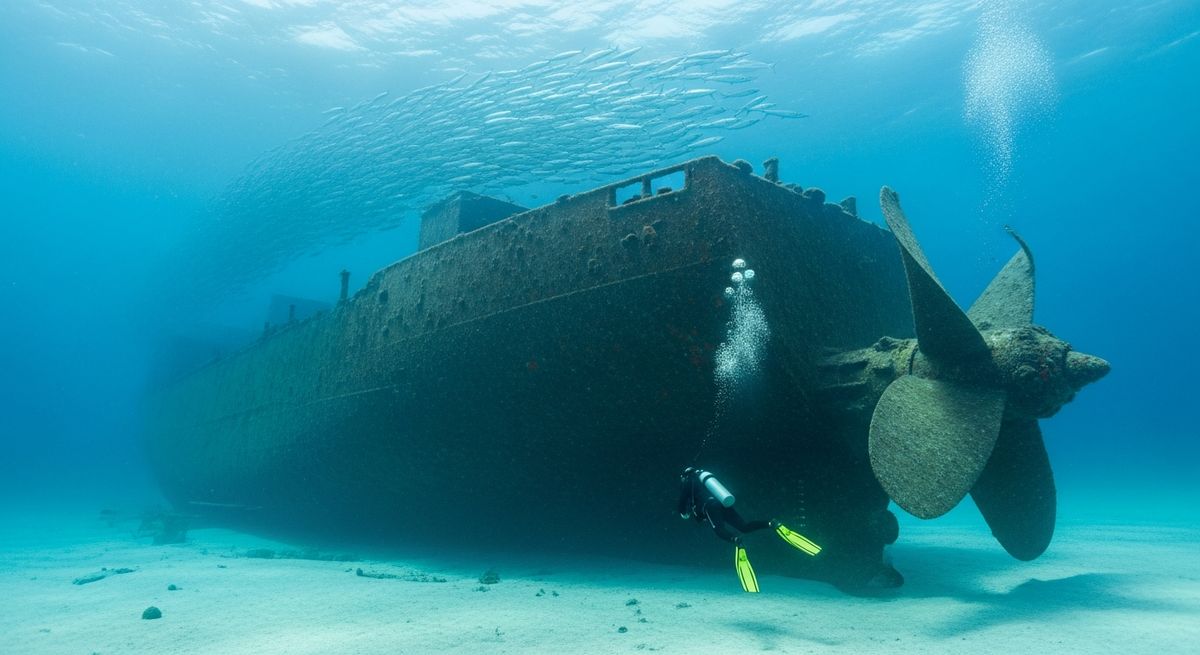
The Hazeldene is an absolute classic for a reason, and if you’re diving the Northumberland coast, we’d say it's an essential stop. This isn't just a pile of twisted metal; she’s an honest-to-goodness steamship, resting upright on the seabed. You really get a sense of her shape, her size at 89 metres, as you drift along the decks. We always start at the stern, picking our way through the propeller shaft tunnel, then working our way forward past the two huge boilers, which are just bursting with life. Visibility can be a proper mixed bag here, so aim for slack water on a neap tide for your best chance. On a good day, when the sun manages to pierce the green, you’ll see the glint of thousands of plumose anemones coating every surface. Look for the lobsters tucked into every nook and cranny, and those big, inquisitive wrasse that seem to follow you around. Our favourite part? Heading into the holds; it's dark and cavernous in there, but just think of the history. It’s a proper dive for those who appreciate wrecks with character.
Safety Notes
Wreck site - avoid penetration without wreck diving certification. Watch for sharp metal and entanglement hazards.
Reviews for HAZELDENE
Conditions
Ocean conditions, forecast and tides for HAZELDENE
Plan & book
Ways to dive Northumberland & Northeast, from day trips to liveaboards.
Day trips & courses
via GetYourGuideGuided dives, courses and snorkel trips with instant booking.
Find dive trips in Northumberland & NortheastPlaces to stay
via Booking.comHotels and dive resorts near Northumberland & Northeast.
Search stays in Northumberland & NortheastDive insurance
Most travel insurance excludes or limits scuba. Check what you need before you go.
Dive insurance explainedPartner links: we may earn a commission if you book, at no extra cost to you. How we make money
Where to Stay near HAZELDENE
Prices from Booking.com. We may earn a commission at no extra cost to you.