HIBERNIAN
Protected Area
West of Copeland
Why dive here
With 118+ marine species recorded in the area - including dolphins, dwarf minke whales, humpback whales, ocean sunfish (mola mola) and orcas - HIBERNIAN offers some of Northumberland & Northeast's richest wreck diving.
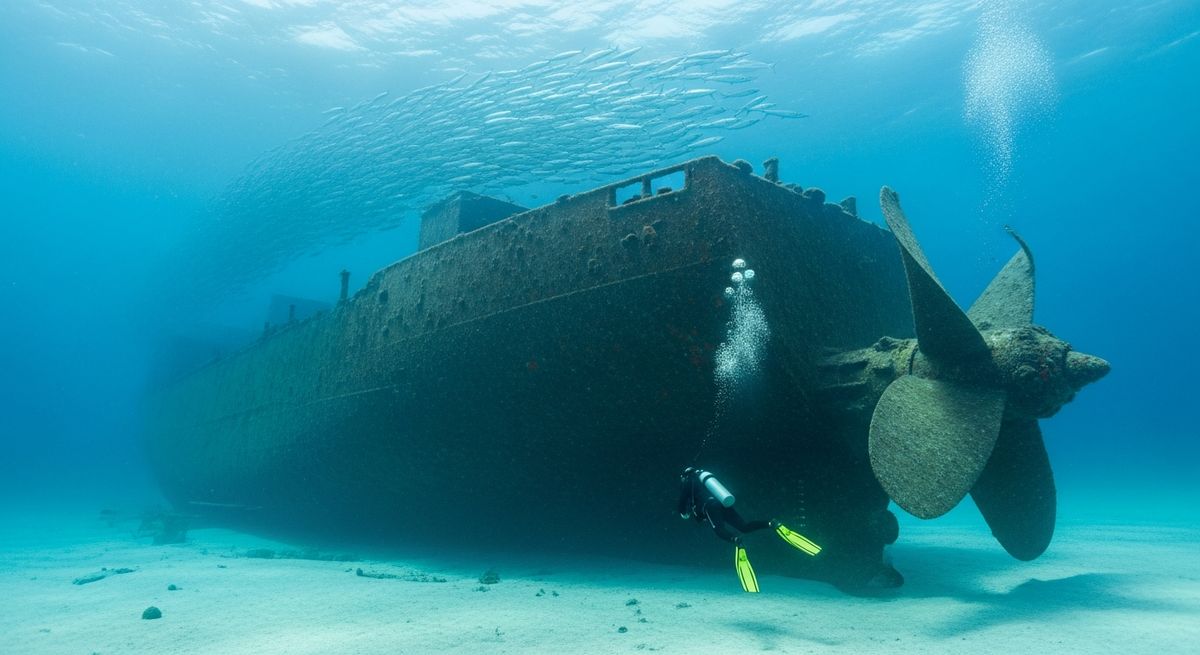
The Hibernian, she’s a proper character, sitting upright at 38 metres. We love that she’s a compact wreck, easy to get your head around in one dive, but still packed with detail. You’ll find her bow pointing north, the stern to the south, with two boilers and a sizeable engine taking centre stage. We always make a point of peering into the open holds, where crabs scuttle and curious wrasse dart in and out of the shadows. The atmosphere down there is something else – the deep green light, the gentle sway of dead man's fingers coating the metalwork. Look closely for the smaller stuff: tiny gobies tucked into crevices, nudibranchs slowly making their way across the plates. Because she’s relatively intact, the structure itself provides plenty of overheads and interesting swim-throughs for the more experienced. It’s a dive that rewards a slow approach, letting your eyes adjust to the subtle changes in light and texture. We’d suggest saving this one for a calm day with good visibility, as the deeper depth makes anything less a bit of a scramble.
Typical HIBERNIAN Dive Profile
Illustrative profile based on site depth and type. Actual dive profiles vary - always follow your dive computer and training.
Safety Notes
Deep dive (38m) - monitor air consumption closely. Advanced certification recommended.
Wreck site - avoid penetration without wreck diving certification. Watch for sharp metal and entanglement hazards.
Always perform a 3-minute safety stop at 5m before surfacing.
Nearest Dive Centres to HIBERNIAN
Dive shops near HIBERNIAN
View all dive centres in Northumberland & NortheastReviews for HIBERNIAN
Conditions
Ocean conditions, forecast and tides for HIBERNIAN
Plan & book
Ways to dive Northumberland & Northeast, from day trips to liveaboards.
Day trips & courses
via GetYourGuideGuided dives, courses and snorkel trips with instant booking.
Find dive trips in Northumberland & NortheastPlaces to stay
via Booking.comHotels and dive resorts near Northumberland & Northeast.
Search stays in Northumberland & NortheastDive insurance
Most travel insurance excludes or limits scuba. Check what you need before you go.
Dive insurance explainedPartner links: we may earn a commission if you book, at no extra cost to you. How we make money
Where to Stay near HIBERNIAN
Prices from Booking.com. We may earn a commission at no extra cost to you.