READING
Protected Area
Granagh Bay
Why dive here
With 118+ marine species recorded in the area - including dolphins, dwarf minke whales, humpback whales, ocean sunfish (mola mola) and orcas - READING offers some of Northumberland & Northeast's richest wreck diving.
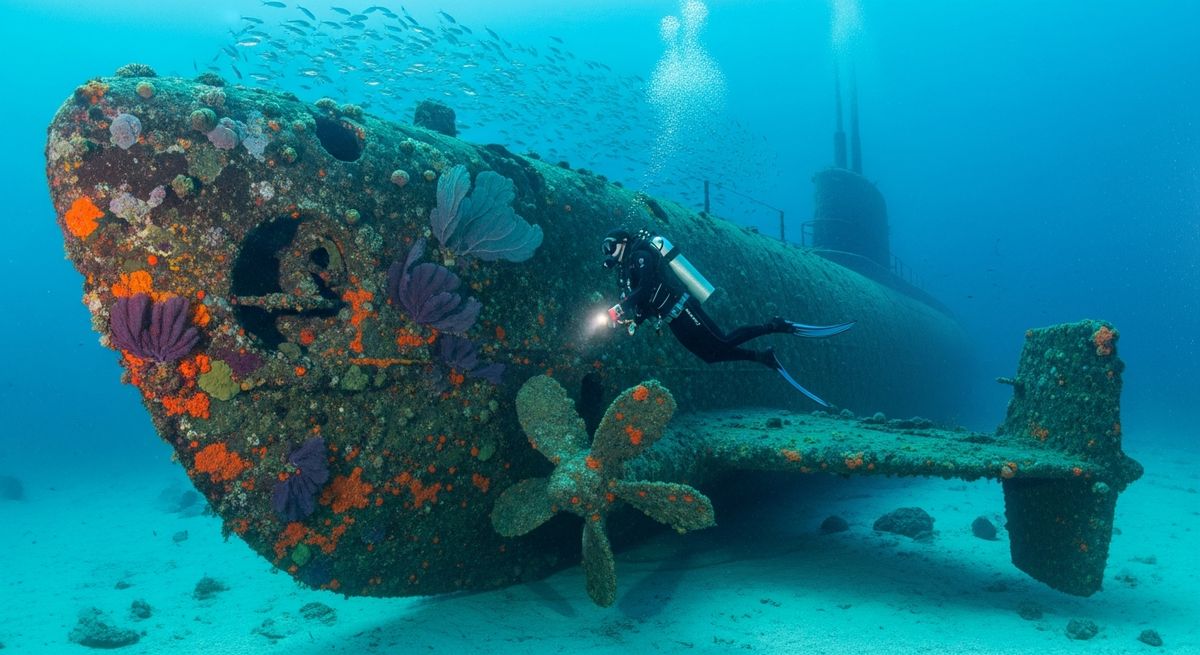
We love the Reading, not for its deep-sea drama, but for its sheer accessibility and the way it brings history right to your mask. Sunk in 1913, this steamship lies in only two meters of water, making it a perfect drift snorkel or a very shallow dive when the tide is right. You’ll spot the massive boilers first, looming out of the sand, still impressively intact. We’ve spent hours just finning slowly over the hull plates, imagining the journey from Seville. The site comes alive with Northumberland's typical hardy residents. Expect to see plenty of velvet swimming crabs scuttling amongst the wreckage, their eyes like little red beads. Shoals of tiny pollack dart in and out of the twisted metal, and the occasional dogfish will glide past, unperturbed by your presence. It’s a fantastic spot for photographers looking to capture a piece of maritime history bathed in natural light. Our favourite way to experience the Reading is on a calm, sunny day with a gentle current, letting the ebb and flow guide you over the remains. Be mindful of boat traffic if you're exploring it without dive support.
Typical READING Dive Profile
Illustrative profile based on site depth and type. Actual dive profiles vary - always follow your dive computer and training.
Safety Notes
Wreck site - avoid penetration without wreck diving certification. Watch for sharp metal and entanglement hazards.
Reviews for READING
Conditions
Ocean conditions, forecast and tides for READING
Plan & book
Ways to dive Northumberland & Northeast, from day trips to liveaboards.
Day trips & courses
via GetYourGuideGuided dives, courses and snorkel trips with instant booking.
Find dive trips in Northumberland & NortheastPlaces to stay
via Booking.comHotels and dive resorts near Northumberland & Northeast.
Search stays in Northumberland & NortheastDive insurance
Most travel insurance excludes or limits scuba. Check what you need before you go.
Dive insurance explainedPartner links: we may earn a commission if you book, at no extra cost to you. How we make money
Where to Stay near READING
Prices from Booking.com. We may earn a commission at no extra cost to you.