ST MATTHAEUS
Protected Area
Hilbre Islands
Why dive here
With 118+ marine species recorded in the area - including dolphins, dwarf minke whales, humpback whales, ocean sunfish (mola mola) and orcas - ST MATTHAEUS offers some of Northumberland & Northeast's richest wreck diving.
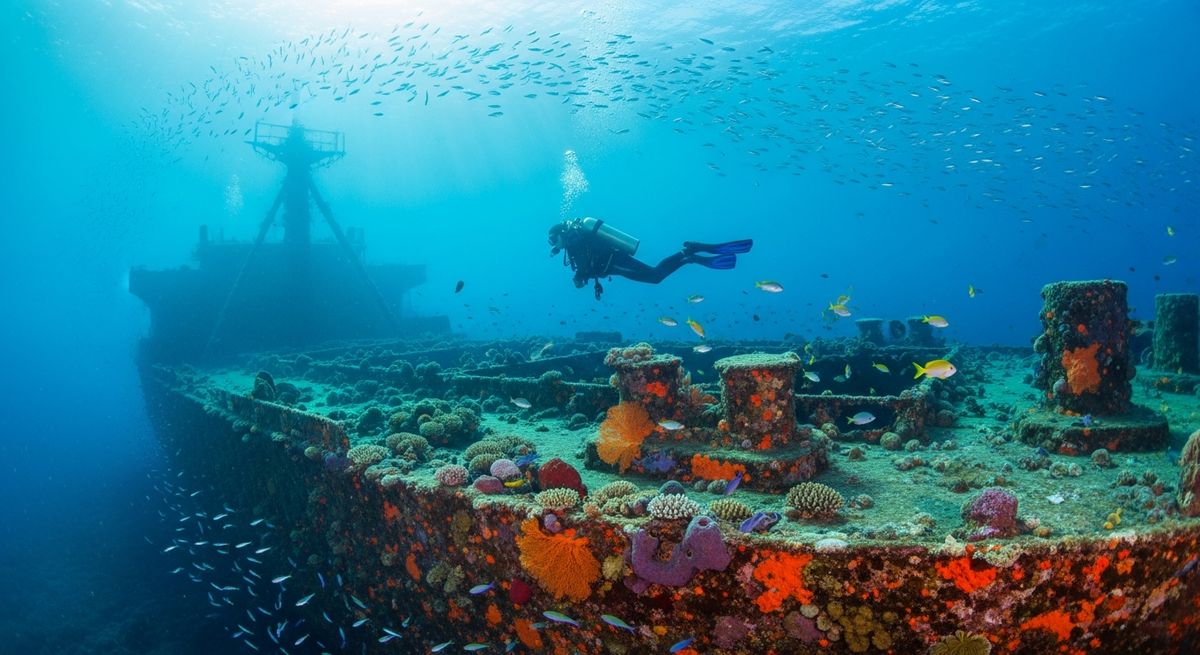
The St. Matthaeus, a sailing vessel that met its end in 1887, rests in a surprisingly shallow five metres. We’re talking easy access here, perfect for a relaxed dip or for divers getting to grips with wreck exploration. What’s left of the 38-metre hull is well broken up, but you can still make out sections of her iron skeleton, especially a few ribs that stick up like ancient fingers. It's a great spot to search for crabs tucked into crevices and smaller fish darting between the metalwork. Visibility can be a bit hit or miss, as with many sites in the Northeast, but on a good day, the light plays nicely through the water, illuminating the wreck's structure.
Typical ST MATTHAEUS Dive Profile
Illustrative profile based on site depth and type. Actual dive profiles vary - always follow your dive computer and training.
Safety Notes
Wreck site - avoid penetration without wreck diving certification. Watch for sharp metal and entanglement hazards.
Nearest Dive Centres to ST MATTHAEUS
Dive shops near ST MATTHAEUS
Aquaventurers
Blue Planet Aquarium
Delph Watersports Centre
Shipmates
Southsea Scuba
Reviews for ST MATTHAEUS
Conditions
Ocean conditions, forecast and tides for ST MATTHAEUS
Plan & book
Ways to dive Northumberland & Northeast, from day trips to liveaboards.
Day trips & courses
via GetYourGuideGuided dives, courses and snorkel trips with instant booking.
Find dive trips in Northumberland & NortheastPlaces to stay
via Booking.comHotels and dive resorts near Northumberland & Northeast.
Search stays in Northumberland & NortheastDive insurance
Most travel insurance excludes or limits scuba. Check what you need before you go.
Dive insurance explainedPartner links: we may earn a commission if you book, at no extra cost to you. How we make money
Where to Stay near ST MATTHAEUS
Prices from Booking.com. We may earn a commission at no extra cost to you.