TIDE - Northumberland & Northeast

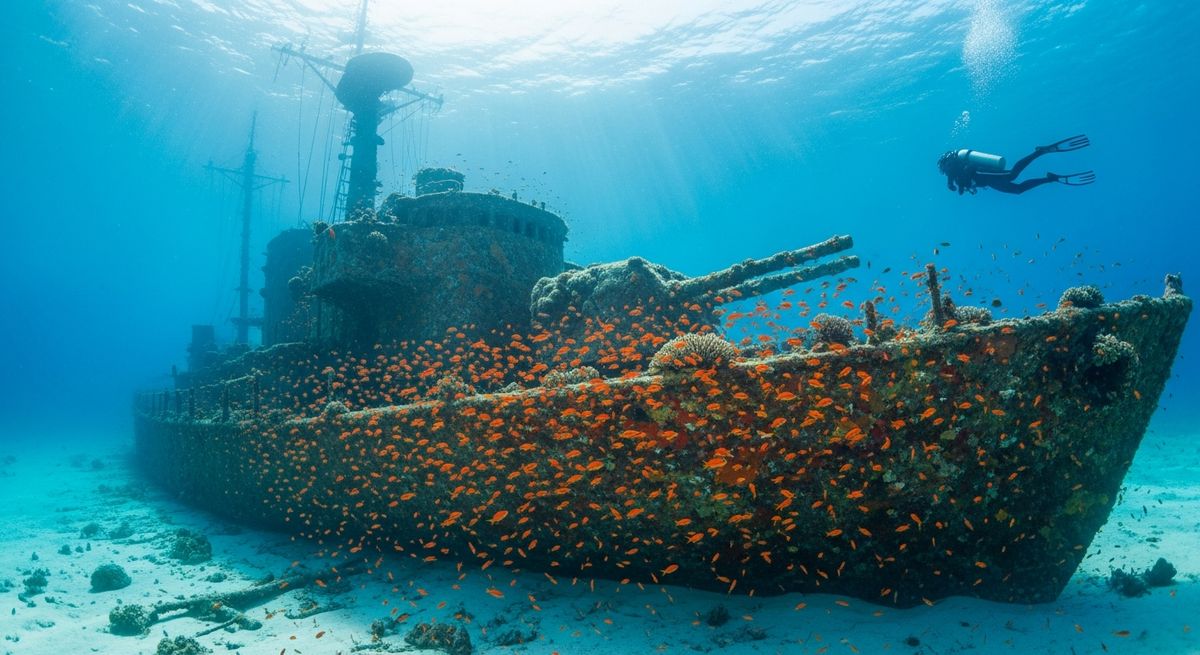
The TIDE, a carrier vessel sunk in 1973, rests upright at 25 metres, making it a good North Sea wreck for a deep dive. Built in 1952, her 48-metre length offers decent penetration for experienced divers, especially into the holds and engine room, if you’re comfortable with overhead environments. The exposed metalwork is now a haven for local critters; you’ll often spot crabs tucked into crevices and various fish darting through the structure. It’s a proper dive for those who enjoy a bit of history and don't mind the chillier waters of the Northeast.

Location
Northumberland & Northeast, United Kingdom, Mediterranean & Europe
Coordinates
54.279750, -5.567666
Type
wreck
Maximum Depth
25m

Marine Protected Area: Killard

Nearby Dive Sites in Northumberland & Northeast

Nearest Dive Centres to TIDE

Marine Life in Northumberland & Northeast

Home to 132 recorded species including 53 reef fish, 15 whales & dolphins, 11 sharks & rays, 10 other, 10 seagrass & algae, 9 crabs & lobsters.

Notable Species

Frequently Asked Questions

What are the typical depths for dives with Thousand Island Dive Excursions (TIDE) in the St. Lawrence River?
The provided data does not contain information about Thousand Island Dive Excursions (TIDE) in the St. Lawrence River. However, for the TIDE wreck site located in Northumberland & Northeast, United Kingdom, the typical depth for dives is 25 meters. This site is a wreck dive, classified as intermediate difficulty.
What kind of marine life and underwater attractions can divers expect to see when diving with TIDE in the St. Lawrence River?
The available data pertains to the TIDE wreck site in Northumberland & Northeast, United Kingdom, not Thousand Island Dive Excursions in the St. Lawrence River. At the UK TIDE site, the primary underwater attraction is a carrier vessel, sunk on January 21, 1973, measuring 48.8m x 8.1m. Information regarding specific marine life at this particular wreck is not detailed in the provided context, but divers can explore the structure of this dangerous wreck. For general marine life information, you can visit our wildlife database.
How challenging are the dive sites offered by Thousand Island Dive Excursions (TIDE) for different skill levels?
Our current data does not cover Thousand Island Dive Excursions (TIDE) in the St. Lawrence River. Instead, it describes the TIDE wreck site in Northumberland & Northeast, United Kingdom. This specific wreck dive is classified as having an intermediate difficulty level. Divers should ensure they have appropriate training and experience for such conditions.
What is the best time of year to dive with TIDE in the St. Lawrence River, considering water temperature and conditions?
The provided data describes the TIDE wreck site in Northumberland & Northeast, United Kingdom, and does not include information for Thousand Island Dive Excursions (TIDE) in the St. Lawrence River. Furthermore, the context for the UK TIDE site does not specify the best time of year, water temperature, or typical diving conditions. For general guidance on seasonal diving, please consult our when-to-dive section.
What scuba diving certifications are required or recommended for diving with Thousand Island Dive Excursions (TIDE)?
The available information pertains to the TIDE wreck site in Northumberland & Northeast, United Kingdom, not Thousand Island Dive Excursions (TIDE) in the St. Lawrence River. The data does not specify required or recommended scuba diving certifications for this particular wreck. However, given its intermediate difficulty and wreck type, advanced certifications and wreck diving specialties are generally recommended for such sites.
What are the typical current conditions and visibility like when diving with TIDE in the St. Lawrence River?
The provided data is for the TIDE wreck site in Northumberland & Northeast, United Kingdom, and does not include details for Thousand Island Dive Excursions (TIDE) in the St. Lawrence River. For the UK TIDE wreck, the context does not specify typical current conditions or visibility. Divers planning to visit this dangerous wreck should consult local dive operators for up-to-date site conditions.