ULSTERMORE - Northumberland & Northeast

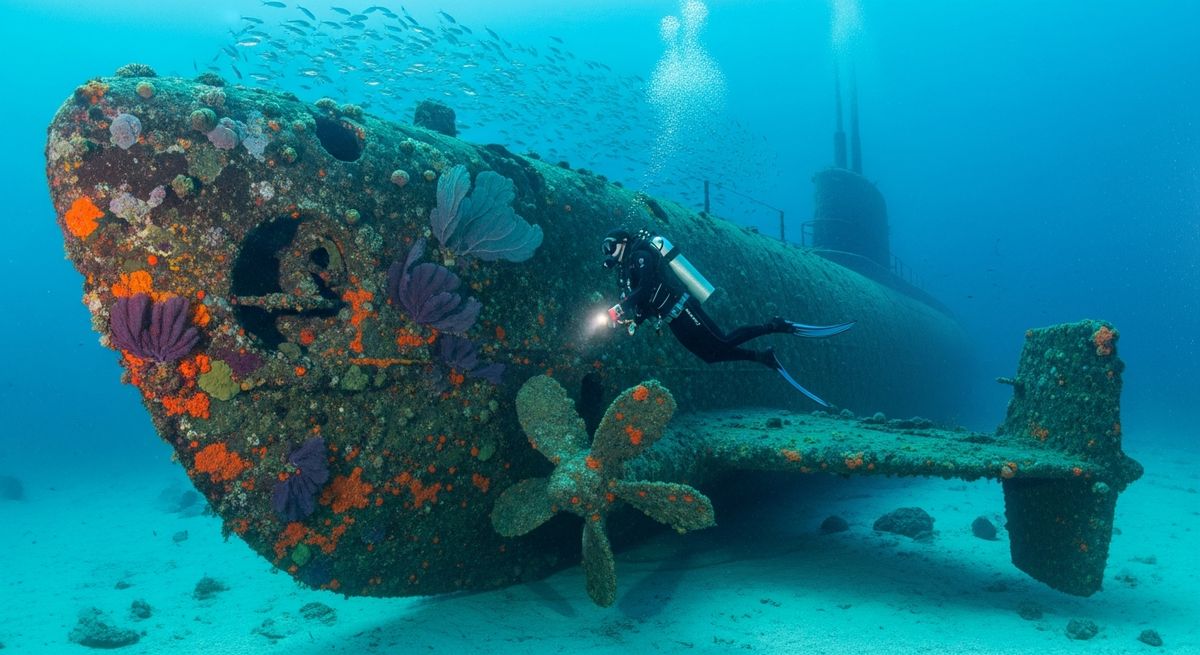
The *Ulsteremore* off the Northumberland coast is one of our favourite UK wrecks, especially if you appreciate a bit of history along with your dive. This isn’t a deep dive, sitting at around 13 metres, so it’s great for extending bottom time and really getting to know the ship. Built by Harland & Wolff, the same yard that built the Titanic, you can feel that grand, turn-of-the-century engineering in the sheer scale of the remains. The wreck is quite broken up, but you can still pick out significant structures. We love exploring the huge boilers, they’re still very much intact and create fantastic swim-throughs, riddled with nooks and crannies where conger eels often lurk. Look closely, and you’ll find the metalwork carpeted in colourful anemones and dead man’s fingers, swaying gently in the mild current. Visibility here can be typical North Sea – sometimes it’s a murky green, other times it opens right up to a decent 10 metres. We’d suggest checking local dive club reports for recent conditions. It’s a site that really suits divers who enjoy piecing together the story of a wreck and appreciate the robust marine life that thrives on these artificial reefs.

Location
Northumberland & Northeast, United Kingdom, Mediterranean & Europe
Coordinates
53.529266, -3.134124
Type
wreck
Maximum Depth
13m

Marine Protected Area: Ravenmeols Hills

Nearby Dive Sites in Northumberland & Northeast

Nearest Dive Centres to ULSTERMORE

Marine Life in Northumberland & Northeast

Home to 132 recorded species including 53 reef fish, 15 whales & dolphins, 11 sharks & rays, 10 other, 10 seagrass & algae, 9 crabs & lobsters.

Notable Species

Frequently Asked Questions

What is the typical depth range for diving the Ulstermore shipwreck in Liverpool Bay?
The Ulstermore shipwreck, located in the Northumberland & Northeast region, is typically found at a depth of 13m. This relatively shallow depth makes it an accessible wreck dive for many enthusiasts.
What kind of marine life and wreck features can divers expect to see at the Ulstermore dive site?
At the Ulstermore dive site, divers can expect to explore the impressive remains of a 137.5m x 14.6m steam ship, built in 1894. Notable features include its four boilers and the triple expansion engine of 627NHP that drove its single shaft. The wreck is classified as a "Dangerous wreck", indicating its historical significance and the need for careful exploration.
How challenging is diving the Ulstermore wreck, and is it suitable for beginner divers?
Diving the Ulstermore wreck is rated as intermediate difficulty. Given this classification and its designation as a "Dangerous wreck", it is generally not suitable for beginner divers. Divers should have appropriate experience and training for this type of dive.
What is the best time of year or tidal condition to dive the Ulstermore for optimal visibility and safety?
The provided data does not specify the best time of year or optimal tidal conditions for diving the Ulstermore for optimal visibility and safety. We recommend consulting local dive centers or guides in the Northumberland & Northeast region for up-to-date information on local conditions.
Are there any specific diving certifications required or recommended for exploring the Ulstermore shipwreck?
While specific certifications are not explicitly stated, exploring the Ulstermore shipwreck, which is rated as intermediate difficulty and classified as a "Dangerous wreck," typically requires more than entry-level certification. Divers should ideally possess an advanced open water certification and consider specialized wreck diving training to safely navigate and appreciate this site.
What are the typical current and visibility conditions encountered when diving the Ulstermore in Liverpool Bay?
The provided data does not contain specific information regarding the typical current or visibility conditions encountered when diving the Ulstermore. For the most accurate and up-to-date conditions, divers should consult local dive centers in the Northumberland & Northeast area.