W M BARKLEY (POSSIBLY)
Protected Area
Croker Carbonate Slabs
Why dive here
With 118+ marine species recorded in the area - including dolphins, dwarf minke whales, humpback whales, ocean sunfish (mola mola) and orcas - W M BARKLEY (POSSIBLY) offers some of Northumberland & Northeast's richest wreck diving.
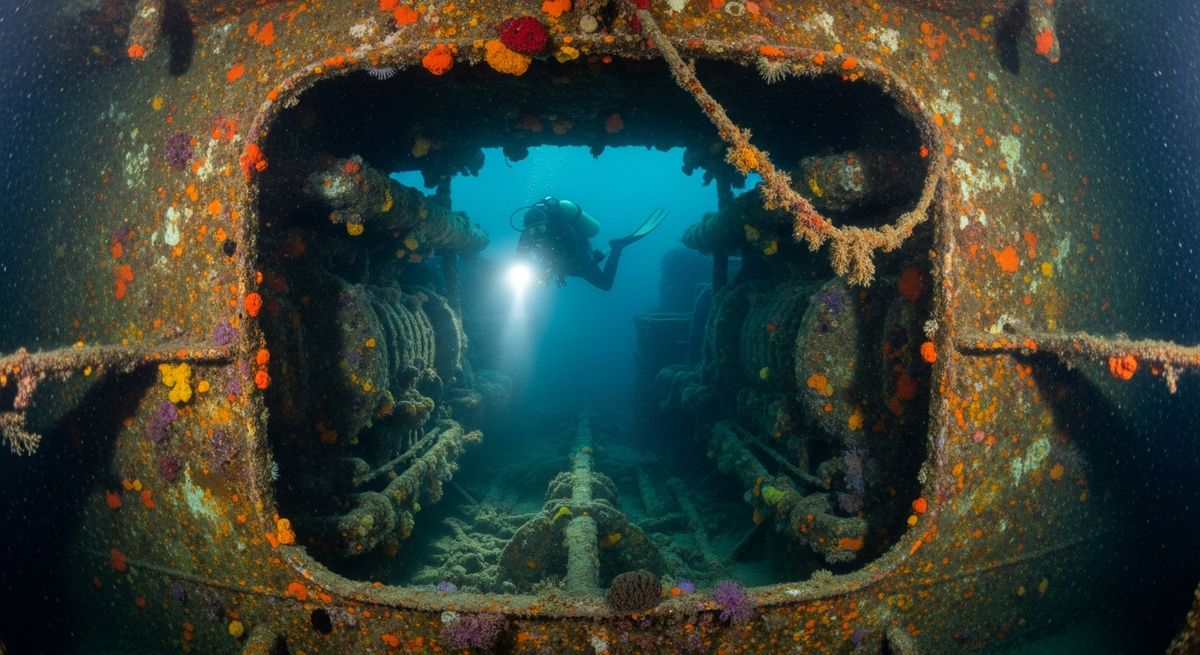
Northumberland wrecks often get overlooked, but the W.M. Barkley is a fantastic example of why you shouldn’t skip them. Dropping onto her deck at 50m, you’re met with a surprisingly intact steamship, built for Arthur Guinness & Sons, no less. It’s a deep dive, yes, but the rewards are there. We love the way the forward holds are still open, inviting a gentle fin kick through. You’ll find squat lobsters tucked into every nook, and we’ve often spotted monkfish camouflaged on the hull. Our favourite part is the single boiler, still standing proud, surrounded by schooling bib. Visibility can be a bit of a lottery, so aim for slack water on a neap tide for the best chance of a clear run. It's a proper technical dive, but for those with the training, it’s a rewarding exploration of a piece of maritime history.
Typical W M BARKLEY (POSSIBLY) Dive Profile
Illustrative profile based on site depth and type. Actual dive profiles vary - always follow your dive computer and training.
Safety Notes
Maximum depth 50m exceeds recreational limits (40m). Technical diving certification and equipment required.
Wreck site - avoid penetration without wreck diving certification. Watch for sharp metal and entanglement hazards.
Always perform a 3-minute safety stop at 5m before surfacing.
Nearest Dive Centres to W M BARKLEY (POSSIBLY)
Dive shops near W M BARKLEY (POSSIBLY)
View all dive centres in Northumberland & NortheastReviews for W M BARKLEY (POSSIBLY)
Conditions
Ocean conditions, forecast and tides for W M BARKLEY (POSSIBLY)
Plan & book
Ways to dive Northumberland & Northeast, from day trips to liveaboards.
Day trips & courses
via GetYourGuideGuided dives, courses and snorkel trips with instant booking.
Find dive trips in Northumberland & NortheastPlaces to stay
via Booking.comHotels and dive resorts near Northumberland & Northeast.
Search stays in Northumberland & NortheastDive insurance
Most travel insurance excludes or limits scuba. Check what you need before you go.
Dive insurance explainedPartner links: we may earn a commission if you book, at no extra cost to you. How we make money
Where to Stay near W M BARKLEY (POSSIBLY)
Prices from Booking.com. We may earn a commission at no extra cost to you.