C-53 Xicotencatl
Protected Area
Arrecifes de Cozumel
Why dive here
With 177+ marine species recorded in the area - including barracuda, bull sharks, dolphins, eagle rays and nurse sharks - C-53 Xicotencatl offers some of Cozumel's richest wreck diving. Water ranges 27-30°C, warmest August, September, October.
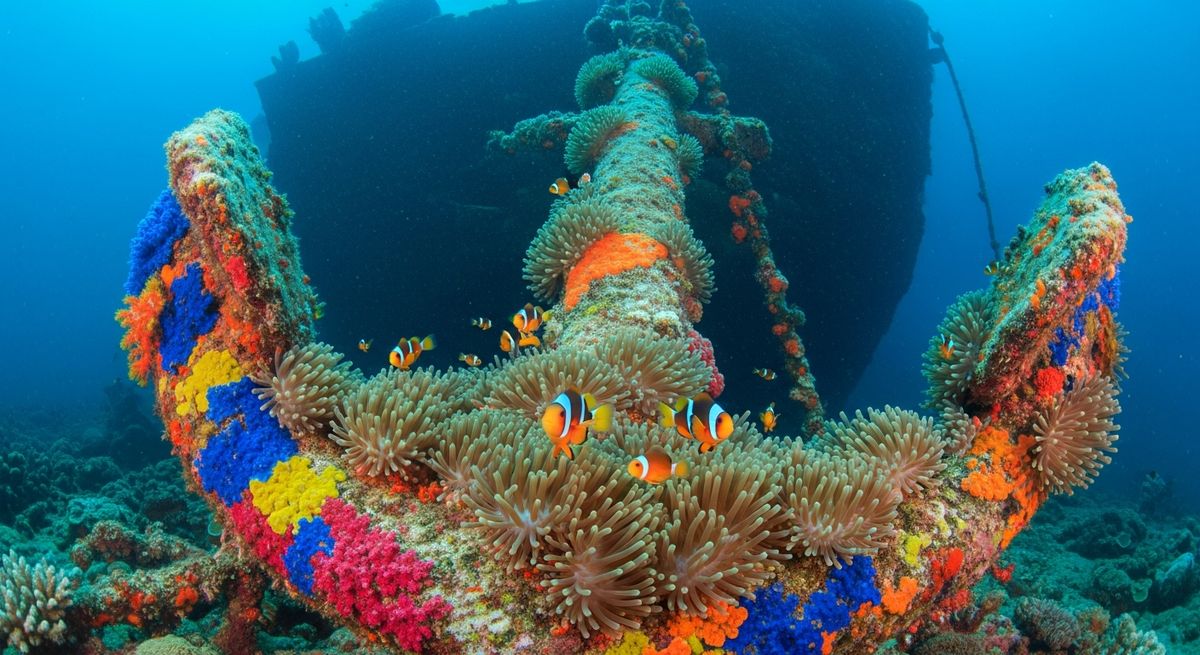
The C-53 Xicotencatl in Cozumel, now that's a dive. We love this wreck not just for its history, a former Mexican Navy minesweeper deliberately sunk for divers, but for how it’s matured into a proper artificial reef. Descending onto the deck, you immediately feel the scale. It's upright and largely intact, making for some fantastic penetration dives if you're certified and comfortable navigating confined spaces. Our favourite parts are the engine room, surprisingly accessible, and the wheelhouse where you can still imagine the captain at the helm. Big groupers often hang out in the shadows, and we've seen schools of snapper streaming through the open holds, their silver scales flashing in the shafts of light. The exterior is crusted in sponges and soft corals, a vibrant contrast to the ship's grey steel. We'd suggest aiming for a morning dive before the crowds really pick up. Visibility is usually excellent, so you get these great long views of the entire vessel. It’s a solid wreck dive, perfect for those with a bit of experience who appreciate both human history and natural reclamation.
Safety Notes
Wreck site - avoid penetration without wreck diving certification. Watch for sharp metal and entanglement hazards.
Strong currents typical this month (avg 79 cm/s). Good buoyancy control essential.
C-53 Xicotencatl Wreck History
Year Sunk
1999
Vessel Type
warship
Cause
scuttled
The C-53 Xicotencatl has a long and decorated history that began long before it became a world-class dive site. It was originally commissioned into the United States Navy as the USS Scuffle (AM-298), an Admirable-class minesweeper. During World War II, it served with distinction in the Pacific Theater, clearing mines to support amphibious landings and earning a prestigious Presidential Unit Citation and five battle stars for its courageous service.
After the war, the vessel was decommissioned and eventually sold to the Mexican Navy in 1962, where it was renamed ARM General Felipe Xicoténcatl (C53) and served for many more decades. At the end of its useful life, the decision was made to give the historic warship a new purpose. In 1999, it was carefully prepared and intentionally sunk off the coast of Cozumel to create a new artificial reef for marine life and an exciting destination for scuba divers.
Today, the C-53 sits perfectly upright on a sandy bottom and is one of Cozumel's most popular wreck dives. It was prepared with divers in mind, with large openings cut into the hull to allow for safe and easy penetration into its compartments and passageways. Divers can explore the bridge, decks, and holds, which are now home to schools of fish, moray eels, and vibrant sponges. Its impressive size and rich history make the C-53 Xicotencatl an unforgettable underwater adventure.
Nearest Dive Centres to C-53 Xicotencatl
Dive shops near C-53 Xicotencatl
CARIBE PARADISE DIVERS
Blue Note Scuba Diving
Scuba XOC Dive Center Cozumel
Scuba Life Cozumel
Dive Palancar
Roberta's Scuba Shack
Reviews for C-53 Xicotencatl
Conditions
Ocean conditions, forecast and tides for C-53 Xicotencatl
C-53 Xicotencatl Ocean Conditions
Monthly averages for C-53 Xicotencatl, sourced from NOAA NDBC + Copernicus Marine (EU) - nearest station: Yucatan Basin - 120 NM ESE of Cozumel, MX (227km away)
October Averages
Sea Temperature
30°C
85°F · Range: 28.7–32.3°C
Air Temperature
29°C
84°F
Current Speed
78.6 cm/s
Direction: NE (36.7°)
Chlorophyll-a
0.046 mg/m³
Very clear (oligotrophic)
Salinity
35.99 PSU
Wave Height
1.1m
6.7s period
Wind Speed
5.5 m/s
10.7 knots
Atmospheric Pressure
1010.7 hPa
Visibility
24.1 nmi
Based on 5 years of monitoring data · Data sources: NOAA NDBC + Copernicus Marine (EU)
Plan & book
Ways to dive Cozumel, from day trips to liveaboards.
Day trips & courses
via GetYourGuideGuided dives, courses and snorkel trips with instant booking.
Find dive trips in CozumelPlaces to stay
via Booking.comHotels and dive resorts near Cozumel.
Search stays in CozumelDive insurance
Most travel insurance excludes or limits scuba. Check what you need before you go.
Dive insurance explainedPartner links: we may earn a commission if you book, at no extra cost to you. How we make money
Where to Stay near C-53 Xicotencatl
Prices from Booking.com. We may earn a commission at no extra cost to you.