Diving in Cozumel
Why dive here
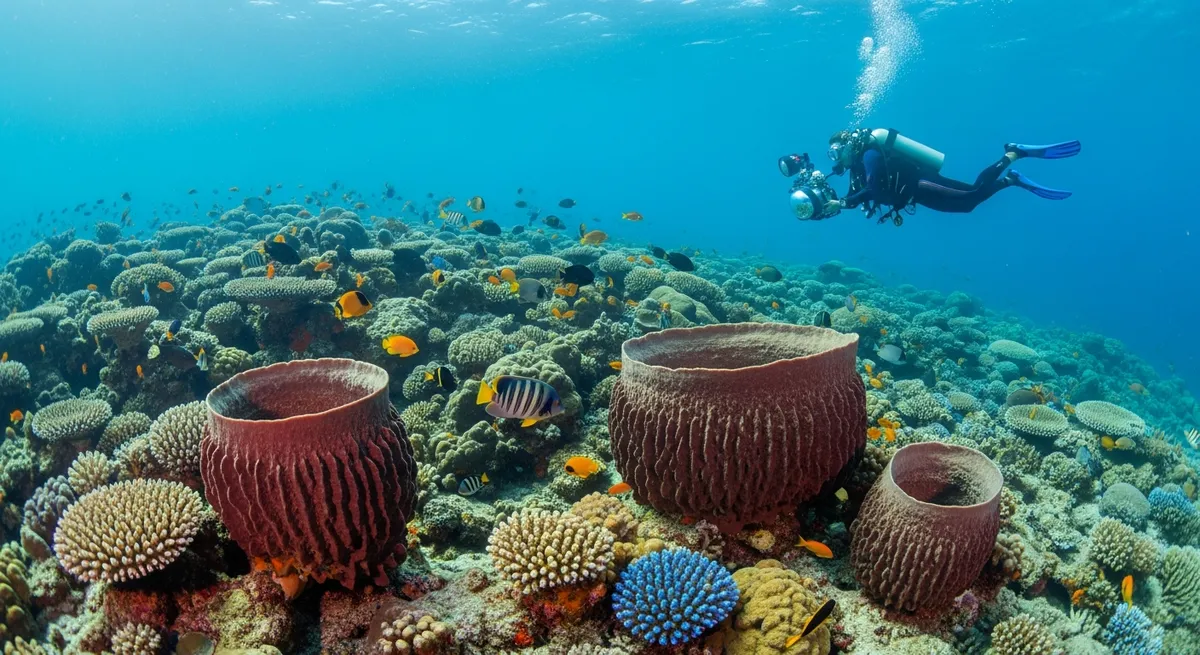
Cozumel offers some of Mexico's richest diving, with 177+ marine species recorded in the area - including barracuda, bull sharks, dolphins, eagle rays and nurse sharks. Water ranges 27-30°C, warmest August, September, October.
Cozumel diving, it’s a whole vibe. We love the sheer energy of the place, specifically how the currents sweep you along the Mesoamerican Barrier Reef. You’re not so much swimming as you are flying past enormous coral formations, often with schools of fusiliers so thick they block the light. Santa Rosa Wall is a classic, a sheer drop that feels like freefall, while Palancar Reef offers incredible visibility, sometimes 30 metres plus, with light shafts piercing through. Our favourite dive here is early morning, beating the crowds to see parrotfish and grunts still a bit sleepy in the crevices. The drift diving here is world-famous for good reason. The currents are a constant, so get comfortable with going with the flow. We often see the endemic splendid toadfish, their vibrant yellow markings standing out against the reef. Keep an eye out for brown garden eels swaying in the sand patches, and the intricate patterns of orangespotted filefish. While it can get busy, especially in peak season, those drift dives mean you’re covering serious ground, always seeing something new. It’s a place that just feels alive, a constant motion of water and fish.
Cozumel Dive Site Map
Dive sites and dive centres in Cozumel
Cozumel Dive Sites
224 dive sites in Cozumel
Agua Negra Cozumel
Agua Negra isn't your typical reef dive; it's Cozumel’s blackwater offering, and honestly, we’re completely hooked. You head out a few miles from shore, drop in at dusk, and spend your dive at a maximum of 18 meters, drifting in the inky blackness. It feels like you’re floating in space, with only the glow of your torch to illuminate the incredible miniature world migrating up from the deep. We've seen some utterly bizarre and beautiful things here. Think tiny larval crabs and squid, transparent eel larvae, and juvenile fish like baby swordfish or sailfish, no bigger than your finger. The way they reflect your light, darting through the darkness, is mesmerizing. It’s a completely different rhythm to reef diving, quieter, more focused. We’d recommend it for divers who are comfortable with good buoyancy and night diving, and who appreciate the truly unique, delicate side of marine life. It’s a special kind of hunt, spotting those almost invisible creatures in the vast open ocean.
Agua Negra Cozumel
Agua Negra isn't your typical reef dive; it's Cozumel’s blackwater offering, and honestly, we’re completely hooked. You head out a few miles from shore, drop in at dusk, and spend your dive at a maximum of 18 meters, drifting in the inky blackness. It feels like you’re floating in space, with only the glow of your torch to illuminate the incredible miniature world migrating up from the deep. We've seen some utterly bizarre and beautiful things here. Think tiny larval crabs and squid, transparent eel larvae, and juvenile fish like baby swordfish or sailfish, no bigger than your finger. The way they reflect your light, darting through the darkness, is mesmerizing. It’s a completely different rhythm to reef diving, quieter, more focused. We’d recommend it for divers who are comfortable with good buoyancy and night diving, and who appreciate the truly unique, delicate side of marine life. It’s a special kind of hunt, spotting those almost invisible creatures in the vast open ocean.
AGUSTIN MELGAR
We really like Agustin Melgar for a straightforward wreck dive. It's not a deep one, hovering around 13 metres, which means plenty of bottom time and a relaxed pace. This fishing vessel lays broken up on the sand, a stark contrast to some of Cozumel’s more intact wrecks, but that’s precisely its charm. The wreckage is spread out, with large pieces of the hull and superstructure creating a playground for fish. We've often found green morays peeking out from behind a twisted piece of metal, and the schools of grunt and snapper are usually thick. Light penetrates everything down here, making the colours pop even on an overcast day. It’s an easy dive, perfect for anyone looking to spend time exploring the nooks and crannies without worrying about complex navigation or strong currents. Our favourite part? The way the soft corals have started to fuzz over the metal, giving it an aged, established feel. Keep an eye out for nudibranchs – they’re often camouflaged on those coral patches.
Amancay Freediving
Amancay Freediving in Cozumel offers a chance to explore a less pressured section of reef, great for those who prefer to fin down without tanks. We’ve found a decent collection of species here, including some neat eels like the Brown Garden Eel and the more elusive Key Worm Eel, along with various grunts and filefish. The site is generally calm enough for extended breath-holds, making it a good choice for freedivers looking to log some deeper dives or practice their technique away from the busier spots further south. It’s a solid pick if you’re keen on spotting more subtle reef residents and enjoying a quieter underwater experience.
Aristos
Aristos in Cozumel often gets overlooked for some of its flashier neighbours, but it's a solid drift dive. We usually find groups of eagle rays cruising overhead here, especially in winter. The current can be brisk, so it’s best for divers comfortable with a good pace, but the shallow depth makes it accessible for many. It’s a great spot to just relax and let the reef come to you.
Bajo de Molas
Bajo de Molas offers a gentler drift along a sandy slope, suitable for newer divers or those looking for a relaxed dive. We typically find several splendid toadfish here, often tucked into small crevices. Keep an eye out for the striking patterns of elegant and harlequin brittle stars on the sponges. It’s a good spot for macro enthusiasts, too.
Bandera
Bandera is a good drift dive along Cozumel’s main reef system. We’ve found it reliably features Caribbean reef sharks cruising in the blue, often alongside schools of horse-eye jacks. The current can pick up here, making it best for divers comfortable with a faster pace, but the visibility is usually excellent.
Barco Hundido - Wreck Cadete Juan Escutia C-56
The Cadete Juan Escutia C-56 wreck, or Barco Hundido as it's often called, is our favourite wreck in Cozumel. We love how the story of this ship, a former US Navy vessel from WWII, gives it a real sense of history before you even hit the water. Dropping down, you'll feel the cool thermocline at about 15 metres, often meaning great visibility below. The wreck itself sits upright at a maximum depth of 26 metres, meaning a decent bottom time for exploring the superstructure. We always head for the wheelhouse first; it's practically begging for a swim-through, and you'll often find schools of French grunts milling about inside, their silver scales catching the shafts of light. Look out for the resident green razorfish burying themselves in the sand nearby if you get too close. This site is brilliant for divers who appreciate a wreck with character, offering plenty of nooks to poke your head into without being overly challenging. The sheer volume of fish here – from the schooling blue runners to the solitary yellow stingrays on the sand – makes it a captivating dive. It’s also a good spot for spotting eagle rays in season, gliding past in the blue.
Barco Hundido - Wreck Cadete Juan Escutia C-56
The Cadete Juan Escutia C-56 wreck, or Barco Hundido as it's often called, is our favourite wreck in Cozumel. We love how the story of this ship, a former US Navy vessel from WWII, gives it a real sense of history before you even hit the water. Dropping down, you'll feel the cool thermocline at about 15 metres, often meaning great visibility below. The wreck itself sits upright at a maximum depth of 26 metres, meaning a decent bottom time for exploring the superstructure. We always head for the wheelhouse first; it's practically begging for a swim-through, and you'll often find schools of French grunts milling about inside, their silver scales catching the shafts of light. Look out for the resident green razorfish burying themselves in the sand nearby if you get too close. This site is brilliant for divers who appreciate a wreck with character, offering plenty of nooks to poke your head into without being overly challenging. The sheer volume of fish here – from the schooling blue runners to the solitary yellow stingrays on the sand – makes it a captivating dive. It’s also a good spot for spotting eagle rays in season, gliding past in the blue.
Barracuda - Cozumel
Barracuda. This is Cozumel drift diving at its most exhilarating, and we love it, but don't come here expecting a gentle cruise. The current here can truly rip, often pushing you along at a good clip, sometimes with a cheeky down-and-out component. It's a site that demands respect and solid buoyancy control, definitely one for advanced divers who relish a fast ride. What makes it special? The sheer volume of fish. We've seen schools of fusiliers so thick they momentarily dim the light, and the sponges here are just enormous. Keep an eye out for patrolling tarpon, their silver scales flashing in the blue, and if you hit it during the right season, you might just get lucky with a squadron of eagle rays gliding past. Jump in together, stay together, and trust your captain – they'll know exactly where to pick you up down current. This isn't a site for lingering; it’s a high-octane drift, a real shot of adrenaline, and a fantastic showcase of Cozumel’s powerful reefs.
Barracuda - Cozumel
Barracuda. This is Cozumel drift diving at its most exhilarating, and we love it, but don't come here expecting a gentle cruise. The current here can truly rip, often pushing you along at a good clip, sometimes with a cheeky down-and-out component. It's a site that demands respect and solid buoyancy control, definitely one for advanced divers who relish a fast ride. What makes it special? The sheer volume of fish. We've seen schools of fusiliers so thick they momentarily dim the light, and the sponges here are just enormous. Keep an eye out for patrolling tarpon, their silver scales flashing in the blue, and if you hit it during the right season, you might just get lucky with a squadron of eagle rays gliding past. Jump in together, stay together, and trust your captain – they'll know exactly where to pick you up down current. This isn't a site for lingering; it’s a high-octane drift, a real shot of adrenaline, and a fantastic showcase of Cozumel’s powerful reefs.
Barracuda - Playa del Carmen
Barracuda, off Playa del Carmen, is where you head for a drift. It’s a shallow wall, maxing out around 15 metres, but don’t let that fool you. The current here can be a real express train, so you need to be comfortable with that push. We’ve seen good-sized French grunts cruising the reef face, and the visibility usually holds at a solid 20 metres. Keep an eye out for morays tucked into the coral, but honestly, it’s the ride that’s the main event. It’s a good spot if you appreciate a brisk drift without needing extreme depths.
Show all 224 dive sites in Cozumel
- Barracuda - Playa del Carmen
- Barracuda Point
- Barracuda Reef
- Blackbeard
- Blackbeard
- Buceando Mahahual
- C-53 Xicotencatl
- C-56 Shipwreck
- C-58 Wreck
- Cantarell
- Cantarell Sand Reef
- Cardona
- Cardona
- Casa Blanca
- Cedar Pass
- Cedral Wall
- Cenote Azul
- Cenote Chac Mool
- Cenote Chikin Ha
- Cenote Cristalino
- Cenote Dos Pisos
- Cenote Eden
- Cenote Kukulcan
- Cenote Maravillas
- Cenote Zapote (Hells Bells)
- Cerebros
- Chac Mool Cenote
- Chankanaab
- Chankanaab Bolones
- Chankanaab Reef
- Chen Rio
- Chikin Ha Cenote
- Chitales
- Chun Chacaaab Reef
- Chunchacah
- Chun-zumbul
- Chun Zumbul
- Chun Zumbul Deep
- Chun-Zumbul Reef
- Coco Beach
- Colombia Deep
- Colombia Reef
- Colombia Shallows
- Columbia Deep
- Columbia Reef
- Cordona Reef
- Cozumel
- Cozumel plane wreck
- Cueva de Pargo
- Cuevas de Afuera
- Deepdivemexico
- Deep Pole
- Devil's Throat
- Devil's Throat
- Dive48
- Dive with Martin
- El Cantil
- El Farito
- El Garrafon
- El Islote
- El Meco
- El Mirador
- El Tunel
- Esquela
- Exectamente
- Felipe Xicotencatl C-53 Wreck
- Fish Market
- Gatas
- Grampin
- Grouper Reef
- Halfmoon Bay
- Herradura
- Herraura
- Inspire Diving
- J-3
- Jardin del Eden Cenote (Ponderosa)
- Jardines
- Jardines
- Jardines
- Julio Kin Scuba shore dive
- La Boya de los Locos
- La Francesa
- La Francesa
- La Inglacia
- La Jardinera de la Esperanza
- La Palomita
- La Pared
- Las Esponjas
- Las Gorgonians
- Las Palamas
- Las Palmas Reef
- Las Palmas Shallows
- Leon
- Little Brother Cenote
- Los Arcos
- Los Arcos - Playa del Carmen
- Mama Vina
- Mama Viña (Wreck)
- Mamitas
- Manchones
- Manchones I
- Maracaibo Reef
- Maracaibo Reef
- Media Luna
- Moc Che Deep
- Moc Che Deep
- Moc Che Shallow
- Money Bar
- Motorcycle Reef
- MUSA Cancun Underwater Museum of Art
- Musa: Under Water Museum
- Neto s
- Net Reef
- No-name Reef
- Ojo de Agua
- Palace Reef
- Palancar Bricks
- Palancar Caves
- Palancar Caves
- Palancar Deep
- Palancar Gardens
- Palancar Gardens
- Palancar Horseshoe
- Palancar Horseshoe
- Palancar Reef
- Palancar Reef
- Palancar Reef
- Palancar Reef
- Paradise Reef - Cozumel
- Paraiso Bajo
- Paraiso Reef
- Paraiso Reef
- Pared Verde
- Pargo Cave
- Pargos
- Paso del Cedral
- Paso El Cedral Reef
- Pelicano Wreck
- Piedra Atravezada
- Playa Corona
- Playa del Carmen
- Playa Maroma
- Puentes
- Puerto de Abrigo
- Puerto Morelos The Aquarium
- Punta Benado
- Punta Dalila
- Punta Dalila
- Punta Dalila
- Punta Francesa
- Punta Negra
- Punta Sur
- Punta Sur - Devil s Throat
- Punta Sur - Devil’s Throat
- Punta Sur - Isla Mujeres
- Punta Sur Reef
- Punta Tunich
- Punta Tunich
- Punta Tunich Wall
- Pura Vida Diving
- Rodman
- Rodman
- Sabalos
- San Clemente
- San Clemente reef
- San Francisco
- San Francisco Wall
- San Frandsco Reef
- San Juan Reef
- San Juan Reef
- Santa Rosa Reef
- Santa Rosa Shallows
- Santa Rosa Wall
- Santa Rosa Wall
- Santo Remedio
- San Toribio
- Shangri La - Playa del Carmen
- Shark Point - Playa del Carmen
- Sitio de los tiburones toro
- Sleeping Shark Cave
- Sleeping Sharks Cave
- The Body Shop
- The Brain
- The pit
- The Wall
- Tikila Beach
- Tormentos
- Tormentos Reef
- Tormentos Reef
- Tormentos Reef
- Tortuga Reef
- Tortugas Reef
- Tortugas Reef
- Tulum Scuba
- Tulum Tours and Airport Shuttle
- Ujosa
- Ultrafreeze Wreck
- VELMA LYKES
- Villa Blanca
- Villablanca Wall
- Villa Blanca Wall
- VILLACARRIEDO
- Wreck C-53
- XCaret - Snorkling Laggon
- Xpu-Ha Canyon
- Yal Ku Chicu
- Yal Ku North
- Yool Caanal
- Yucab Reef
- Yucab Reef
- Yucab Reef
- Zero Gravity Scuba Equipment
Cozumel Dive Centres
86 dive shops and operators in Cozumel
Abyss
ACTUNPRO
AGUA CLARA DIVING
Akumal Dive Adventures
Akumal Dive Shop
Aldora Divers
ALMA LIBRE DIVE CENTER
Alux Divers
Show all 86 dive centres in Cozumel
- Amancay Freediving
- Aquaexcursions Diving Centers
- Aquanauts
- Aquaworld
- Bahia divers
- Beach Divers
- BE DIVING COZUMEL
- Blue Angel
- Bluedream Cozumel
- Blue Experience Diving
- Blue Note Scuba Diving
- Buceando Mahahual
- CARIBE PARADISE DIVERS
- Casa del Buceo
- Cave Gravity Dive Shop
- Cozumel Dive School
- Deepdivemexico
- DeepSee Adventure
- Deportes Acuáticos/Aquatic Sports
- Dive48
- Dive Balam
- Dive Life SCUBA
- Dive Palancar
- Dive with Ruben
- Doctor Dive
- Dorado Buceo
- Dream Time
- Dune Mexico
- Elite Dive Center
- GeoFish
- Gypsea Divers
- HAMMER HEAD DIVING & SNORKELING
- Inspire Diving
- KOOX ADVENTURE CENTER
- Koox Diving Tulum
- Manta Divers SA de CV
- Mexico Divers
- Paamul Dive Center
- PADI
- PADI
- Pepe Dive Mahahual
- Pepe Scuba Dive Shop
- Phantom Divers
- Phocea Riviera
- Planet Scuba Mexico
- Playa Diving Center
- Pro Air
- Pro Dive International Occidental Xcaret
- Pro Dive International Royal Hideaway Allegro Play
- ProRec Tulum
- Pura Vida Diving
- Roberta's Scuba Shack
- Salty Endeavors
- ScubaCaribe Playa del Carmen Mexico
- Scuba Life Cozumel
- Scuba Mau
- Scuba Planet Mexico
- Scuba Playa
- Scuba Total
- Scuba Tulum
- Scuba XOC Dive Center Cozumel
- Sea Hawk Divers
- Solo Buceo
- Squalo Divers
- Tank-Ha Dive Center
- Tarraya: Snorkle, Diving & Fishing
- The Go Pro Family
- The Snorkel Shop
- Tolok Divers Mexico
- TRIPPY DIVERS
- Tritones
- Underworld Tulum
- Vision Oceanos Dive Center
- Water Dragons Diving
- Windward Adventures
- Xibalba Dive Center
- Xico Dive Center
- Zero Gravity
Ocean Wildlife in Cozumel
177 species recorded in Cozumel
Cozumel Daylight & Sunrise/Sunset
Sunrise and sunset times for Cozumel, calculated from coordinates
Today - Sunday 11 October
Sunrise
05:42
Sunset
17:29
Daylight
11h 47m
Golden Hour
17:00
First light (dawn) at 05:20 · Last light (dusk) at 17:51
Monthly Averages
| Month | Sunrise | Sunset | Daylight |
|---|---|---|---|
| Jan | 06:27 | 17:28 | 11h 0m |
| Feb | 06:19 | 17:47 | 11h 28m |
| Mar | 05:58 | 17:58 | 12h 0m |
| Apr | 05:31 | 18:07 | 12h 36m |
| May | 05:12 | 18:18 | 13h 6m |
| JunLongest | 05:08 | 18:30 | 13h 22m |
| Jul | 05:16 | 18:33 | 13h 16m |
| Aug | 05:28 | 18:19 | 12h 51m |
| Sep | 05:36 | 17:53 | 12h 17m |
| OctNow | 05:43 | 17:26 | 11h 42m |
| Nov | 05:58 | 17:09 | 11h 11m |
| DecShortest | 06:17 | 17:10 | 10h 54m |
Times are approximate local times based on longitude. Actual times may vary slightly depending on the exact timezone observed in Cozumel.
Where to Stay near Cozumel
Prices from Booking.com. We may earn a commission at no extra cost to you.
Marine Protected Areas near Cozumel
22 protected areas near Cozumel - please respect local regulations when diving
Caribe Mexicano
Sian Ka'an
Sian Ka'an
Sian Ka'an
Sian Ka'an
Tiburón Ballena
Área de Protección de Flora y Fauna Yum Balam
Yum Balam
Arrecifes de Sian Ka'an
La porción norte y la franja costera oriental, terrestres y marinas de la Isla de Cozumel
Manglares y Humedales del Norte de Isla Cozumel
Dzilam
Showing 12 largest of 22
Getting to Cozumel
Cozumel
Cancún
Tulum
Plan & book
Ways to dive Cozumel, from day trips to liveaboards.
Day trips & courses
via GetYourGuideGuided dives, courses and snorkel trips with instant booking.
Find dive trips in CozumelPlaces to stay
via Booking.comHotels and dive resorts near Cozumel.
Search stays in CozumelDive insurance
Most travel insurance excludes or limits scuba. Check what you need before you go.
Dive insurance explainedPartner links: we may earn a commission if you book, at no extra cost to you. How we make money