Crater
Protected Area
Alligator Reef Sanctuary Preserva Sanctuary
Why dive here
With 87+ marine species recorded in the area - including bull sharks, dolphins, hammerhead sharks, seahorses and sea turtles - Crater offers some of Florida Keys's richest diving. Water ranges 19-32°C, warmest July, August, September.
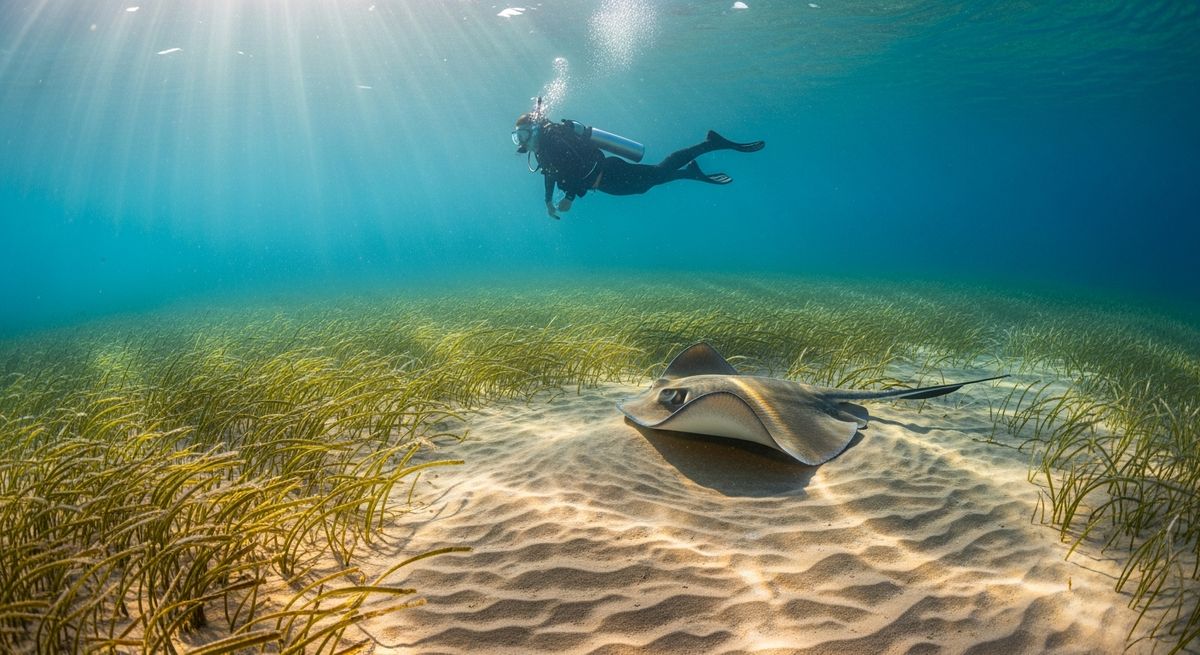
The Crater is a straightforward dive in the Florida Keys, dropping to 19 meters. It’s essentially a large, sandy depression in the seabed, ringed by scattered coral heads. We usually find smaller reef fish sheltering among these corals, and occasionally a curious nurse shark cruises by. It's a relaxed spot, good for beginner divers looking for an easy descent and a gentle introduction to the local reef environment.
Typical Crater Dive Profile
Illustrative profile based on site depth and type. Actual dive profiles vary - always follow your dive computer and training.
Safety Notes
Depth of 19m - Advanced Open Water certification recommended.
Always perform a 3-minute safety stop at 5m before surfacing.
Nearest Dive Centres to Crater
Dive shops near Crater
Key Dives
Deep Sea Scuba
Florida Sea Base
Islamorada Dive Center
Florida Keys Dive Center
Conch Republic Divers
Reviews for Crater
Conditions
Ocean conditions, forecast and tides for Crater
Crater Ocean Conditions
Monthly averages for Crater, sourced from NOAA NDBC + Copernicus Marine (EU) - nearest station: 8725520 - Fort Myers, FL (28km away)
October Averages
Sea Temperature
27°C
81°F · Range: 20.9–31.1°C
Air Temperature
26°C
79°F
Current Speed
0 cm/s
Direction: S (180°)
Salinity
35.98 PSU
Wind Speed
2.7 m/s
5.2 knots
Atmospheric Pressure
1014.5 hPa
Based on 5 years of monitoring data · Data sources: NOAA NDBC + Copernicus Marine (EU)
Plan & book
Ways to dive Florida Keys, from day trips to liveaboards.
Day trips & courses
via GetYourGuideGuided dives, courses and snorkel trips with instant booking.
Find dive trips in Florida KeysPlaces to stay
via Booking.comHotels and dive resorts near Florida Keys.
Search stays in Florida KeysDive insurance
Most travel insurance excludes or limits scuba. Check what you need before you go.
Dive insurance explainedPartner links: we may earn a commission if you book, at no extra cost to you. How we make money
Where to Stay near Crater
Prices from Booking.com. We may earn a commission at no extra cost to you.