Diving in Florida Keys
Why dive here
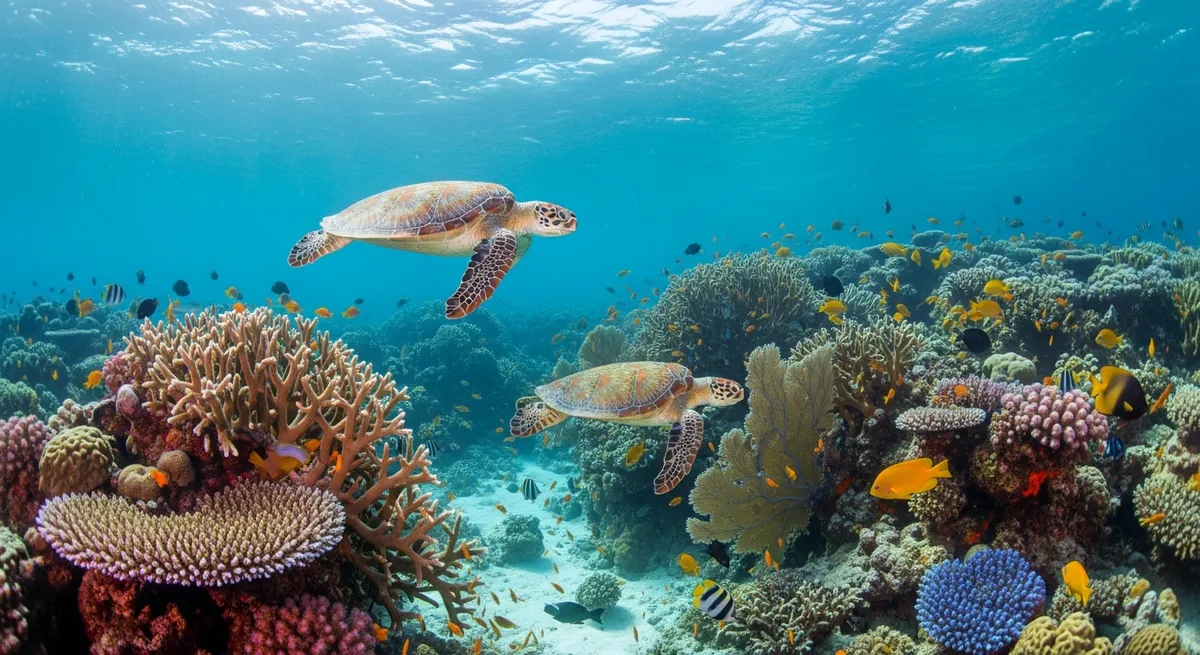
Florida Keys offers some of United States's richest diving, with 87+ marine species recorded in the area - including bull sharks, dolphins, hammerhead sharks, seahorses and sea turtles. Water ranges 19-32°C, warmest July, August, September.
The Keys are a classic for a reason. We love diving here for its sheer accessibility to proper reef diving, a rarity in the continental US. You can be out on the boat, splashing in, and staring down at a curious green moray or a school of jacks within an hour of leaving the dock. It’s not the wildest reef you’ll ever see, but it consistently delivers solid reef dives, especially around John Pennekamp State Park and Looe Key. Our favourite time to visit is late spring or early autumn, when the summer crowds have thinned but the water is still bathtub warm. Visibility can hit 25 metres on a good day. You’ll spend your bottom time cruising colourful shallow reefs, spotting parrotfish munching away, or keeping an eye out for a passing bonnethead shark. The wrecks, like the Spiegel Grove, are fantastic artificial reefs too, quickly becoming home to grouper and a surprising number of tenpounders. Just be mindful of currents, particularly on deeper wrecks; they can pick up fast.
Florida Keys Dive Site Map
Dive sites and dive centres in Florida Keys
Florida Keys Dive Sites
260 dive sites in Florida Keys
1 Girón
One Girón off the Florida Keys is definitely an interesting proposition, though it’s not your typical reef dive. We usually drop in hoping to spot something a bit different here. You’ll frequently encounter big schools of ballyhoo shimmering in the sun, and the needlefish, both hound and redfin, are almost always zipping around. It’s also a good spot to keep an eye out for larger pelagics; we’ve had silky shark sightings, and even sperm whales have been recorded in the area. This site is best for divers who appreciate the thrill of the unexpected, rather than those seeking classic coral gardens.
9-foot Stake
9-foot Stake is a favourite of ours for a reason. It’s got that classic Keys feel, an unexpected bounty of smaller, more unusual stuff if you take the time to really look. We often find ourselves drifting over a patchy but lively bottom, maybe 15 feet deep, watching parrotfish nibble the algae off the coral heads. It’s not a dramatic drop-off, more of a gentle slope with scattered brain and star corals that have seen some things. What really makes this spot sing are the little guys. We’ve spent entire dives here captivated by the almost translucent bodies of little post horn squid, subtly changing colours, or spotting the incredible camouflage of a plumed scorpionfish tucked against a sponge. Keep an eye out for the gaudy frog shells too; they’re surprisingly ornate for something hiding on the sand. You’ll see plenty of the usual suspects, sure, like schools of grunts hanging out, but the joy of 9-foot Stake is in the slow hunt for the less common, the things that make you pause and really appreciate the detail. It’s a superb spot for macro lovers, or anyone who enjoys a relaxed dive without the crowds, where the rewards come to those who move slowly.
Ajax Reef
Ajax Reef, out in the Islamorada sanctuary, often gets overshadowed by its flashier neighbours, but we think that’s a mistake. It’s not just another Florida Keys reef; it’s a living, breathing example of resilience. Drop down here and you’ll find a sprawling coral labyrinth. We love the way the light plays through the deeper channels, illuminating huge heads of rose coral and artichoke coral. Keep an eye out for the yellow stingrays often tucked into sandy patches. What makes Ajax special for us are the schools of fish – not just a few stragglers, but proper groups of ocean triggerfish and schoolmasters moving in unison. We’ve spent whole dives just watching them drift past. The harlequin bass and black margates are also a constant presence, darting between the fire coral. It’s a great spot for macro too; we’ve often found banded pipefish hiding in the gorgonians. If you’re a diver who prefers a quieter, more intimate reef experience over dramatic walls, Ajax is your kind of place. Go on a weekday morning to really have it to yourself.
Alexander Springs
Alexander Springs offers a different kind of dive, perfect for when you want a break from the usual ocean sites. It's a spring-fed basin, not a reef, so don't expect corals, but you'll find plenty of freshwater critters doing their thing. We often spot schools of Least Killifish darting amongst the aquatic plants, and sometimes an American eel or a Gulf Flounder makes an appearance. Visibility is generally excellent, a welcome change from some of Florida's murkier spots, and the calm environment makes it a great place to practice buoyancy or just enjoy a relaxed dip. It's really suited for divers looking for something a bit unique, or those wanting to log some easy bottom time.
Alligator Reef
Alligator Reef, just off Islamorada, is one of our favourites in the Upper Keys. It’s got that classic spur-and-groove formation, really defined, making for some interesting swim-throughs and overhangs. We often find ourselves just drifting along the deeper sections, watching schools of snapper and grunt huddle under the ledges, or spotting hogfish digging in the sand. Keep an eye out for the smaller stuff too, the Notchtongue Gobies are always a treat if you take the time to look closely at the coral heads. The visibility here is usually pretty solid, often 20 metres plus, especially on an incoming tide. We like hitting it early in the morning before the day boats crowd the mooring balls, that's when you sometimes get lucky with a passing silky shark on the deeper edges. It’s a good spot for intermediate divers; the currents can pick up, but nothing too wild. Just keep an eye on your dive guide and enjoy the drift.
Anglin Pier Ledge
Anglin Pier Ledge gives you a decent shallow dive, perfect for knocking out a few training dives or just a relaxed afternoon dip. It’s a 10-meter maximum, so you’re spending good bottom time checking out the ledge itself, which has some surprisingly busy pockets. We’ve spotted parrotfish munching on the corals and often see schools of grunts hanging out under the overhangs. It’s a solid pick if you’re new to the Keys, or just want something easy with decent fish action without a long boat ride.
Anglin’s Pier Reef
Anglin’s Pier Reef really delivers on that “Shore Dive Capital” promise. The reef here, just a short swim from the sand, is surprisingly robust, especially for a site so accessible. We love dropping in and almost immediately finding ourselves among finger corals and the occasional thicket of brain coral, a proper reef in shallow water. It's not a deep dive, maybe 5-7 meters if you’re hugging the bottom, making it fantastic for extended bottom times and photographers. Our favourite time to dive Anglin’s is early morning, right as the sun starts to warm the water. That’s when you’ll spot dusky jawfish hovering near their burrows, quickly retreating if you get too close. Look closely under ledges for the shy blackfin cardinalfish, or out in the open for schools of silver mojarra reflecting the light. We've even been lucky enough to see a lemon shark cruising by the pier pilings on a few occasions – a proper thrill in such shallow water. It's a forgiving dive, perfect for knocking off some rust or just enjoying a relaxed afternoon exploring, though watch out for strong north currents which can make the surface swim back a bit of a workout.
Aquarium
Aquarium, off the Florida Keys, is a decent spot for newer divers. At a consistent 10m, it’s an easy run, no surprises. You’ll see the usual suspects here: parrotfish nibbling at the hard corals and some smaller schooling fish. It’s a comfortable, shallow dive, good for getting your buoyancy dialed in or if you’re just after a relaxed float.
Ball and Chain
Ball and Chain is a relaxed spot in the Keys, ideal if you're looking for something mellow, especially after a few days of deeper dives. At a consistent 11 metres, it's a calm drift over a mostly sandy bottom interspersed with small coral heads. We usually spot nurse sharks tucked away, some green morays peeking from crevices, and plenty of grunts and snapper schooling around the little structures. It’s a great site for beginners or anyone wanting a longer bottom time without pushing depth limits.
Banana Patch Reef
Banana Patch Reef sits in about 10 meters of water, making it a good spot for newer divers or those looking for a relaxed, shallow profile. You'll find a scattered reef here, home to plenty of smaller reef fish. It’s a nice, easy dive if you're keen to take things slow and really observe the smaller stuff.
Beach House
The Beach House site in the Florida Keys sits at a consistent 19 meters, making it a comfortable dive for beginners. We've often found small nurse sharks tucked under ledges here, and the usual suspects of reef fish, like grunts and snappers, cruise through the coral formations. It’s a pretty straightforward dive, good for getting your buoyancy dialed in or for a relaxed afternoon dip if you’re looking for something calm. Visibility can vary, but generally, it’s a pleasant, easy-going spot.
Blue Grotto Spring
Blue Grotto Spring is a freshwater cavern dive with a large open entrance. Descend into a vast, dark chamber, lit only by divers' lights. It’s a good spot for new cavern divers to practice their skills in a controlled environment. We’ve seen Eastern Mosquitofish darting around the edges of the light.
Show all 260 dive sites in Florida Keys
- Boynton Comb Reef
- Boynton Ledges
- Breakers Reef
- Briney Breezes
- Cable Crossing
- Cannonball Cut
- Cannon Patch
- Captain Grumphy
- Captain Grumpy
- Captain Hook’s Looe Key Reef Adventures
- Capt Dan Wreck
- Carysfort Lighthouse Reef
- Carysfort Reef
- Castor Wreck
- Catfish Hotel Sink
- Catherine
- Cayman Salvager
- Cayman Salvager (Wreck)
- Centro de Buceo Barracuda
- Centro de Buceo Punta Perdiz
- CFK Lagoon
- Cheeca Rocks
- Christmas Tree Cave
- Christ of the Abyss
- Cindy's Corner
- City of Washington (Wreck)
- Club de Buceo
- Coffins Patch
- Coffins Patch
- Colson s Barge
- Commercial Pier Reef
- Concepcion
- Conch Reef
- Copenhagen Wreck
- Coral Restoration Foundation Nursery
- Corona
- Cottrell Key
- Crater
- Crater Jr.
- Crocker Reef
- Crocker Reef
- Cudjoe Gardens Marina And Dive Center
- Cueva de los peces
- Cueva El Brinco
- Dangerous Shoals
- Dania Erojacks Reef
- Davey Crocker Reef
- Davis Reef
- Davis Reef
- Deadman's Cays
- Deep Reef - Looe Key
- Deerfield Beach North Rocks
- Deliverance
- Delta Shoal The Barge
- DEMA Trader
- Devil's Den
- Devil's Den
- Divers Direct
- Donut
- Drifting Spot
- Dry Rocks
- D Tower
- Eagle Ray Alley
- Eagle's Nest
- Eastern Dry Rocks
- Eastern Sambo
- Eastern Sambo Reef
- Eidsvag and Owens
- Esso Bonnaire
- Eye of the needle
- Fingers Reef
- Fire Coral Cave
- Florida Reef
- Flower Gardens
- Fort Pickens Jetties
- French Reef
- French Reef
- Garrett’s Reef
- Ginnie Spring
- Golden Beach Boulder Reef
- Good patches
- Grecian Rocks
- Green Roofs
- Guy Harvey
- Hall Of Fame Moorings
- Hamm
- Hardbottom Cave
- Hen and Chickens
- Hens Chicken Reef
- Hermans Behind
- Hog Heaven
- Hole in the Wall
- Horseshoe reef
- Horseshoe Reef - Florida
- Hydro Atlantic
- Ichetucknee Spring
- Jackson Blue Spring
- Jeri’s Joint
- Jim Atria Wreck
- Joe s tug
- John D MacArthur Beach State Park
- John Pennekamp State Park
- Jolly Jacks
- Juniper Springs
- Juno Ledge
- Key Largo Undersee Park
- King Neptune
- Kylie's Reef
- LBTS Biorock reef
- Lighthouse Ledge
- Lofthus
- Looe Key
- Looe Key National Marine Sanctuary
- Lost Reef
- Lugano
- Madison Blue Spring
- Mandalay
- Marker 32
- Marker 32 Reef
- Marquesas
- Marriott Reef
- Matanilla Reef
- Maze - Florida
- Mercedes I
- MG-111 barge
- Miami Terrace Reef
- Mike s Wreck
- Mike’s Wreck (Hannah M. Bell)
- Mizpah
- Molasses Reef
- Molasses Reef
- Monsanto Boxes
- Morada
- Morrison Spring
- Narwall
- Neptune Memorial Reef
- Newfound Harbor Key
- North Canyon
- North North Dry Rocks
- Noula Express
- Octopus Club
- Orion wreck
- Pacific Reef
- Palm Island Ferry
- Park Headquarters reef
- Patricia Wreck
- Pauls Reef
- P. C. Barge
- Phil Foster Park Snorkel Reef
- Pickles Reef
- Pink House
- Pirates Hide Out
- Playpen
- Pompano Beach
- Princess Anne
- Proteus Wreck
- Pulley Ridge
- Punto de Buceo - Caleta del Toro
- Rainbow Spring
- Rainbow Spring North
- Recovery Room
- Rhein
- RJ s Ledge
- Rock Key
- Rocky Top
- Rodeo 25
- Rompidas
- Rons Rock
- RSB-1
- R Tower
- Samantha s
- Sand Key
- Sand Key Lighthouse
- San Pablo
- Santa Lucia
- Sea Emperor
- Sebastian Inlet
- Shamrock
- Shark Canyon
- Sheri-Lynn
- Site D Coral Reef
- Snapper Ledge
- Snapper Ledge Reef
- Sombrero Beach
- Sombrero Key
- Sombrero Reef
- Soule Barge-Gulf Power Towers
- South Canyon
- South Doubles
- Spanish Anchor
- Spiegel Grove
- Spiegel Grove
- SS Copenhagen Shipwreck
- S.S. Inchulva / Delray Wreck (Wrack)
- S.S. Sapona
- State Harbor
- Sylvia
- Tenneco Towers
- Tennessee Reef
- Tessie
- The Benwood Wreck
- The Bibb Wreck
- The Bib Wreck Key Largo FL
- The Cable
- The City of Washington Wreck
- The Duane Wreck
- The Eagle Wreck
- The Elbow
- The Elbow
- The Ft. Pickens Jetties is one of the most popular shore diving sites in the Florida Panhandle. This site is easily accessible from the north seawall steps west of the fishing pier. This site is one of the main SCUBA training dive sites in the area.
- The Haystacks
- The Horseshoe
- The Nursery - Florida
- The Spirit of Miami
- The Trench
- Three Coal Barges
- Thunderbolt Wreck
- Tigertail Lake
- Tortugas Banks
- Tracy
- Train Wheel Wreck
- Triumph Reef
- Troy Spring
- Tumble Rock
- Turtle Reef
- U-2513
- United Caribbean
- USCG Bibb (Wreck)
- USNS General Hoyt S. Vandenberg
- USS Maine
- USS Massachusetts
- USS Oriskany
- USS Spiegel Grove (Wreck)
- USS Vandenberg (Wreck)
- USS Vandenburg
- Victory Reef
- Volusia Blue Spring
- Vortex Spring
- Vortex Spring
- Weeki Wachee Spring
- Western dry rocks
- Western Sambo
- Western Sambo Reef
- Worth Avenue Pier Debris
- Wreck of Deepwater Horizon
- Wreck of Half Moon
- Wreck of Nuestra Señora de Atocha
- Wreck of Nuestra Señora del Pópulo
Florida Keys Dive Centres
88 dive shops and operators in Florida Keys
Abyss Dive Center
ACE DIVING
Alquiler de equipos de snorkeling y buceo
American Pro
Amigo's Dive Center
AQUI Water Sports
Atlantis Varadero
Austin's Dive Center
Show all 88 dive centres in Florida Keys
- Barracuda Diving Centre
- Better Than Most SCUBA
- Big Willy's Surf & Swim
- Blue Grotto Dive Resort
- Captain Hook
- Captain Hook’s Looe Key Reef Adventures
- Captain Hook's Marina & Dive Center
- Cave Country Dive Shop
- Centro de Buceo Barracuda
- Centro de Buceo Felix
- Centro de Buceo Punta Perdiz
- Club de Buceo
- Conch Republic Divers
- Coral Diving Club
- Coral Reef Scuba
- Cruise Fish Dive
- Daly's Watersports
- Deep Sea Scuba
- Delta’s Splash Dive Charter
- Dive Adventures
- Dive In Watersports
- Diver's Den
- Divers Direct
- Divers Direct
- Divers Paradise
- Dive Shop
- Diving Center
- Emerald Coast Scuba
- Finz Dive Center
- Florida Keys Dive Center
- Florida Sea Base
- Force-E Scuba Centers
- Gaspars Dive N Board
- Gold Coast Scuba
- Grove Scuba
- Hall's Diving Center & Career Institute
- Hatts Diving Headquarters
- Hydrotherapy Dive Charters LLC
- Islamorada Dive Center
- Juliet Sailing and Diving
- Key Dives
- Looe Key Reef Resort & Dive Center
- Lost Reef Adventures
- Mac's Sports Inc.
- Mac's Sports - Tampa
- Marina Chapelin
- Neritic Diving
- Ocean First Key Largo, LLC
- Ocean Quest Scuba
- Octopus Club
- Quiescence Diving Services Inc
- Rainbow Reef Dive Center (Boat Docks)
- Rainbow Reef Dive Center (Boat Docks)
- Rainbow Reef Retail Store
- Rosen Aquatic & Fitness Center
- Sail Fish Scuba
- Scuba-Fun
- Scuba Marco
- Scuba Monkey Dive Center LLC
- Scuba Outfitters
- Scuba Quest Outlet
- ScubaTech
- Scuba Works
- Sea Daddys Adventures and Dive Center
- Sea Dogs Dive Center
- Sea Dogs Dive Center
- Seminole Scuba
- Silent World
- Silent World Dive Center
- Squalo Divers
- Starfish Scuba
- Sundiver Boat Dock
- Sundiver Snorkel Tours
- Tarpoon Lagoon Divers Academy
- The Scuba Club
- The Scuba Store
- Tilden's Scuba Center
- TURKS and CAICOS AGGRESSOR II
- Underseas Sports
- Underwater Unlimited
Ocean Wildlife in Florida Keys
87 species recorded in Florida Keys
Florida Keys Daylight & Sunrise/Sunset
Sunrise and sunset times for Florida Keys, calculated from coordinates
Today - Sunday 11 October
Sunrise
06:22
Sunset
18:03
Daylight
11h 41m
Golden Hour
17:32
First light (dawn) at 05:59 · Last light (dusk) at 18:26
Monthly Averages
| Month | Sunrise | Sunset | Daylight |
|---|---|---|---|
| Jan | 07:14 | 17:55 | 10h 41m |
| Feb | 07:02 | 18:18 | 11h 16m |
| Mar | 06:36 | 18:34 | 11h 58m |
| Apr | 06:03 | 18:48 | 12h 45m |
| May | 05:40 | 19:04 | 13h 23m |
| JunLongest | 05:34 | 19:18 | 13h 45m |
| Jul | 05:43 | 19:20 | 13h 37m |
| Aug | 05:58 | 19:03 | 13h 5m |
| Sep | 06:11 | 18:32 | 12h 21m |
| OctNow | 06:24 | 17:59 | 11h 36m |
| Nov | 06:43 | 17:37 | 10h 54m |
| DecShortest | 07:04 | 17:36 | 10h 32m |
Times are approximate local times based on longitude. Actual times may vary slightly depending on the exact timezone observed in Florida Keys.
Where to Stay near Florida Keys
Prices from Booking.com. We may earn a commission at no extra cost to you.
Marine Protected Areas near Florida Keys
118 protected areas near Florida Keys - please respect local regulations when diving
Florida Keys
Florida Keys National Marine Sanctuary
Florida Keys Areas to be Avoided Natural Reserve
Parc national des Everglades
Everglades
Everglades National Park
Marjory Stoneman Douglas
Everglades National Park
Everglades
Key West
Key West National Wildlife Refuge
Great White Heron
Showing 12 largest of 118
Getting to Florida Keys
Miami
Miami
Fort Lauderdale
Plan & book
Ways to dive Florida Keys, from day trips to liveaboards.
Day trips & courses
via GetYourGuideGuided dives, courses and snorkel trips with instant booking.
Find dive trips in Florida KeysPlaces to stay
via Booking.comHotels and dive resorts near Florida Keys.
Search stays in Florida KeysDive insurance
Most travel insurance excludes or limits scuba. Check what you need before you go.
Dive insurance explainedPartner links: we may earn a commission if you book, at no extra cost to you. How we make money