BOLESLAW KRZYWOUSTY
Protected Area
Marsa Ibrahim
Why dive here
With 74+ marine species recorded in the area - including sea turtles, spinner dolphins and pufferfish - BOLESLAW KRZYWOUSTY offers some of Dahlak Archipelago's richest wreck diving. Water ranges 27-33°C, warmest July, August, September.
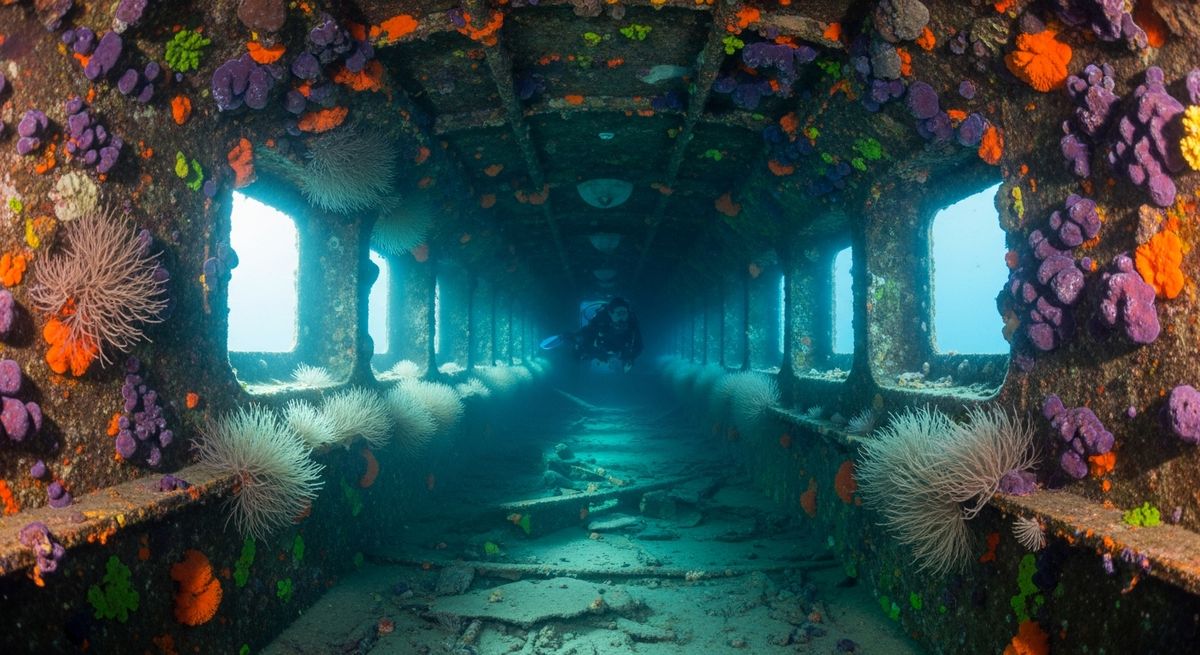
The Boleslaw Krzywousty is less a dive and more a snorkel, but don't let that fool you into thinking it's not worth the journey. This hulking motor vessel, struck by rockets in 1990 and run aground, lies so shallow you can almost reach out and touch her superstructure from the surface. We love how the light plays across the twisted metal, reflecting off schools of snapper that dart in and out of the skeletal remains of the bridge. The depth, or lack thereof, means you can spend ages just floating, tracing the outline of the decks, spotting angelfish picking at the coral crusting the railings. It’s an almost eerie experience, seeing such a massive ship so completely exposed. Our favourite moments are often spent just drifting silently, watching the reef sharks glide past the bow, seemingly unfazed by the wreck's dramatic history. This site suits anyone looking for a unique, historical snorkel, where the drama of the past is still palpable in the shallows.
Typical BOLESLAW KRZYWOUSTY Dive Profile
Illustrative profile based on site depth and type. Actual dive profiles vary - always follow your dive computer and training.
Safety Notes
Wreck site - avoid penetration without wreck diving certification. Watch for sharp metal and entanglement hazards.
BOLESLAW KRZYWOUSTY Wreck History
Year Sunk
1990
Vessel Type
cargo ship
Cause
attacked
Tonnage
6,700 GRT
The Boleslaw Krzywousty was a Polish cargo ship with a dramatic and fiery end. On January 4, 1990, during the Eritrean War of Independence, the vessel was transiting the waters of the Dahlak Archipelago when it was suddenly attacked by an armed vessel belonging to Eritrean rebels. Rockets slammed into the ship, sparking a massive fire that quickly raged out of control. With the vessel doomed, the crew ran it aground before being captured by the rebel forces.
This modern wreck is now a stunning and surreal landmark. Lying in just 2 meters of water, its massive, rust-colored hull and superstructure jut out from the turquoise Red Sea, visible for miles. It is less of a scuba dive and more of an incredible snorkeling or shallow-water exploration site. The immense size of the ship is breathtaking, and its shallow depth allows sunlight to illuminate the decks and cargo holds, which are already showing the first signs of coral colonization. The Boleslaw Krzywousty serves as a stark and powerful reminder of recent conflict, slowly being reclaimed by the sea.
Reviews for BOLESLAW KRZYWOUSTY
Conditions
Ocean conditions, forecast and tides for BOLESLAW KRZYWOUSTY
BOLESLAW KRZYWOUSTY Ocean Conditions
Monthly averages for BOLESLAW KRZYWOUSTY, sourced from Open-Meteo marine data - nearest station: Open-Meteo marine grid (15.67, 40.12) (15km away)
October Averages
Sea Temperature
33°C
91°F · Range: 31–34.1°C
Air Temperature
32°C
90°F
Wind Speed
5.8 m/s
11.3 knots
Atmospheric Pressure
1009 hPa
Based on 4 years of monitoring data · Data sources: Open-Meteo marine data
Plan & book
Ways to dive Dahlak Archipelago, from day trips to liveaboards.
Day trips & courses
via GetYourGuideGuided dives, courses and snorkel trips with instant booking.
Find dive trips in Dahlak ArchipelagoPlaces to stay
via Booking.comHotels and dive resorts near Dahlak Archipelago.
Search stays in Dahlak ArchipelagoDive insurance
Most travel insurance excludes or limits scuba. Check what you need before you go.
Dive insurance explainedPartner links: we may earn a commission if you book, at no extra cost to you. How we make money
Where to Stay near BOLESLAW KRZYWOUSTY
Prices from Booking.com. We may earn a commission at no extra cost to you.