Bellatrix
Protected Area
Área De Relevante Interesse Ecológico Orla Marítima
Why dive here
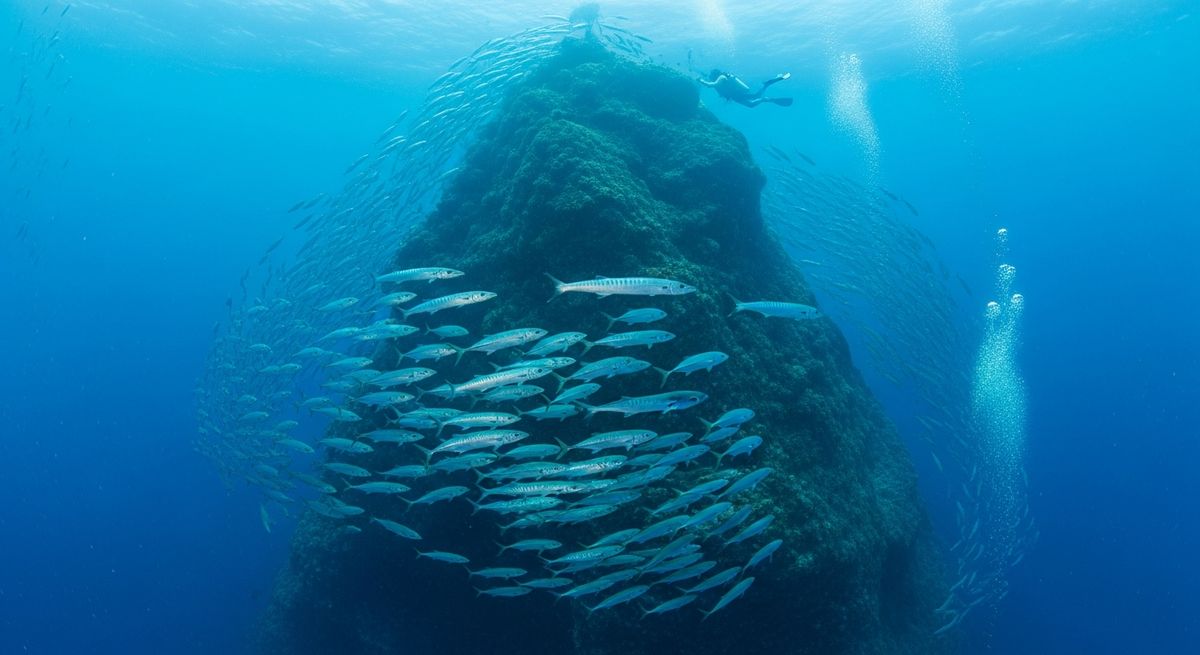
With 44+ marine species recorded in the area - including sea turtles - Bellatrix offers some of Fernando de Noronha's richest pinnacle diving. Water ranges 27-29°C, warmest March, April, May.
Bellatrix is a wreck dive, and we think it's one of Fernando de Noronha's most compelling. The tugboat was intentionally sunk as an artificial reef, now resting upright at 29 meters. We love tracing the deck, noting the barnacles and soft corals that have begun to cloak the metal, softening its industrial edges. Head for the bow, and you'll often find a lazy nurse shark tucked underneath, almost part of the structure. This wreck really shines with its resident schools of horse-eye jacks, which often swirl around the mast, flashing silver as they turn. If you're comfortable with wreck penetration, the wheelhouse is a straightforward, open swim-through, just be mindful of your buoyancy. We’ve found angelfish picking at the coral patches near the stern, and every now and then, a massive red grouper will eye you from a shadowy corner. Visibility here is usually excellent, often pushing past 20 meters, which makes the whole wreck visible as you descend. Our favourite time to visit is mid-morning, just after the sun has climbed high enough to really illuminate the deck.
Nearest Dive Centres to Bellatrix
Dive shops near Bellatrix
View all dive centres in Fernando de NoronhaReviews for Bellatrix
Conditions
Ocean conditions, forecast and tides for Bellatrix
Bellatrix Ocean Conditions
Monthly averages for Bellatrix, sourced from Open-Meteo marine data + Copernicus Marine (EU) - nearest station: Open-Meteo marine grid (-3.84, -32.38) (0km away)
October Averages
Sea Temperature
27°C
81°F · Range: 26.5–27.9°C
Current Speed
29.15 cm/s
Direction: NW (329°)
Chlorophyll-a
0.035 mg/m³
Very clear (oligotrophic)
Salinity
36.39 PSU
Based on 4 years of monitoring data · Data sources: Open-Meteo marine data + Copernicus Marine (EU)
Plan & book
Ways to dive Fernando de Noronha, from day trips to liveaboards.
Day trips & courses
via GetYourGuideGuided dives, courses and snorkel trips with instant booking.
Find dive trips in Fernando de NoronhaPlaces to stay
via Booking.comHotels and dive resorts near Fernando de Noronha.
Search stays in Fernando de NoronhaDive insurance
Most travel insurance excludes or limits scuba. Check what you need before you go.
Dive insurance explainedPartner links: we may earn a commission if you book, at no extra cost to you. How we make money
Where to Stay near Bellatrix
Prices from Booking.com. We may earn a commission at no extra cost to you.