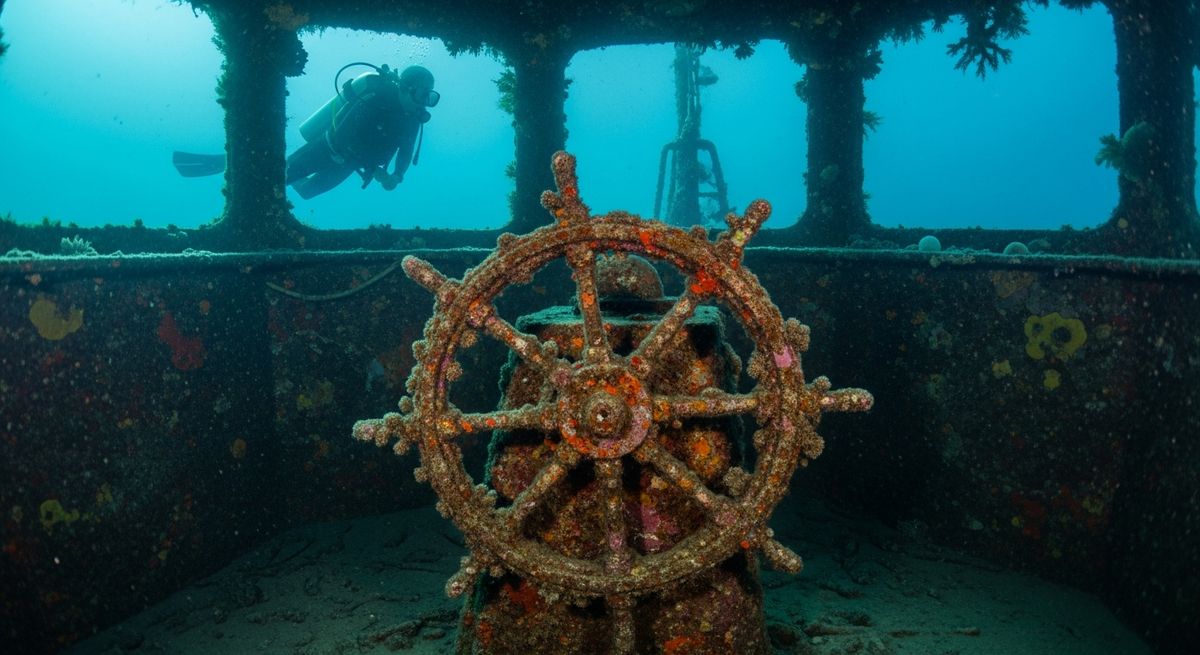
Rebocador Marte
Protected Area
Área De Relevante Interesse Ecológico Orla Marítima
Why dive here
With 44+ marine species recorded in the area - including sea turtles - Rebocador Marte offers some of Fernando de Noronha's richest wreck diving. Water ranges 27-29°C, warmest March, April, May.
The Rebocador Marte wreck has a real personality. We love how the tugboat sits upright on the sand, almost as if it’s still ready to sail, just… not quite. Dropping onto the deck at 16m, you can immediately feel the pull of exploring its three distinct levels. This isn't just a static structure; it’s become a living, breathing part of the ocean here. We find ourselves drawn to the pilothouse, imagining the old captain. You can fin through corridors where schools of Atlantic bumper now shimmer, their scales reflecting the light filtering in. Look closely in the darker corners and you’ll often spot a nurse shark snoozing under a deck plate, or a grumpy mutton snapper peering out from a porthole. The coral growth is respectable for its age, providing shelter for colourful parrotfish and the occasional orange filefish. We’ve seen barracudas cruising silently by, too. It’s a site that rewards multiple visits, revealing new details each time you go. For anyone who enjoys a proper wreck dive with plenty to see inside and out, Rebocador Marte is our pick.
Safety Notes
Wreck site - avoid penetration without wreck diving certification. Watch for sharp metal and entanglement hazards.
Nearest Dive Centres to Rebocador Marte
Dive shops near Rebocador Marte
Aicá Diving
MIURAMAR
Serrambi Resort
Aquaticos Centro De Mergulho
Reviews for Rebocador Marte
Conditions
Ocean conditions, forecast and tides for Rebocador Marte
Rebocador Marte Ocean Conditions
Monthly averages for Rebocador Marte, sourced from Open-Meteo marine data + Copernicus Marine (EU) - nearest station: Open-Meteo marine grid (-3.84, -32.38) (0km away)
October Averages
Sea Temperature
27°C
81°F · Range: 26.5–27.9°C
Current Speed
29.15 cm/s
Direction: NW (329°)
Chlorophyll-a
0.035 mg/m³
Very clear (oligotrophic)
Salinity
36.39 PSU
Based on 4 years of monitoring data · Data sources: Open-Meteo marine data + Copernicus Marine (EU)
Plan & book
Ways to dive Fernando de Noronha, from day trips to liveaboards.
Day trips & courses
via GetYourGuideGuided dives, courses and snorkel trips with instant booking.
Find dive trips in Fernando de NoronhaPlaces to stay
via Booking.comHotels and dive resorts near Fernando de Noronha.
Search stays in Fernando de NoronhaDive insurance
Most travel insurance excludes or limits scuba. Check what you need before you go.
Dive insurance explainedPartner links: we may earn a commission if you book, at no extra cost to you. How we make money
Where to Stay near Rebocador Marte
Prices from Booking.com. We may earn a commission at no extra cost to you.