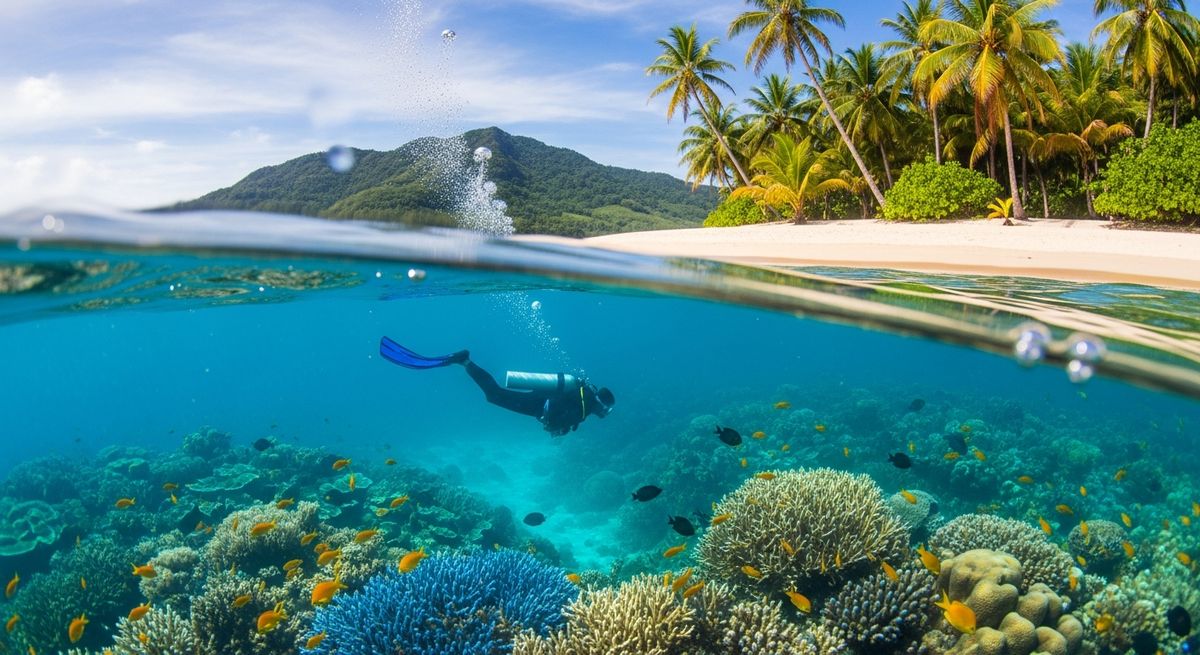
Vapor dos 48
Protected Area
Área De Relevante Interesse Ecológico Orla Marítima
Why dive here
With 44+ marine species recorded in the area - including sea turtles - Vapor dos 48 offers some of Fernando de Noronha's richest reef diving. Water ranges 27-29°C, warmest March, April, May.
Vapor dos 48 is a deep dive, a definite standout here in Fernando de Noronha, but not one for beginners. We're talking about a steamship wreck, its identity still a mystery, resting at a max depth of 47m. Drop down and the first thing you notice is the sheer size of those diagonal steam engines, surprisingly intact and looking like they could fire up any second. One of the paddle wheels is still clearly visible, a testament to the ship's last moments. This isn't just a metal hulk, though. It’s absolutely buzzing with life. Schools of round scad and jacks swirl around the superstructure, a shimmering curtain that sometimes parts to reveal the wreck beneath. Look closer and you'll spot mottled conger morays tucked into crevices, while parrotfish pick at the coral growth on the hull. We’ve seen large loggerhead turtles drifting lazily by, and the occasional nurse shark resting on the sand nearby. We'd suggest aiming for a morning dive, as the light penetrates the depth a little better, really highlighting the wreck's structure. It's a proper adventure, a real piece of history reclaimed by the ocean, and easily one of our favourite deep dives in the area.
Nearest Dive Centres to Vapor dos 48
Dive shops near Vapor dos 48
View all dive centres in Fernando de NoronhaReviews for Vapor dos 48
Conditions
Ocean conditions, forecast and tides for Vapor dos 48
Vapor dos 48 Ocean Conditions
Monthly averages for Vapor dos 48, sourced from Open-Meteo marine data + Copernicus Marine (EU) - nearest station: Open-Meteo marine grid (-3.84, -32.38) (0km away)
October Averages
Sea Temperature
27°C
81°F · Range: 26.5–27.9°C
Current Speed
29.15 cm/s
Direction: NW (329°)
Chlorophyll-a
0.035 mg/m³
Very clear (oligotrophic)
Salinity
36.39 PSU
Based on 4 years of monitoring data · Data sources: Open-Meteo marine data + Copernicus Marine (EU)
Plan & book
Ways to dive Fernando de Noronha, from day trips to liveaboards.
Day trips & courses
via GetYourGuideGuided dives, courses and snorkel trips with instant booking.
Find dive trips in Fernando de NoronhaPlaces to stay
via Booking.comHotels and dive resorts near Fernando de Noronha.
Search stays in Fernando de NoronhaDive insurance
Most travel insurance excludes or limits scuba. Check what you need before you go.
Dive insurance explainedPartner links: we may earn a commission if you book, at no extra cost to you. How we make money
Where to Stay near Vapor dos 48
Prices from Booking.com. We may earn a commission at no extra cost to you.