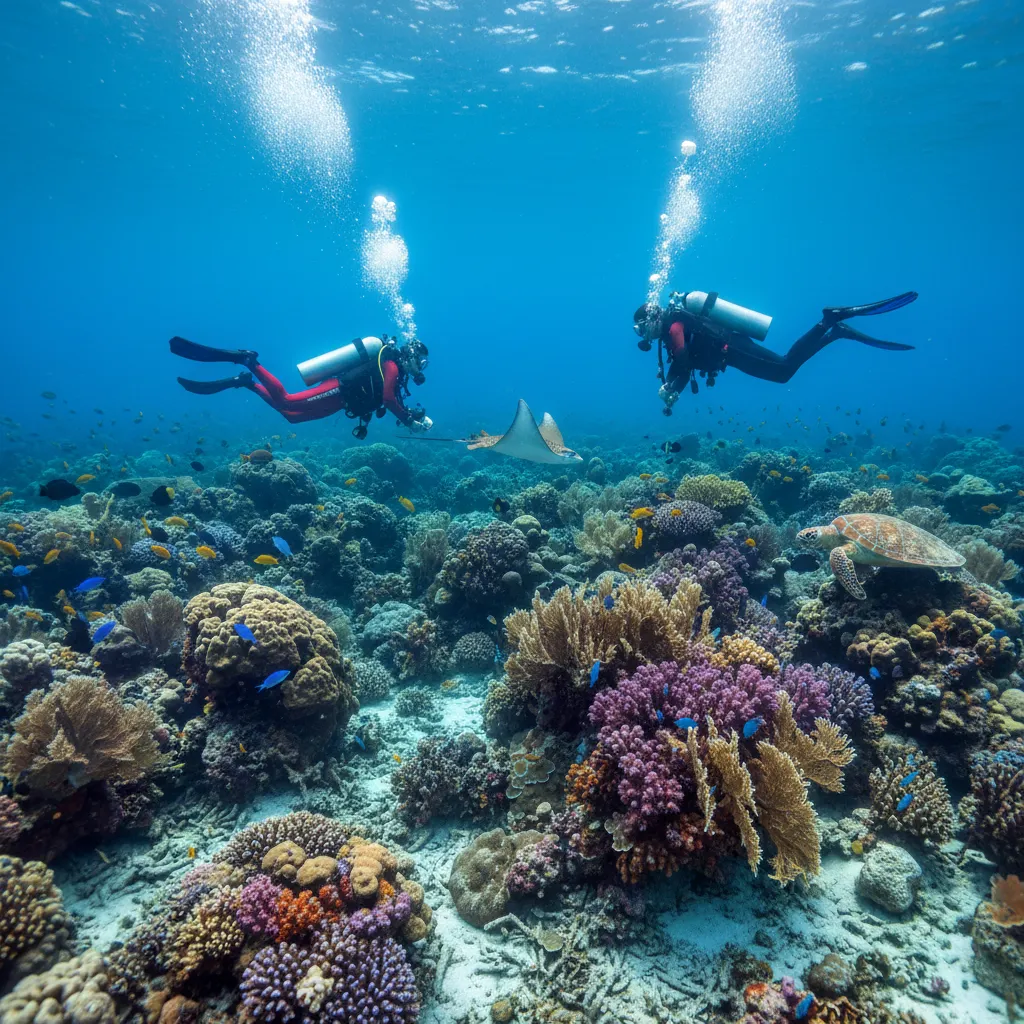
Diving in Los Roques Archipelago
Why dive here
Los Roques Archipelago offers some of Venezuela's richest diving, with 337+ marine species recorded in the area - including barracuda, blue sharks, bull sharks, dolphins and eagle rays. Water sits around 28°C.
Los Roques is a place we’ve talked about extensively. It’s a national park, which means the reefs are in genuinely good shape, and the water clarity is something you’ll remember long after you’ve toweled off. We’re talking about consistently excellent visibility, often pushing past 30 metres, which is a real treat for photographers. We love the feeling of drifting along the reef here, spotting big schools of snapper and grunt, the occasional curious angelfish, and some impressive parrotfish munching on the corals. Keep an eye out for the Florida pompano; they’re often zipping around. The Chain Moray is another common sight, peeking out from crevices. Our favourite thing to do is find a quiet spot and just watch the reef ecosystem go about its business - there’s a quiet hum to it all. It’s not about huge pelagics here, though you might get lucky. It’s about healthy reef systems and the smaller, fascinating details. The wreck is a nice change of pace, too. Currents are generally manageable, making it an easy-going dive for most levels.
Los Roques Archipelago Dive Site Map
Dive sites and dive centres in Los Roques Archipelago
Los Roques Archipelago Dive Sites
28 dive sites in Los Roques Archipelago
Boca de Cote
Boca de Cote is where Los Roques really flexes its muscles. It's not a gentle drift, but a proper channel dive, an exhilarating rush through a funnel that connects the open sea to the inner lagoon. You’ll feel that push of water, a constant, invigorating current that just screams "nutrient highway." We’ve logged some serious bottom time here, and it always delivers. Keep your eyes peeled, because the current brings in the big stuff. We're talking schools of barracuda, sleek silver torpedoes hanging in the flow, occasionally joined by the languid grace of eagle rays gliding past. Nurse sharks often snooze in the sandy patches just outside the main current. Look for the flashes of iridescent scales from demoiselles and the quirky pout of redlip blennies tucked into crevices. This spot is a vibrant, moving ecosystem, and it’s our pick for anyone who loves a bit of speed and the thrill of encountering larger pelagics. Boca de Cote is an intermediate dive that truly rewards vigilance and a comfortable command of buoyancy in current.
CARMINA
Carmina, for us, is a standout in Los Roques, not just another hunk of metal on the seabed. This 91-metre carrier went down in ‘76, breaking apart into three main sections that are now completely encrusted. We love that you can still make out the superstructure, the huge cargo holds, and even the stern with its rudder. Dropping down, the first thing that hits you is the sheer scale – it’s big enough to feel like an expedition. The wreck itself is a magnet for life. We’ve finned past huge schools of tarpon circling the holds, barracuda lurking in the shadows, and often see nurse sharks resting under the larger plates. The amount of orange cup coral here is incredible, spilling across every surface and creating these vibrant patches against the grey steel. For photographers, the bow section, draped in soft corals, makes for some dramatic wide-angle shots, especially with the clear Caribbean light filtering through. This is a dive that suits those who appreciate history and the way the ocean reclaims its own, offering plenty to explore without being overly deep or technically demanding.
Cominoto el Hoyo
Cominoto el Hoyo in Los Roques offers an accessible dive for most skill levels. You'll find a lively reef with plenty of schooling fish and a good chance of spotting turtles cruising by. It’s a solid choice for a relaxing afternoon dive, uncomplicated and consistently pleasant. We often bring newer divers here to build confidence in an easy current.
Cominoto el Velero
Cominoto el Velero in Los Roques is one of those wrecks that just keeps giving. We’ve explored her many times, and each dive feels like finding new passages. She’s a pretty old vessel, a fishing boat sunk decades ago, and what we love most is how the ocean has completely reclaimed her. You’re not just looking at a wreck; you’re swimming through a living, breathing reef that happens to have a steel skeleton. The hull is coated in thick sponges and colourful encrusting corals, and we always find big schools of snapper hanging out in the darker sections. Look for the resident green moray eel that often pokes its head from a pipe near the bow – a real character. Penetration is possible for experienced divers through a few of the larger holds, which is where you often find nurse sharks resting on the sandy bottom, completely unfazed by divers. Our favourite time to dive Velero is early morning, just after sunrise, when the light filters through the clear Los Roques water and illuminates the wreck's structure beautifully, making the chrome yellow sponges glow. It’s a great dive for anyone who appreciates the blend of history and thriving marine life, and it’s usually quite sheltered from any strong currents.
Cubagua
Cubagua is one of the outer sites at Los Roques, often reached via a slightly longer boat ride. It’s a good spot for seeing bigger pelagics, especially if you’re hoping for sharks or large jacks cruising the blue. The currents here can be unpredictable, so we’d suggest it for divers comfortable with drift diving and keeping an eye on their buddy. It’s a dive that rewards patience and a bit of open-ocean experience.
CUMANA
Cumana, oh Cumana. This isn't a deep dive, sitting shallow at nine meters, but it’s one of our favourite Los Roques wrecks for a good reason. The old ferry, intentionally beached and later sunk in ‘85, has just enough history to give it character. You swim over the main deck and feel that slight drag from the current, looking down into what used to be passenger cabins, now dark openings that beckon you closer. We love exploring the wheelhouse, still largely intact. Sunlight filters through the gaps, illuminating schools of tiny silversides that flicker like scattered glitter. Keep an eye out for nurse sharks often napping under the deeper sections, and we always spot a few grumpy-looking moray eels peeking from the holes in the hull. Visibility here is usually excellent, making it a dream for photographers, especially when the sun is high and casting those long shadows across the metal. It’s a site that suits divers who appreciate a good story with their wreck, and aren't afraid to poke around a bit.
CUMANA (POSSIBLY)
Okay, let's talk about the *Cumana*. This isn't your usual deep, dramatic wreck dive; it’s a shallow, sun-drenched playground, and we absolutely love it for that. The old ferry, built back in '41, settled here after a pretty benign end in '85, and now it just sits in about 8 metres of water, feeling almost like a permanent fixture of the reef. What makes the *Cumana* stand out is how completely integrated it is with the surrounding environment. We’re talking about a wreck that's less a stark metal skeleton and more a living, breathing part of the reef. You glide over the deck, which is now a mosaic of hard corals, and the light here is just incredible. It filters through the shallow water, illuminating every crevice and every schooling snapper. We’ve spent hours just poking around the superstructure, finding lobsters tucked into shadowy corners and watching parrotfish nibble at the encrusted metal. Our favourite part? Definitely finning through the old car deck, where the light shafts create these ethereal blue corridors. It’s an easy, relaxed dive, perfect for photographers or anyone who just wants to soak up the atmosphere of a wreck that’s found peace with the ocean. You'll see green sea turtles cruising past, often oblivious, and the sheer volume of schooling fish using the wreck for shelter is impressive. A real joy, especially if you catch it in the calm morning light.
Dos Mosquises
Dos Mosquises is one of those spots we always make a point of revisiting when we’re in Los Roques. It’s a gentle drift along the edge of the marine biology station’s reef, shallow enough that you get plenty of bottom time to really soak it all in. We’re talking 5 to 18 meters, so it’s perfect for new divers, or anyone who just wants a relaxed cruise. What we really love here is the sheer density of the smaller stuff. Keep your eyes peeled for the Bluenose Gobies perched on the coral heads, or the tiny Mimic Blennies darting into their holes. We’ve spent entire dives just watching the territorial displays of Puffcheek Blennies. There are bigger fish too, of course – snapper schools often drift past, and we’ve seen more than a few Caribbean Chestnut Morays peeking out from the coral. It’s a very calm site, and a great place to slow down and appreciate the intricate reef life. The local sea turtles are quite accustomed to divers, often just gliding by, unfazed.
Farallon
Farallon delivers a solid dive experience in Los Roques, particularly if you’re looking for a relaxed drift. Expect to see plenty of schooling fish, with tarpon often patrolling the reef edge and turtles munching on sponges. It's a site that suits most experience levels, offering gentle conditions on most days and reliable sightings.
Gran Roque West
Gran Roque West offers a straightforward dive, accessible directly from the main island. We've often found small schools of jacks patrolling the reef edge, with plenty of parrotfish munching on the corals. It's a relaxed spot, decent for an afternoon splash when you want something easy close to shore, particularly if you’re newer to the area or prefer less challenging conditions.
Ichao el Tunal
Ichao el Tunal, in Venezuela's Los Roques Archipelago, offers a relaxed dive without much fuss. You'll likely drift over sand patches dotted with small coral bommies, finding various reef fish going about their day. It’s a good spot for a second dive or for divers who appreciate a quieter, less demanding exploration.
INDEPENDENCE
The Independence wreck, off the coast of Los Roques, really stands out for us. It’s not just a sunken hull; it’s a time capsule. This motor vessel went down in 1974, coming to rest upright in about 40 metres. We love how the decades have softened its industrial edges, turning bulkheads and decks into canvases for sponges and corals. Swimming along the deck, you’ll spot schools of glassy sweepers shimmering in the shadowed cargo holds. Look closer, and you might see an octopus camouflaged against the rust-red plating, or a green moray peeking from a porthole. It’s a dive for those who appreciate history intertwined with nature’s reclamation. Because of the depth, we’d suggest this one for advanced divers comfortable with decompression limits. If you time your dive right, typically mid-morning before any strong currents pick up, the visibility can be excellent, letting you take in the scale of this old ship.
Show all 28 dive sites in Los Roques Archipelago
Los Roques Archipelago Dive Centres
1 dive shop and operator in Los Roques Archipelago
Ocean Wildlife in Los Roques Archipelago
337 species recorded in Los Roques Archipelago
Los Roques Archipelago Daylight & Sunrise/Sunset
Sunrise and sunset times for Los Roques Archipelago, calculated from coordinates
Today - Sunday 11 October
Sunrise
06:09
Sunset
18:05
Daylight
11h 56m
Golden Hour
17:37
First light (dawn) at 05:48 · Last light (dusk) at 18:27
Monthly Averages
| Month | Sunrise | Sunset | Daylight |
|---|---|---|---|
| Jan | 06:43 | 18:15 | 11h 32m |
| Feb | 06:42 | 18:28 | 11h 46m |
| Mar | 06:28 | 18:31 | 12h 3m |
| Apr | 06:10 | 18:32 | 12h 22m |
| May | 05:58 | 18:36 | 12h 38m |
| JunLongest | 05:58 | 18:44 | 12h 47m |
| Jul | 06:04 | 18:48 | 12h 44m |
| Aug | 06:10 | 18:40 | 12h 30m |
| Sep | 06:10 | 18:22 | 12h 12m |
| OctNow | 06:09 | 18:03 | 11h 54m |
| Nov | 06:16 | 17:54 | 11h 37m |
| DecShortest | 06:31 | 17:59 | 11h 28m |
Times are approximate local times based on longitude. Actual times may vary slightly depending on the exact timezone observed in Los Roques Archipelago.
Where to Stay near Los Roques Archipelago
Prices from Booking.com. We may earn a commission at no extra cost to you.
Marine Protected Areas near Los Roques Archipelago
12 protected areas near Los Roques Archipelago - please respect local regulations when diving
Dependencias Federales: Isla La Tortuga, Las Tortuguillas, Cayo Herradura, los Palanquines, y su Espacio Acuático Asociado
Mochima
Laguna de Tacarigua
Laguna de Tacarigua
Laguna de La Restinga
Laguna de La Restinga
Isla Cubagua
Laguna de Las Marites
Utilidad Pública y de Interés Turístico Recreacional Orilla de Laguna Grande en la Península de Araya
Zona de Interés Turístico, Sector El Yaque
Laguna Blanca o del Morro
Utilidad Pública y de Interés Turístico Recreacional El Castillo de Araya
Getting to Los Roques Archipelago
Isla Margarita
Barcelona
Maiquetía
Plan & book
Ways to dive Los Roques Archipelago, from day trips to liveaboards.
Day trips & courses
via GetYourGuideGuided dives, courses and snorkel trips with instant booking.
Find dive trips in Los Roques ArchipelagoPlaces to stay
via Booking.comHotels and dive resorts near Los Roques Archipelago.
Search stays in Los Roques ArchipelagoDive insurance
Most travel insurance excludes or limits scuba. Check what you need before you go.
Dive insurance explainedPartner links: we may earn a commission if you book, at no extra cost to you. How we make money