CARMINA
Why dive here
With 337+ marine species recorded in the area - including barracuda, blue sharks, bull sharks, dolphins and eagle rays - CARMINA offers some of Los Roques Archipelago's richest wreck diving. Water ranges 26-30°C, warmest September, October, November.
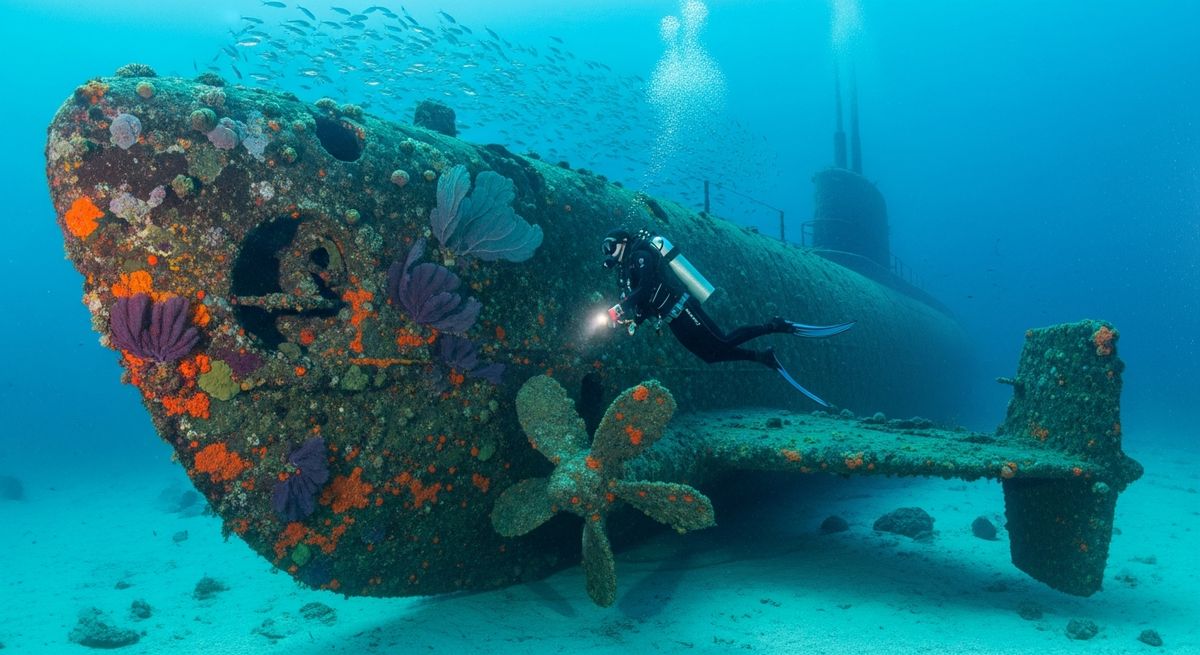
Carmina, for us, is a standout in Los Roques, not just another hunk of metal on the seabed. This 91-metre carrier went down in ‘76, breaking apart into three main sections that are now completely encrusted. We love that you can still make out the superstructure, the huge cargo holds, and even the stern with its rudder. Dropping down, the first thing that hits you is the sheer scale – it’s big enough to feel like an expedition. The wreck itself is a magnet for life. We’ve finned past huge schools of tarpon circling the holds, barracuda lurking in the shadows, and often see nurse sharks resting under the larger plates. The amount of orange cup coral here is incredible, spilling across every surface and creating these vibrant patches against the grey steel. For photographers, the bow section, draped in soft corals, makes for some dramatic wide-angle shots, especially with the clear Caribbean light filtering through. This is a dive that suits those who appreciate history and the way the ocean reclaims its own, offering plenty to explore without being overly deep or technically demanding.
Typical CARMINA Dive Profile
Illustrative profile based on site depth and type. Actual dive profiles vary - always follow your dive computer and training.
Safety Notes
Depth of 20m - Advanced Open Water certification recommended.
Wreck site - avoid penetration without wreck diving certification. Watch for sharp metal and entanglement hazards.
Always perform a 3-minute safety stop at 5m before surfacing.
CARMINA Wreck History
Year Sunk
1976
Vessel Type
cargo ship
Cause
grounding
Tonnage
3,892 GRT
Built in Canada in 1948, the cargo carrier Carmina served for nearly three decades before its final, fateful voyage. In June 1976, while en route from Trinidad to Costa Rica, the vessel ran into trouble in the stunning but hazardous Los Roques Archipelago off the coast of Venezuela. The Carmina ran hard aground on a reef just 700 meters from the northern coast of Isla la Blanquilla, where it was battered by the sea and eventually succumbed, sinking to the seabed.
Today, the Carmina is a fantastic wreck dive, resting in 20 meters of warm, clear Caribbean water. Its nearly 50 years on the bottom have allowed for spectacular coral growth, transforming the steel hull into a vibrant, living reef. Divers can explore the large, relatively intact structure, swimming through its cargo holds and around the superstructure, which are now patrolled by schools of tropical fish, moray eels, and crustaceans. The wreck's moderate depth makes it an ideal site for a wide range of divers, offering a perfect blend of maritime history and thriving marine biodiversity.
Reviews for CARMINA
Conditions
Ocean conditions, forecast and tides for CARMINA
CARMINA Ocean Conditions
Monthly averages for CARMINA, sourced from Open-Meteo marine data - nearest station: Open-Meteo marine grid (10.9, -65.35) (53km away)
October Averages
Sea Temperature
30°C
86°F · Range: 28.6–31.1°C
Air Temperature
29°C
83°F
Wind Speed
8.25 m/s
16.0 knots
Atmospheric Pressure
1010.6 hPa
Based on 4 years of monitoring data · Data sources: Open-Meteo marine data
Plan & book
Ways to dive Los Roques Archipelago, from day trips to liveaboards.
Day trips & courses
via GetYourGuideGuided dives, courses and snorkel trips with instant booking.
Find dive trips in Los Roques ArchipelagoPlaces to stay
via Booking.comHotels and dive resorts near Los Roques Archipelago.
Search stays in Los Roques ArchipelagoDive insurance
Most travel insurance excludes or limits scuba. Check what you need before you go.
Dive insurance explainedPartner links: we may earn a commission if you book, at no extra cost to you. How we make money
Where to Stay near CARMINA
Prices from Booking.com. We may earn a commission at no extra cost to you.