KANA BARU
Protected Area
PKK-003 Bangkalan
Why dive here
With 515+ marine species recorded in the area - including barracuda, blue-spotted stingrays, bull sharks, giant moray eels and manta rays - KANA BARU offers some of Bali's richest wreck diving. Water ranges 29-31°C, warmest April, May, November.
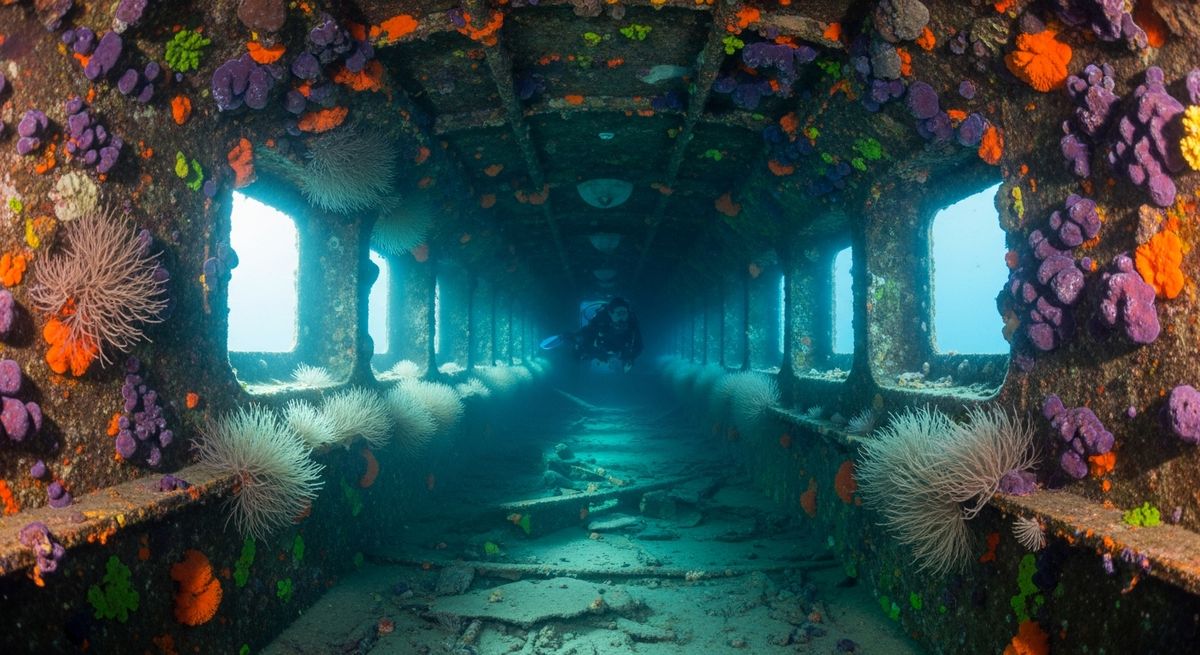
Kana Baru is something of an anomaly, a big bulk carrier wreck sitting in just five metres of water. We love it for its sheer accessibility; you can practically snorkel it, but getting on scuba lets you really appreciate the scale. At 44.5 metres long, the ship is pretty much intact, resting upright on the sandy bottom. You can peer into the holds, see the bow rising up, and imagine it underway. The real joy here, though, is how quickly marine life has taken over. Schools of yellowtail snapper swirl over the deck, and we always spot lionfish tucked into crevices. It’s an easy, rewarding dive, perfect for a relaxed afternoon. The lack of current means you can spend ages exploring, watching the light play through the water onto the metal. We’d suggest going early or late in the day to get the best light and fewer crowds.
Typical KANA BARU Dive Profile
Illustrative profile based on site depth and type. Actual dive profiles vary - always follow your dive computer and training.
Safety Notes
Wreck site - avoid penetration without wreck diving certification. Watch for sharp metal and entanglement hazards.
Nearest Dive Centres to KANA BARU
Dive shops near KANA BARU
View all dive centres in BaliReviews for KANA BARU
Conditions
Ocean conditions, forecast and tides for KANA BARU
KANA BARU Ocean Conditions
Monthly averages for KANA BARU, sourced from Open-Meteo marine data + Copernicus Marine (EU) - nearest station: Open-Meteo marine grid (-7.5, 113.18) (20km away)
October Averages
Sea Temperature
30°C
86°F · Range: 28.3–31.6°C
Current Speed
4 cm/s
Direction: E (90°)
Salinity
32.94 PSU
Based on 4 years of monitoring data · Data sources: Open-Meteo marine data + Copernicus Marine (EU)
Plan & book
Ways to dive Bali, from day trips to liveaboards.
Day trips & courses
via GetYourGuideGuided dives, courses and snorkel trips with instant booking.
Find dive trips in BaliPlaces to stay
via Booking.comHotels and dive resorts near Bali.
Search stays in BaliDive insurance
Most travel insurance excludes or limits scuba. Check what you need before you go.
Dive insurance explainedPartner links: we may earn a commission if you book, at no extra cost to you. How we make money
Where to Stay near KANA BARU
Prices from Booking.com. We may earn a commission at no extra cost to you.