Gili Lawa - Komodo

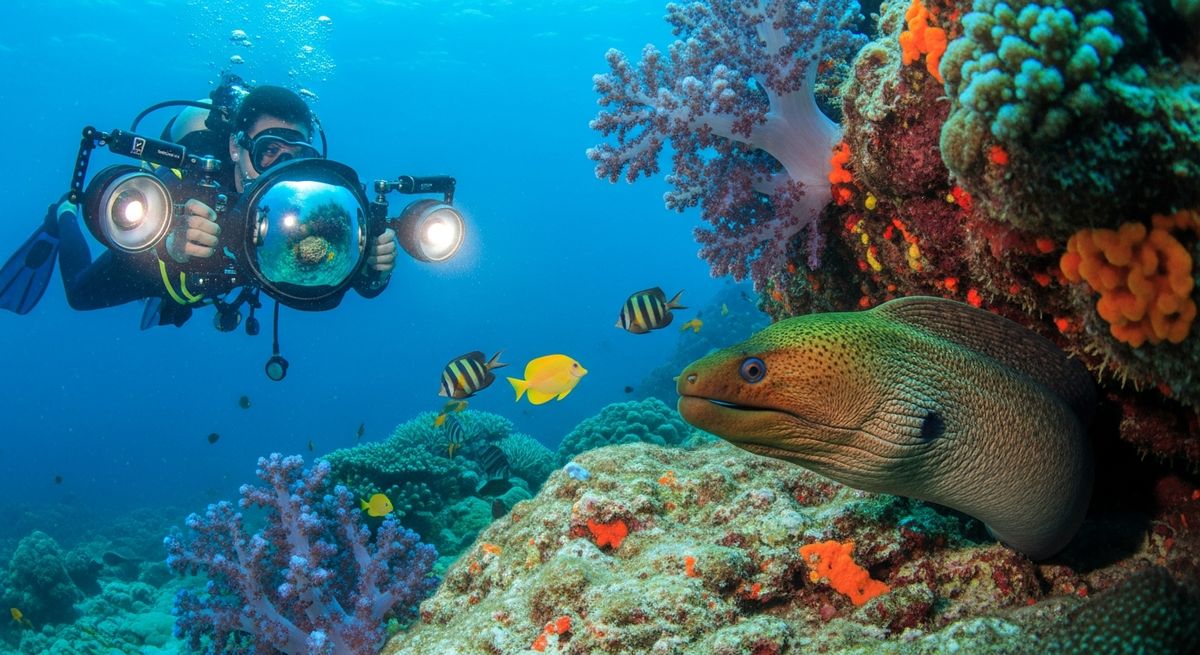
Gili Lawa, or Crystal Bommie, is a pinnacle that just kisses the surface north of Komodo. It’s a site we always look forward to, particularly for its vibrant soft corals and sponges that paint the reef in shades of bronze and rust. The shallows are a flurry of activity, thick with anthias and damselfish, plus regular sightings of hawksbill turtles and those curiously bright red octopus. It’s got a real buzz about it, especially if you enjoy drift dives with plenty to watch as you pass by.

Location
Komodo, Indonesia, Southeast Asia
Coordinates
-8.430000, 119.560000

Marine Protected Area: Komodo

Best Time to Dive in Komodo

The warmest water temperatures in Komodo occur in November, averaging 30.3°C. The coolest conditions are in August at 27.9°C.

Monthly Water Temperatures

  • January: 29.2°C
  • February: 28.9°C
  • March: 29.4°C
  • April: 29.7°C
  • May: 29.4°C
  • June: 28.9°C
  • July: 28.1°C
  • August: 27.9°C
  • September: 28.2°C
  • October: 29.2°C
  • November: 30.3°C
  • December: 30.2°C

Nearby Dive Sites in Komodo

Nearest Dive Centres to Gili Lawa

Marine Life in Komodo

Home to 220 recorded species including 95 reef fish, 92 hard corals, 13 seagrass & algae, 5 sharks & rays, 4 sea cucumbers, 3 clams & mussels.

Notable Species

Recommended Packing List for Gili Lawa

Based on average water temperature of 29.1°C, currents 5 cm/s.

  • Shorty or Rashguard - warm 29°C water needs minimal exposure protection
  • Mask - essential for every dive
  • Fins
  • BCD - buoyancy compensator
  • Regulator - your most safety-critical piece of gear
  • Dive Computer - tracks depth, time, and NDL
  • Surface Marker Buoy (SMB) - essential for boat pickups
  • Dive Torch - useful for crevices and colour at depth
  • Underwater Camera - capture your diving memories

Frequently Asked Questions

What is the typical depth range for diving at Gili Lawa's dive sites?
The specific typical depth range for diving at Gili Lawa is not specified in the current data. However, the dive site, Crystal Bommie, is described as a pinnacle that just breaks the surface, suggesting a range from shallow to potentially deeper areas around the pinnacle's base. Divers should consult with local dive operators for precise depth information.
What kind of marine life can divers expect to see when diving around Gili Lawa?
Divers at Gili Lawa can expect to encounter a vibrant array of marine life. The reef is rich with bronze and rust coloured sponges and soft tree corals. In the shallows, you'll find thousands of anthias and damselfish, large cuttlefish, pyramid butterflyfish, hawksbill turtles, and several red octopus. For more details on species, visit our wildlife database.
How challenging are the dive conditions and currents at Gili Lawa, and is it suitable for beginner divers?
The dive conditions at Gili Lawa are rated as intermediate difficulty. This suggests that while it offers an excellent experience, it may not be ideal for absolute beginner divers due to potential currents or more demanding conditions. Divers should have some experience and comfort in varying conditions.
What is the best time of year to go diving at Gili Lawa for optimal conditions and marine life?
Information regarding the best time of year for optimal conditions and marine life at Gili Lawa is not available in the provided data. For general guidance on seasonal diving in the region, please refer to our When to Dive section.
What scuba diving certifications are required or recommended for diving at Gili Lawa?
Given the intermediate difficulty rating for diving at Gili Lawa, it is recommended that divers hold at least an Advanced Open Water certification or equivalent. This ensures divers have the necessary skills and experience to safely navigate the conditions. Always consult with your dive operator for specific requirements.
What are the typical visibility and water conditions like for diving at Gili Lawa?
Details regarding the typical visibility and specific water conditions, such as temperature or current strength, for diving at Gili Lawa are not provided in the current data. Divers are encouraged to check with local dive centers for up-to-date information on daily conditions.