Pengah Kecil
Protected Area
Komodo
Why dive here
With 203+ marine species recorded in the area - including manta rays, mobula rays (devil rays), pygmy seahorses, sea turtles and sperm whales - Pengah Kecil offers some of Komodo's richest reef diving. Water ranges 28-30°C, warmest April, May, November.
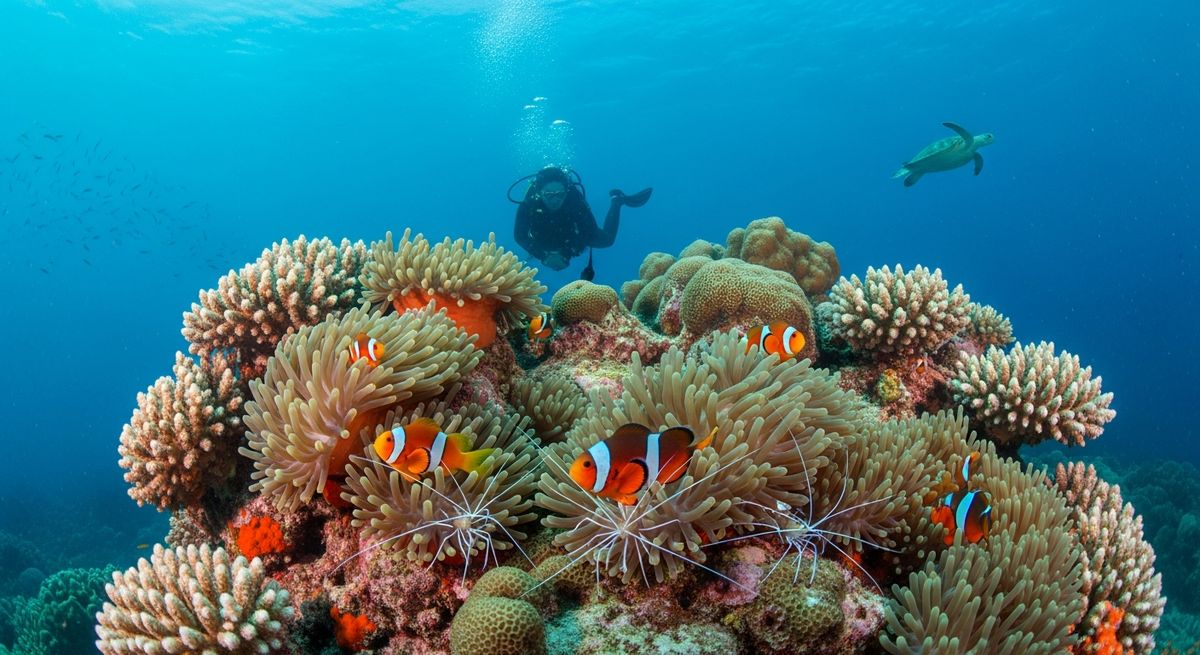
Pengah Kecil is a proper Komodo dive, one where we often drop in expecting a gentle drift and find ourselves holding on. It’s a small, rocky island in the central part of the park. The current here can really pick up, so the dive strategy is always about finding the sheltered side. We’ve found ourselves tucked into a pocket, watching schooling fusiliers stream past in the blue, then turning our attention to the wall. This site really shines for the little things. The corals are intricate: plenty of staghorn, yes, but also delicate elegance corals and impressive brain corals forming a textured backdrop. Look closely at those branches; we’ve spotted bicolor blennies peeking out of their holes, and the nudibranchs here are often vibrant against the muted rock. On one memorable dive, we watched a pair of frogfish perfectly camouflaged on a sponge, barely moving as eagle rays glided past in the deeper water. It's a site that rewards a slow pace and a keen eye. Expect visibility to average around 14m, sometimes more, sometimes less, depending on the day. Pengah Kecil is a great choice for macro lovers who don't mind a bit of current to get there.
Nearest Dive Centres to Pengah Kecil
Dive shops near Pengah Kecil
Neptune Scuba Diving Komodo
Scuba Junkie Komodo
Wet Frog Divers
Blue Marlin Dive
Wicked Diving Komodo
Somer Dive
Reviews for Pengah Kecil
Conditions
Ocean conditions, forecast and tides for Pengah Kecil
Pengah Kecil Ocean Conditions
Monthly averages for Pengah Kecil, sourced from Open-Meteo marine data + Copernicus Marine (EU) - nearest station: Open-Meteo marine grid (-8.39, 119.8) (79km away)
October Averages
Sea Temperature
30°C
85°F · Range: 28.1–30.9°C
Current Speed
4.24 cm/s
Direction: NW (315°)
Chlorophyll-a
0.175 mg/m³
Clear water
Salinity
34.03 PSU
Based on 4 years of monitoring data · Data sources: Open-Meteo marine data + Copernicus Marine (EU)
Plan & book
Ways to dive Komodo, from day trips to liveaboards.
Day trips & courses
via GetYourGuideGuided dives, courses and snorkel trips with instant booking.
Find dive trips in KomodoPlaces to stay
via Booking.comHotels and dive resorts near Komodo.
Search stays in KomodoDive insurance
Most travel insurance excludes or limits scuba. Check what you need before you go.
Dive insurance explainedPartner links: we may earn a commission if you book, at no extra cost to you. How we make money
Where to Stay near Pengah Kecil
Prices from Booking.com. We may earn a commission at no extra cost to you.