Gerombong
Protected Area
KK Karangasem
Why dive here
With 246+ marine species recorded in the area - including blue-spotted stingrays, bull sharks, grey reef sharks, manta rays and mobula rays (devil rays) - Gerombong offers some of Lombok & Gili Islands's richest diving. Water ranges 28-30°C, warmest April, May, November.
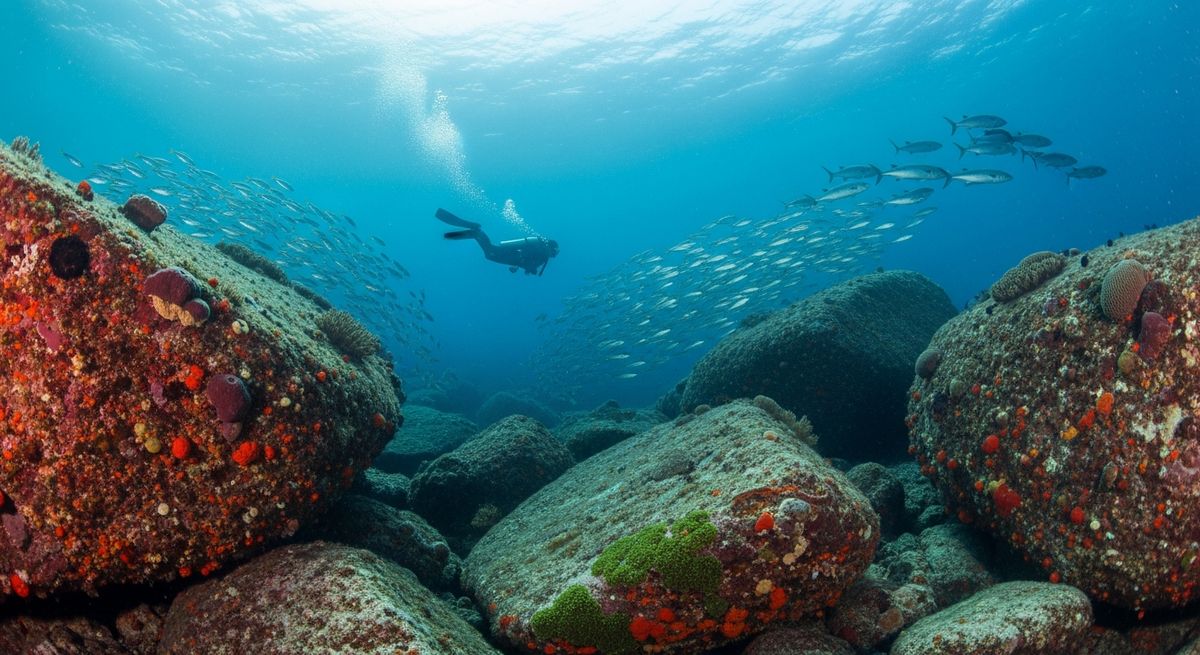
Gerombong, when the conditions are right, is one of our favourites in Lombok. The entry can be a bit of a scramble over rocks, so we’d only go if the sea is flat, otherwise it’s a non-starter. But if you get in, you’ll find a site that offers a lot. We love how it’s basically two distinct reefs, separated by a gentle slope of rock, each with its own personality. The big draw for us is the small cavern. It’s not a deep penetration, more like an overhang you can peek into, but the light plays beautifully off the walls inside. Look closely for those little surprises; we’ve spotted Freckled Anglerfish tucked away there, almost invisible against the rock. Out on the reefs, the Staghorn coral is a dominant feature, forming intricate structures where you’ll see schools of Glassy Cardinalfish shimmering, and if you’re patient, the tiny Shimada’s Pygmygoby darting in and out. Deeper, we’ve come across sizeable Gorgonian fans, and seen big snappers cruising past. It’s a site that rewards a slow pace, letting you really appreciate the smaller, often overlooked creatures. We’d say it suits divers who enjoy exploring nooks and crannies and have an eye for macro life, provided they don’t mind a bit of a rock scramble to get in.
Nearest Dive Centres to Gerombong
Dive shops near Gerombong
Alam Batu
Relax Bali
Siddhartha Dive Center
Villa Alba Dive Resort
Liberty Dive Resort
Paradise Diving
Reviews for Gerombong
Conditions
Ocean conditions, forecast and tides for Gerombong
Gerombong Ocean Conditions
Monthly averages for Gerombong, sourced from Open-Meteo marine data + Copernicus Marine (EU) - nearest station: Open-Meteo marine grid (-8.35, 116.05) (0km away)
October Averages
Sea Temperature
30°C
85°F · Range: 28.3–30.9°C
Current Speed
29.15 cm/s
Direction: SW (239°)
Chlorophyll-a
0.223 mg/m³
Clear water
Salinity
33.97 PSU
Based on 4 years of monitoring data · Data sources: Open-Meteo marine data + Copernicus Marine (EU)
Plan & book
Ways to dive Lombok & Gili Islands, from day trips to liveaboards.
Day trips & courses
via GetYourGuideGuided dives, courses and snorkel trips with instant booking.
Find dive trips in Lombok & Gili IslandsPlaces to stay
via Booking.comHotels and dive resorts near Lombok & Gili Islands.
Search stays in Lombok & Gili IslandsDive insurance
Most travel insurance excludes or limits scuba. Check what you need before you go.
Dive insurance explainedPartner links: we may earn a commission if you book, at no extra cost to you. How we make money
Where to Stay near Gerombong
Prices from Booking.com. We may earn a commission at no extra cost to you.